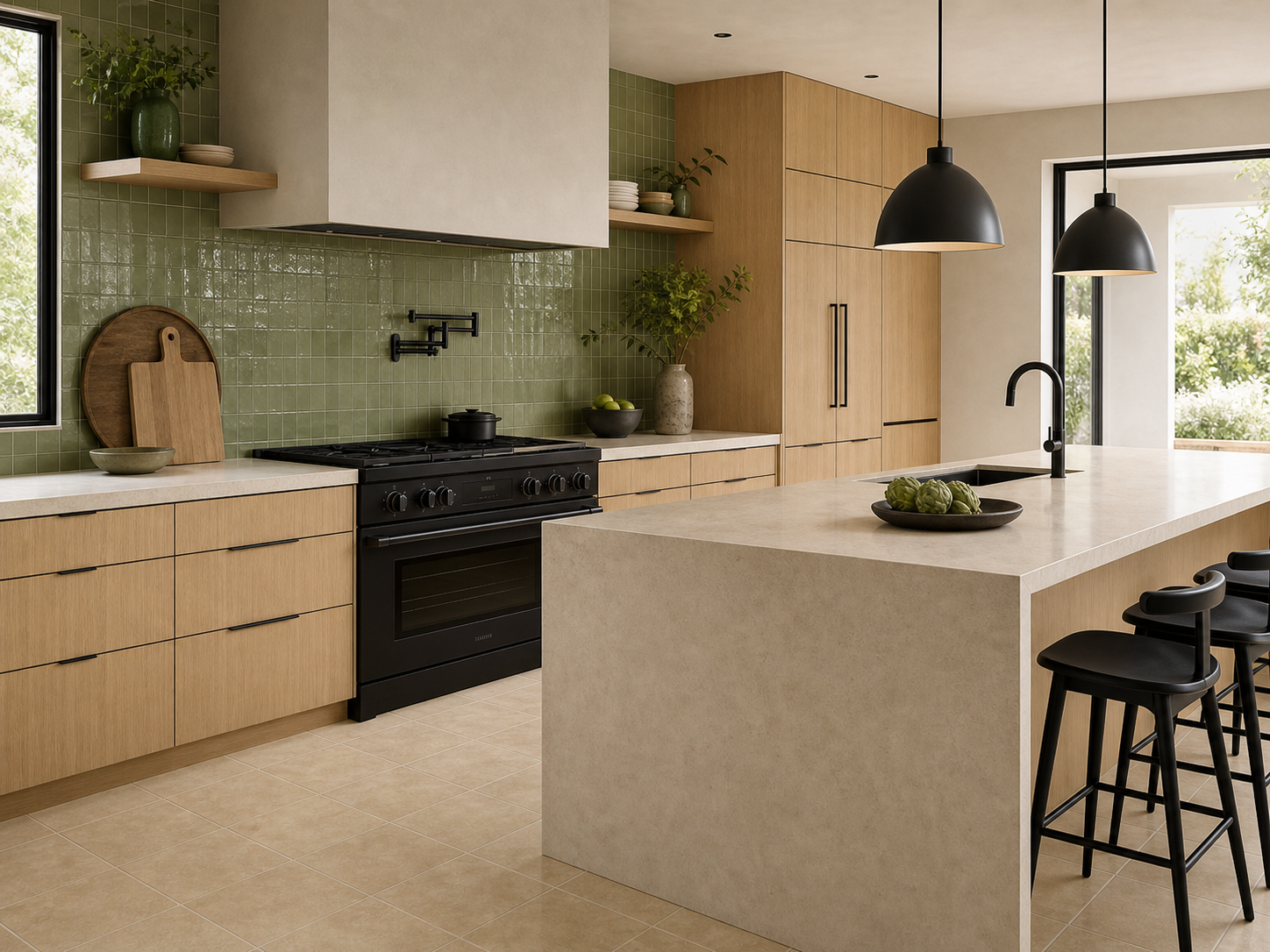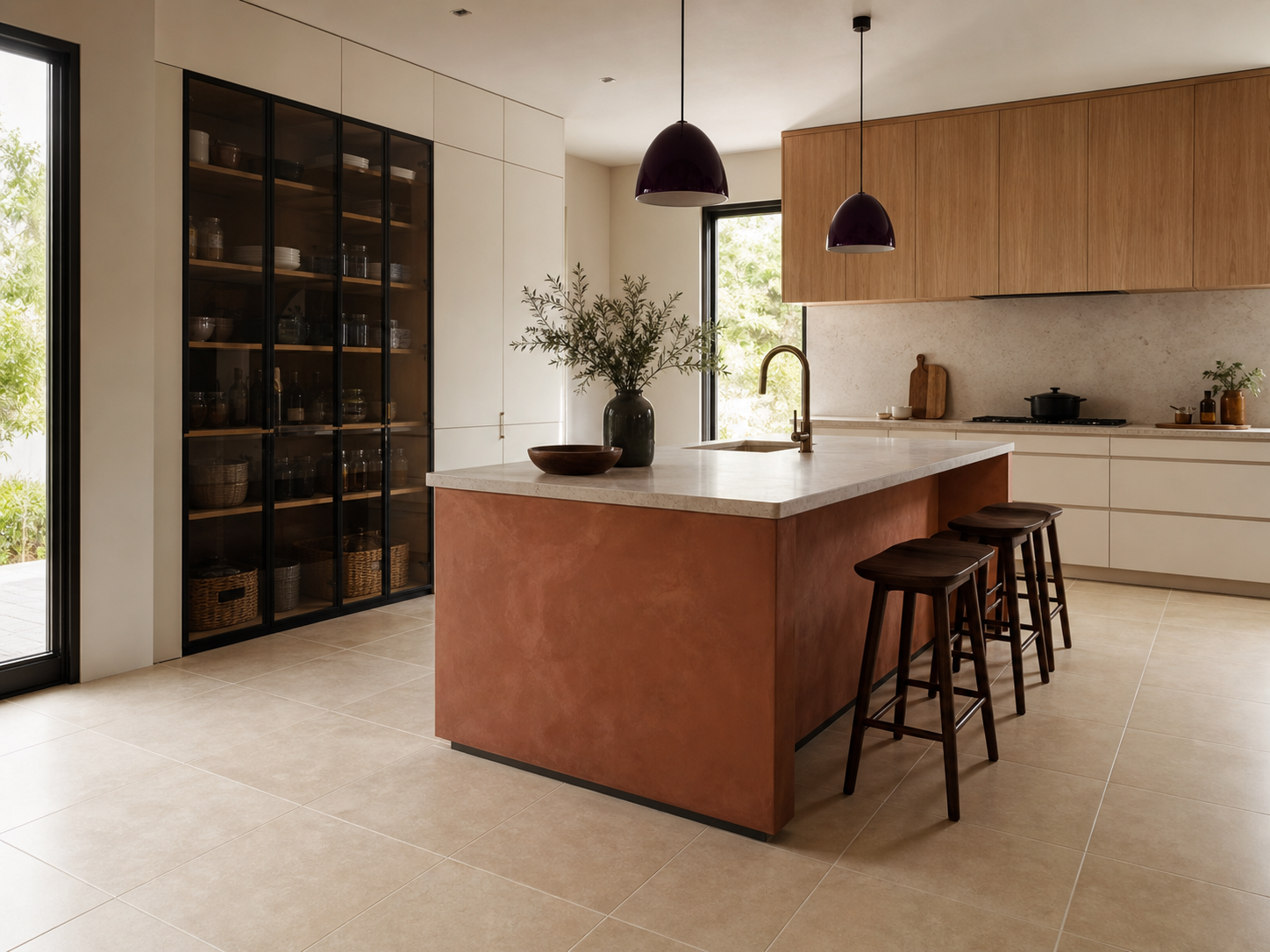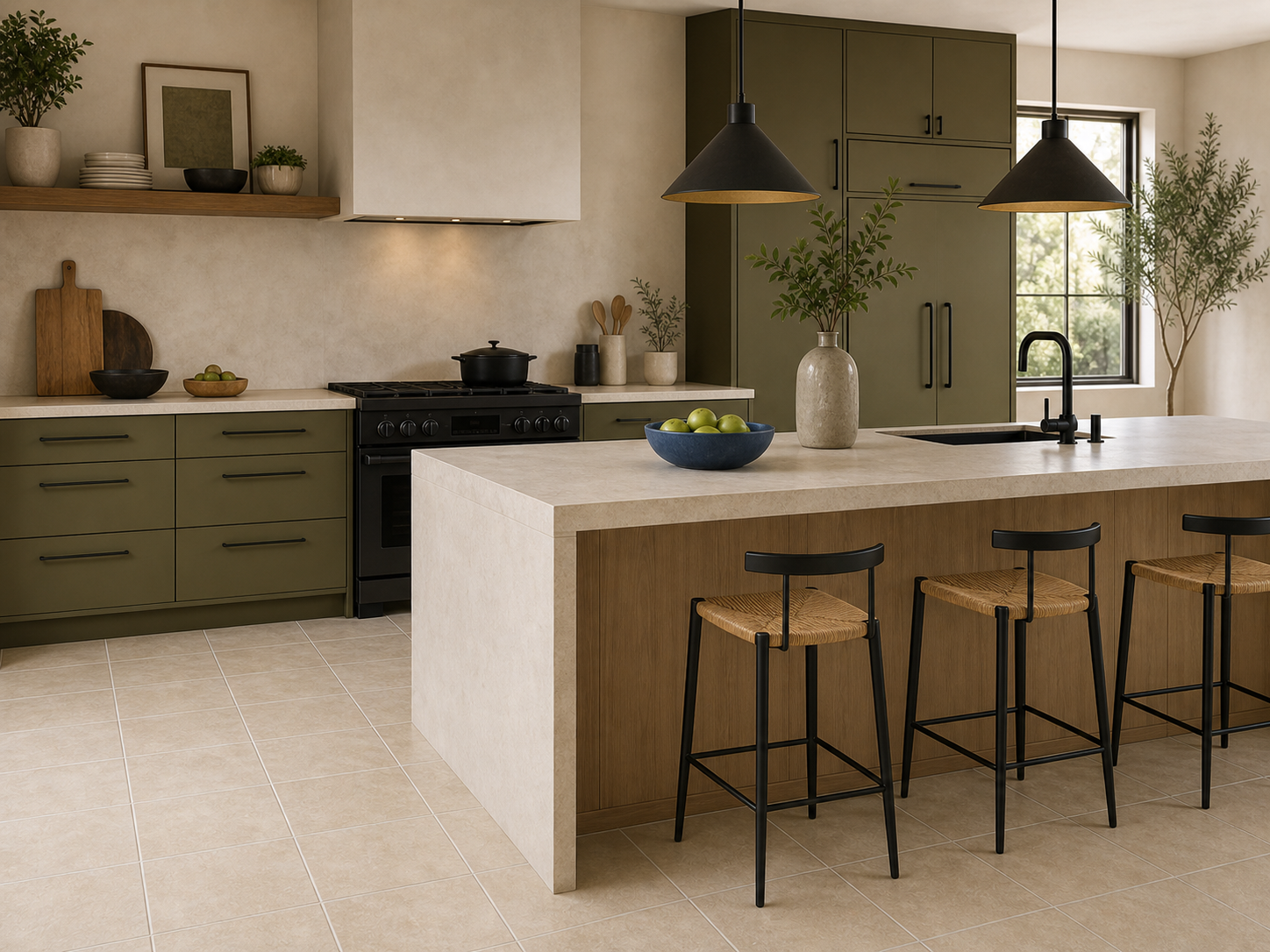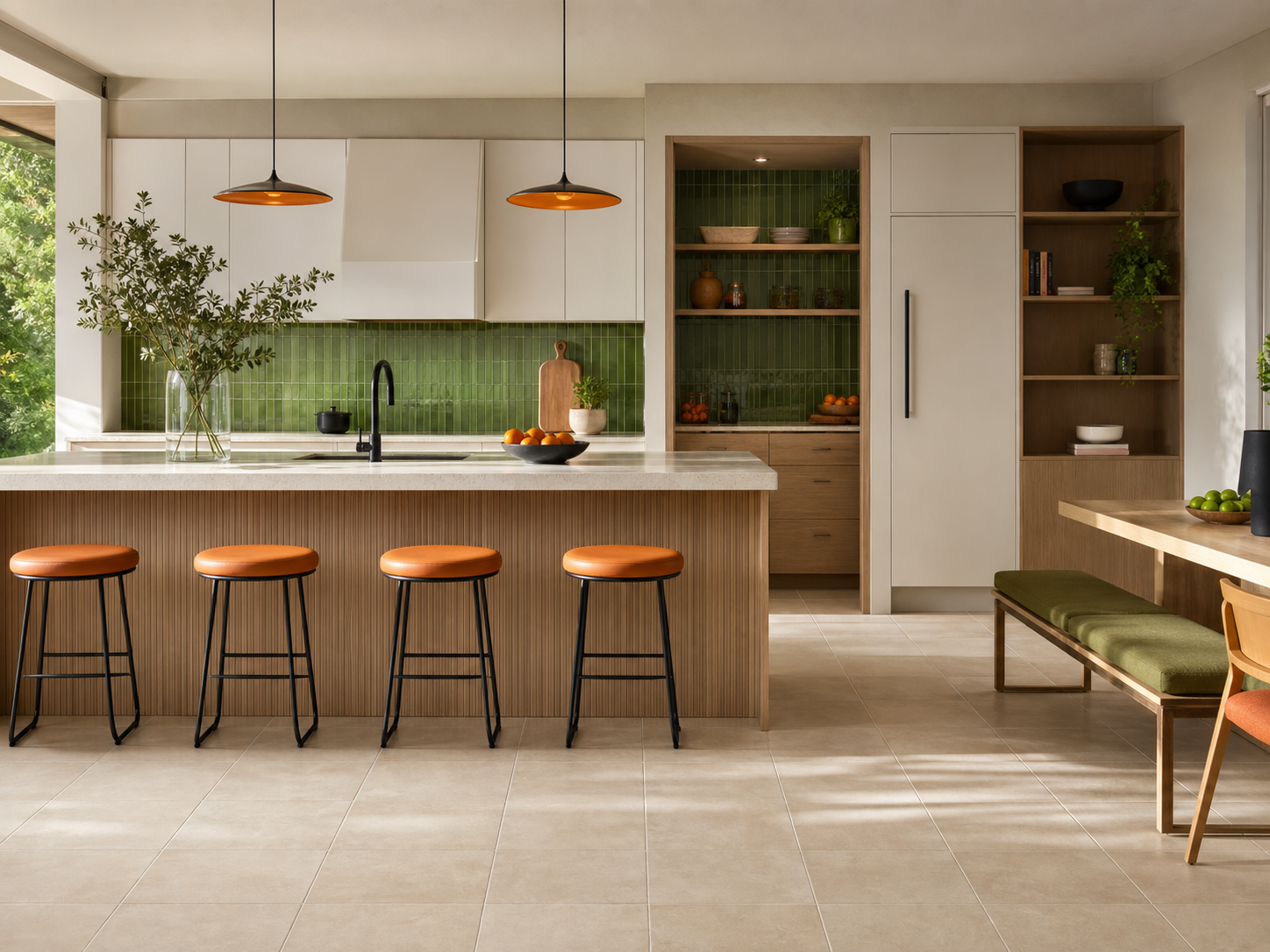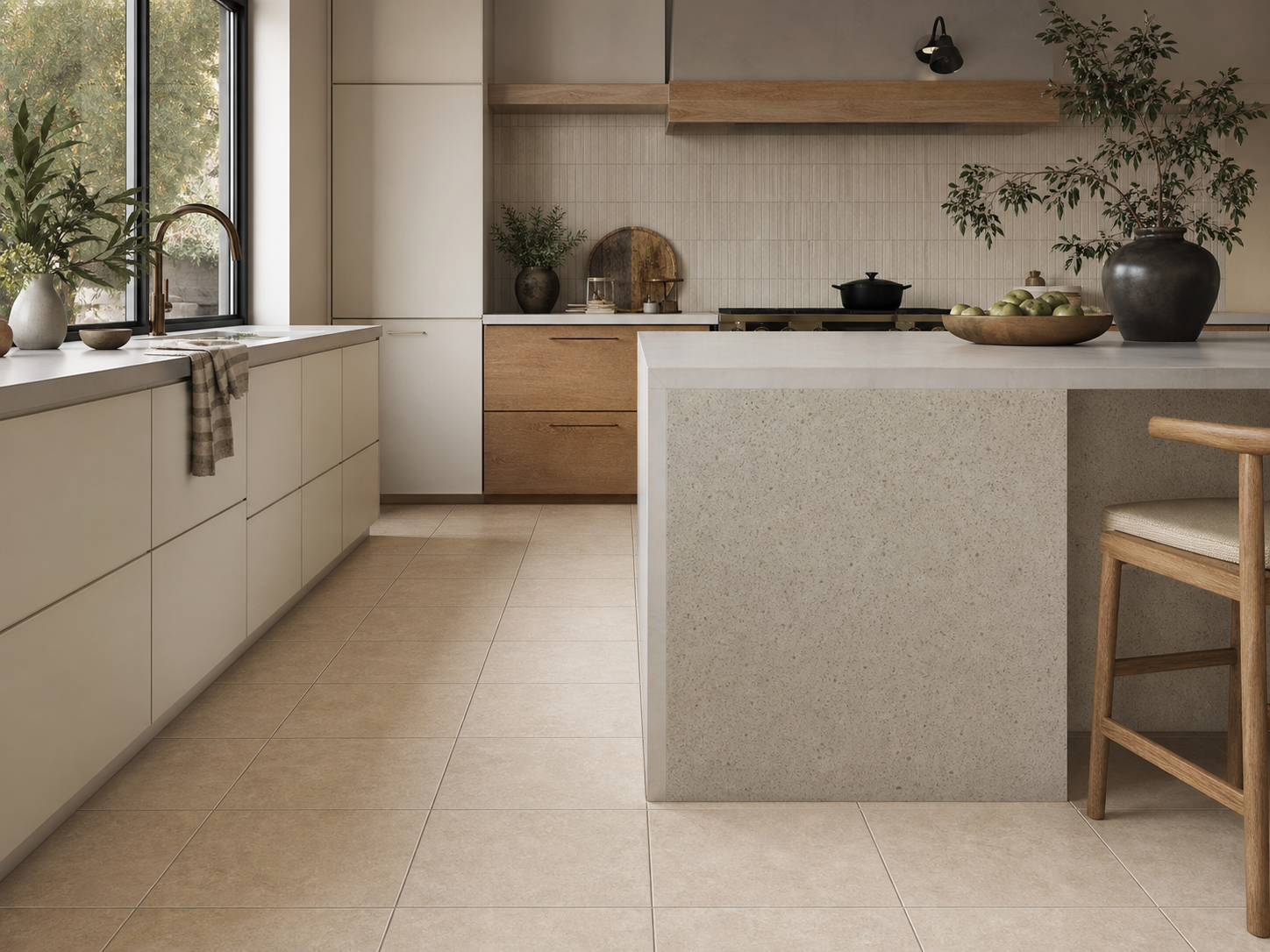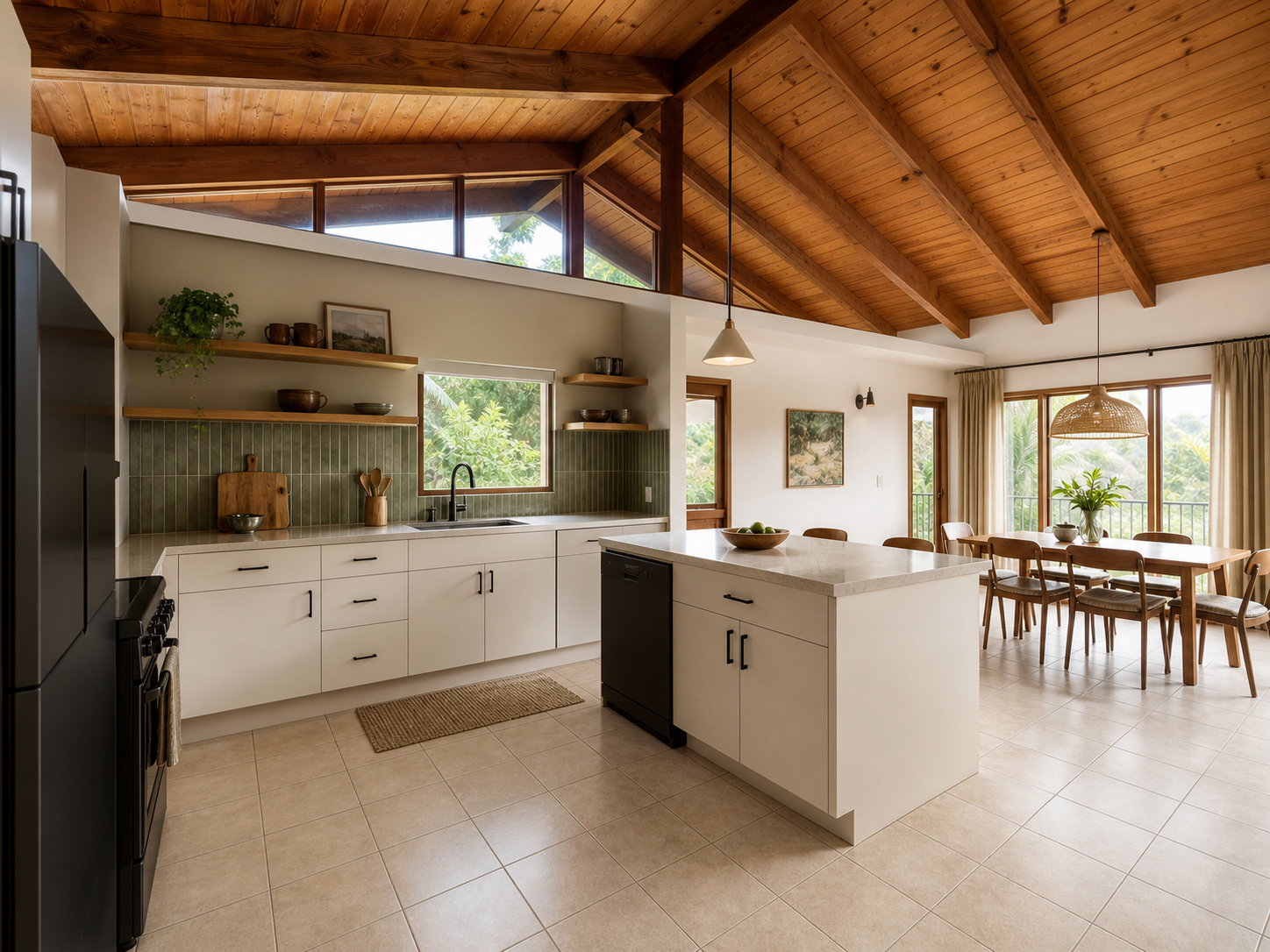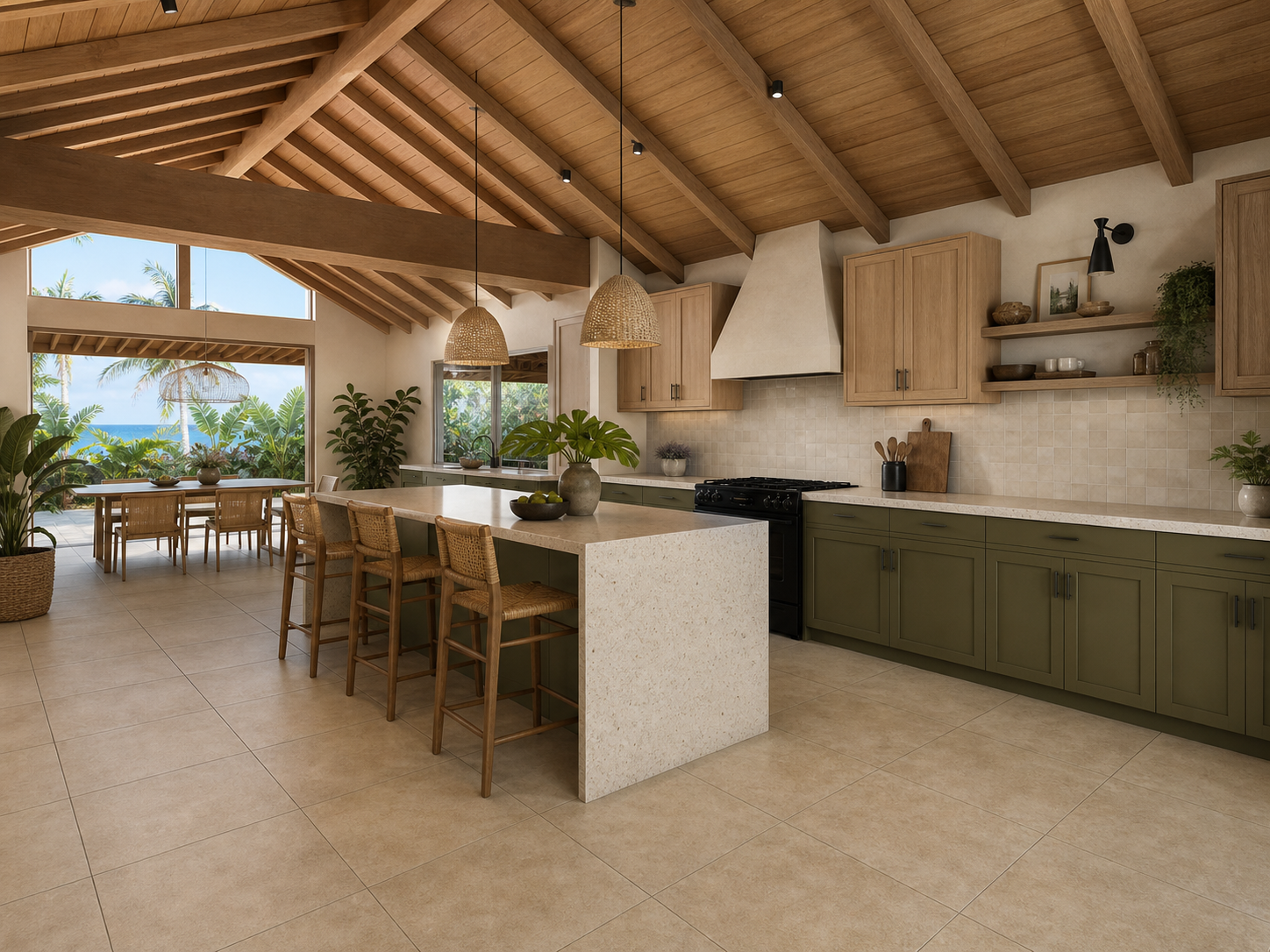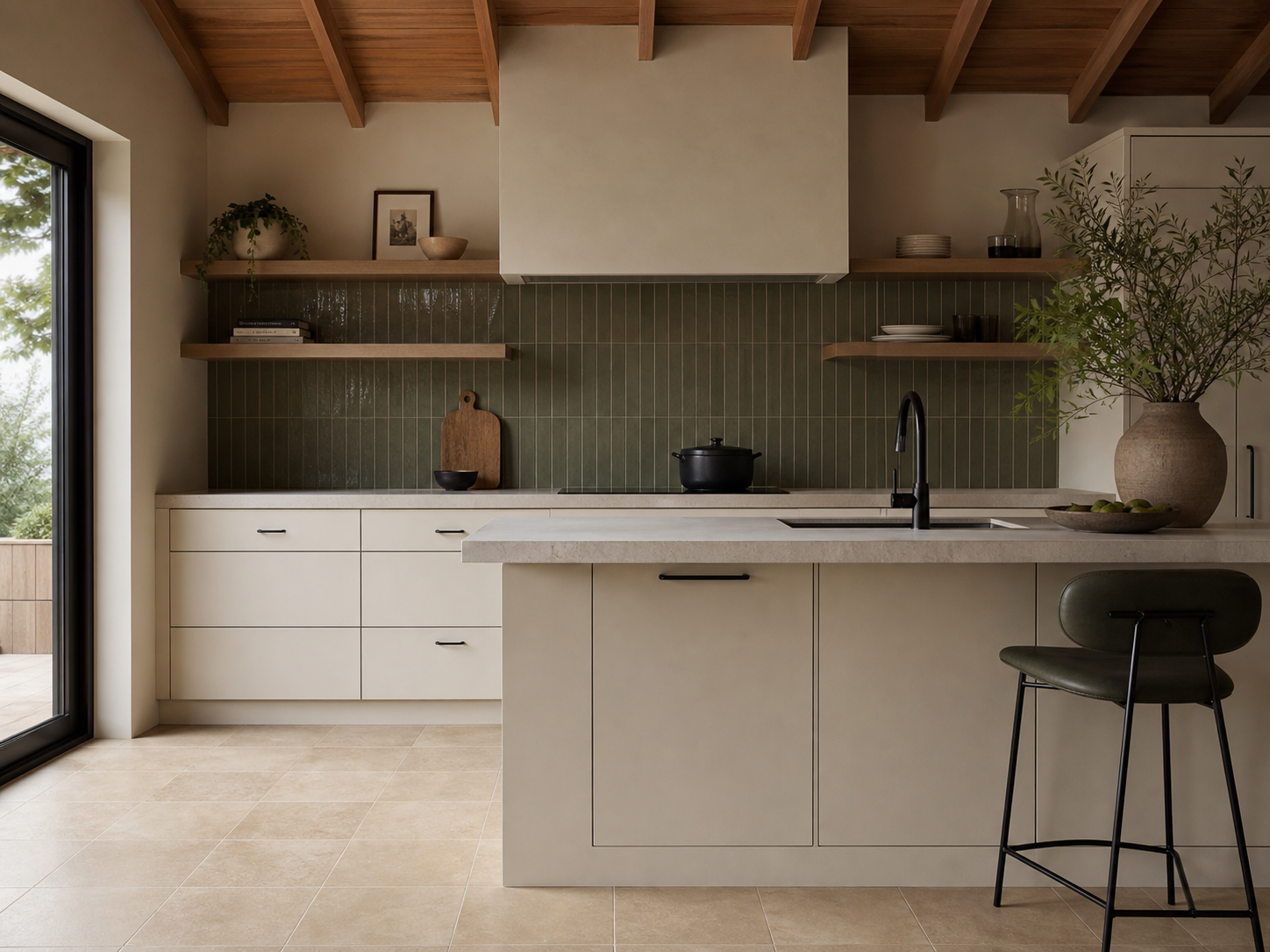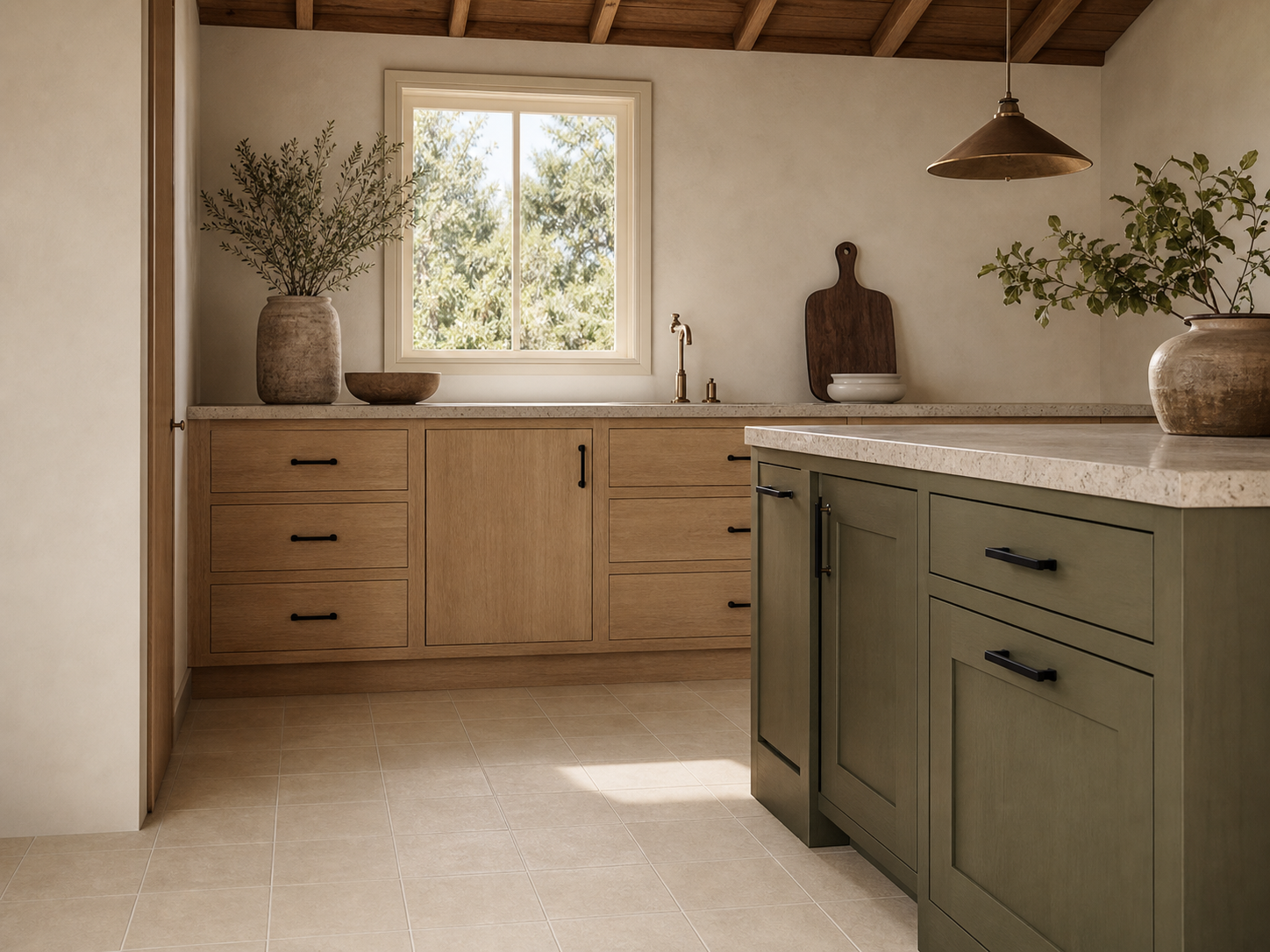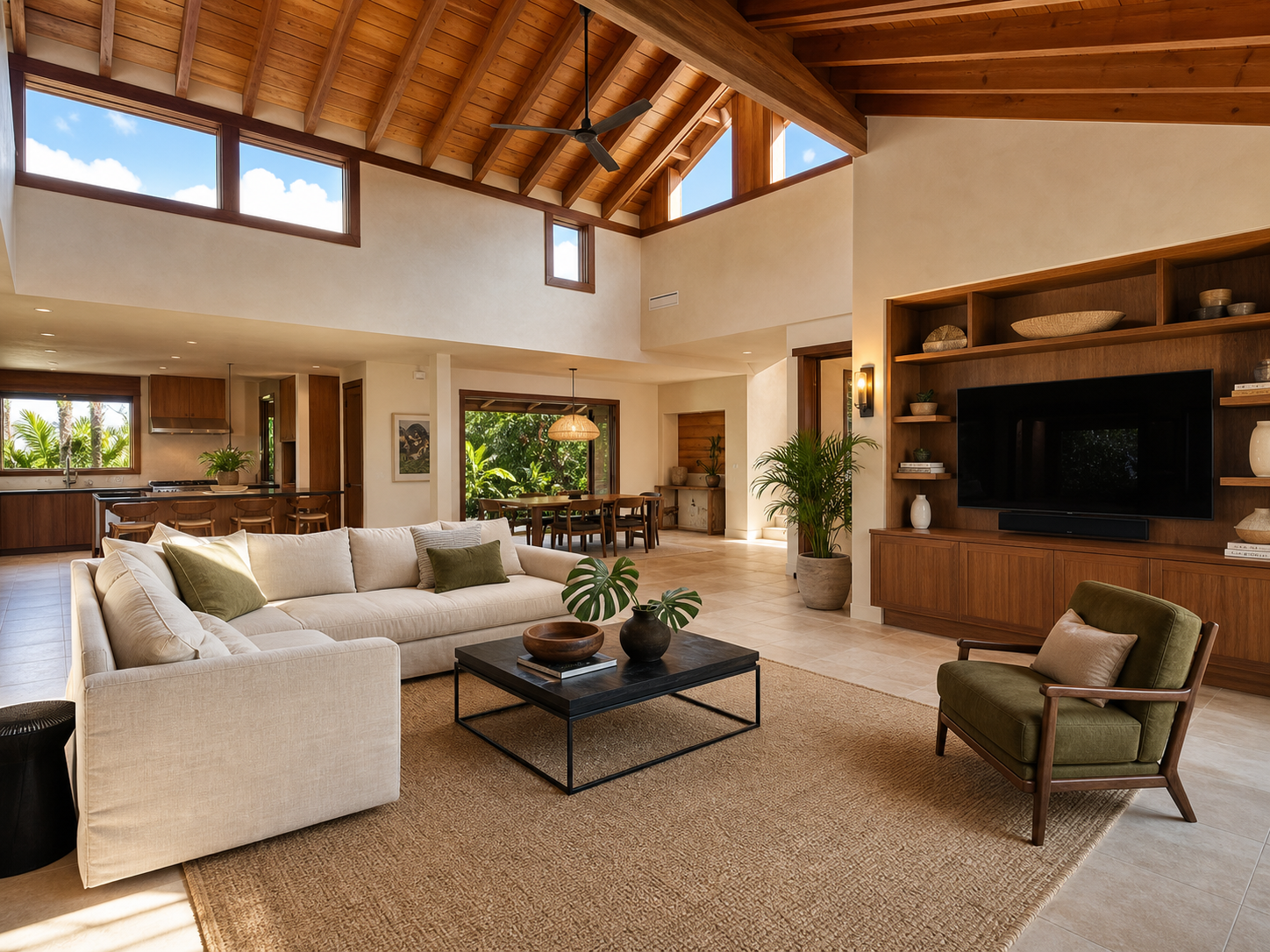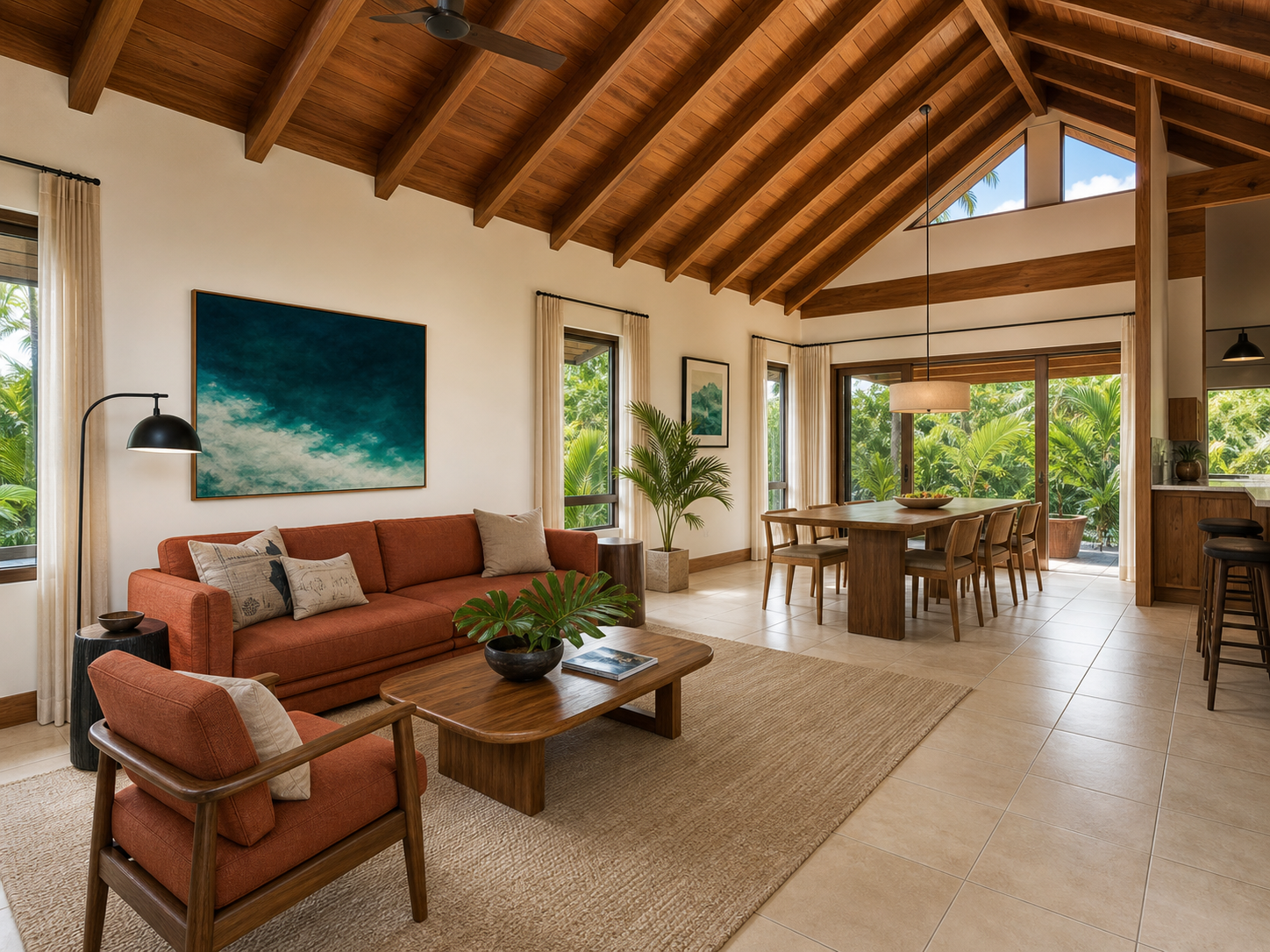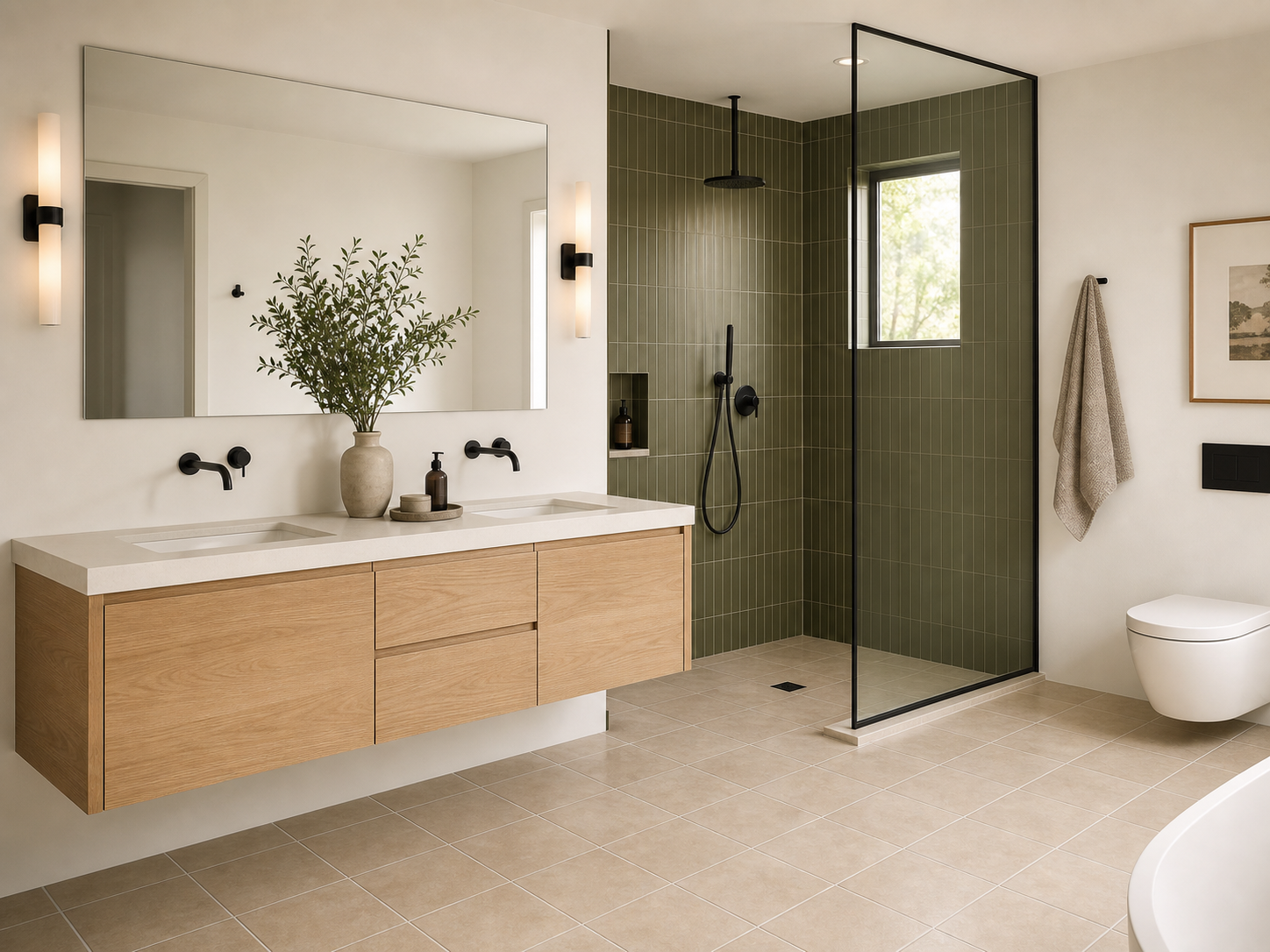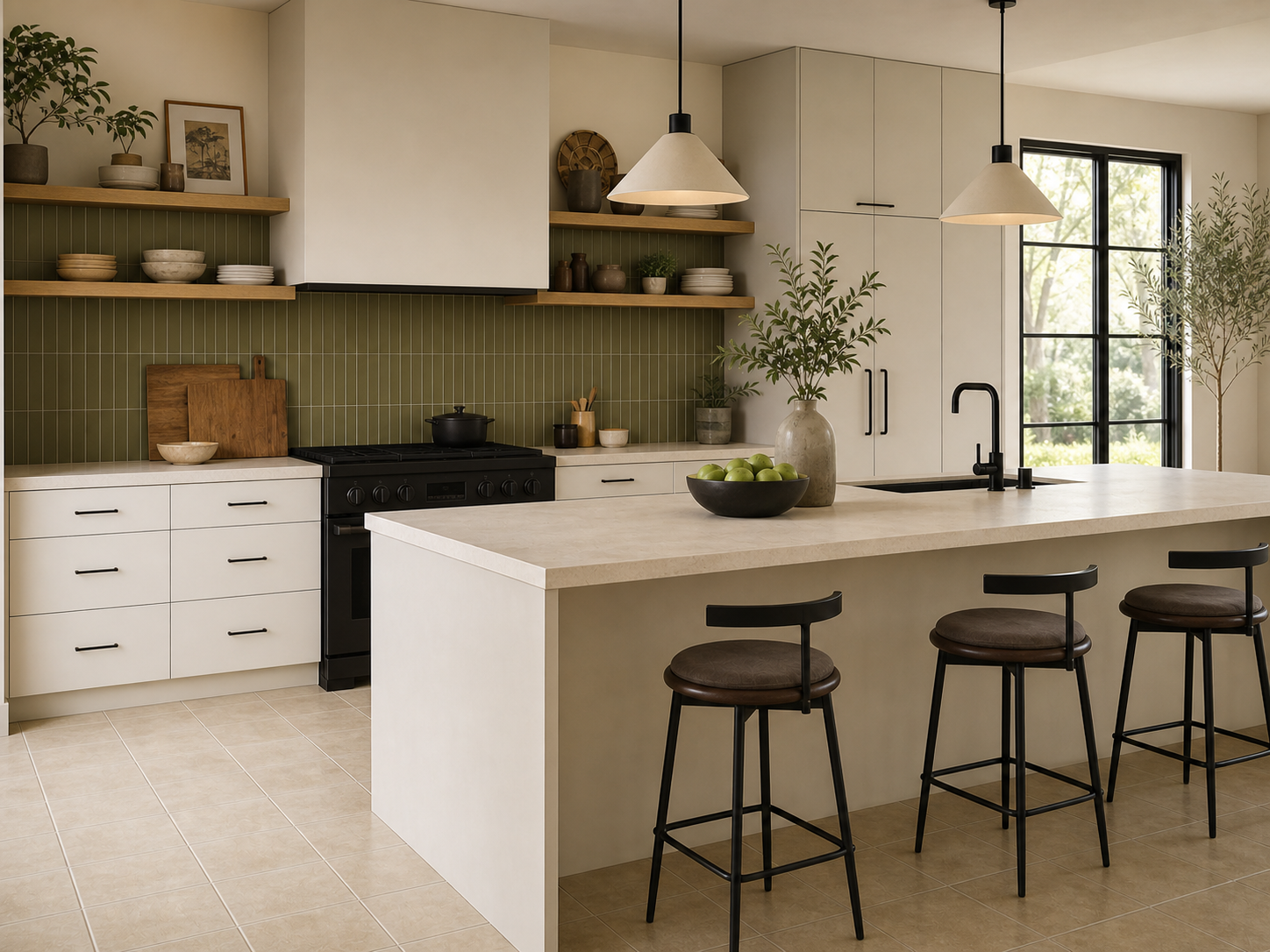
Warm white plus olive vertical tile
Flat warm-white fronts quiet the floor while olive, oak, black hardware, and bronze lighting make the beige grid feel current.
Keep: low-contrast beige grout. Add: matte hardware, warm daylight, clear counters.
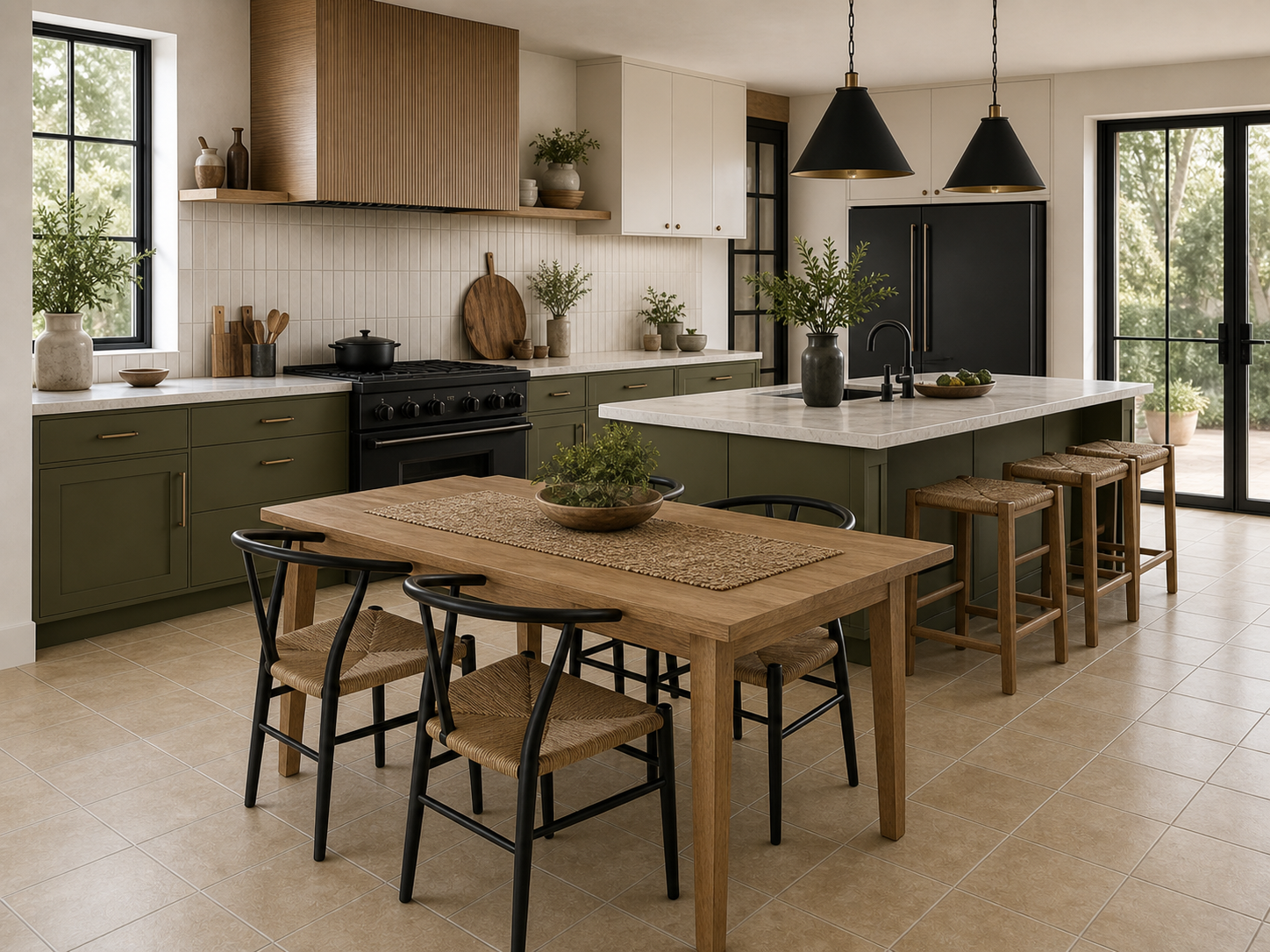
Material study for existing tile
A quieter set of kitchen concepts, direct applications to Paul's kitchen photos, living, bath, and bedroom directions built around warm whites, olive, oak, blackened metal, bronze, stone, carpet, and a few saturated accents. The existing 12x12 beige porcelain tile and beige grout stay fixed where it exists; the room changes around it.
The point is not to disguise the floor. It is to give the square beige grid enough material context that it reads as a calm neutral surface instead of a leftover finish.
Twelve material-led directions: warm white, olive, oak, charcoal, terracotta, walnut, celadon, cobalt, citrus green, fine terrazzo, and wood cathedral ceilings.
Flat warm-white fronts quiet the floor while olive, oak, black hardware, and bronze lighting make the beige grid feel current.
Keep: low-contrast beige grout. Add: matte hardware, warm daylight, clear counters.
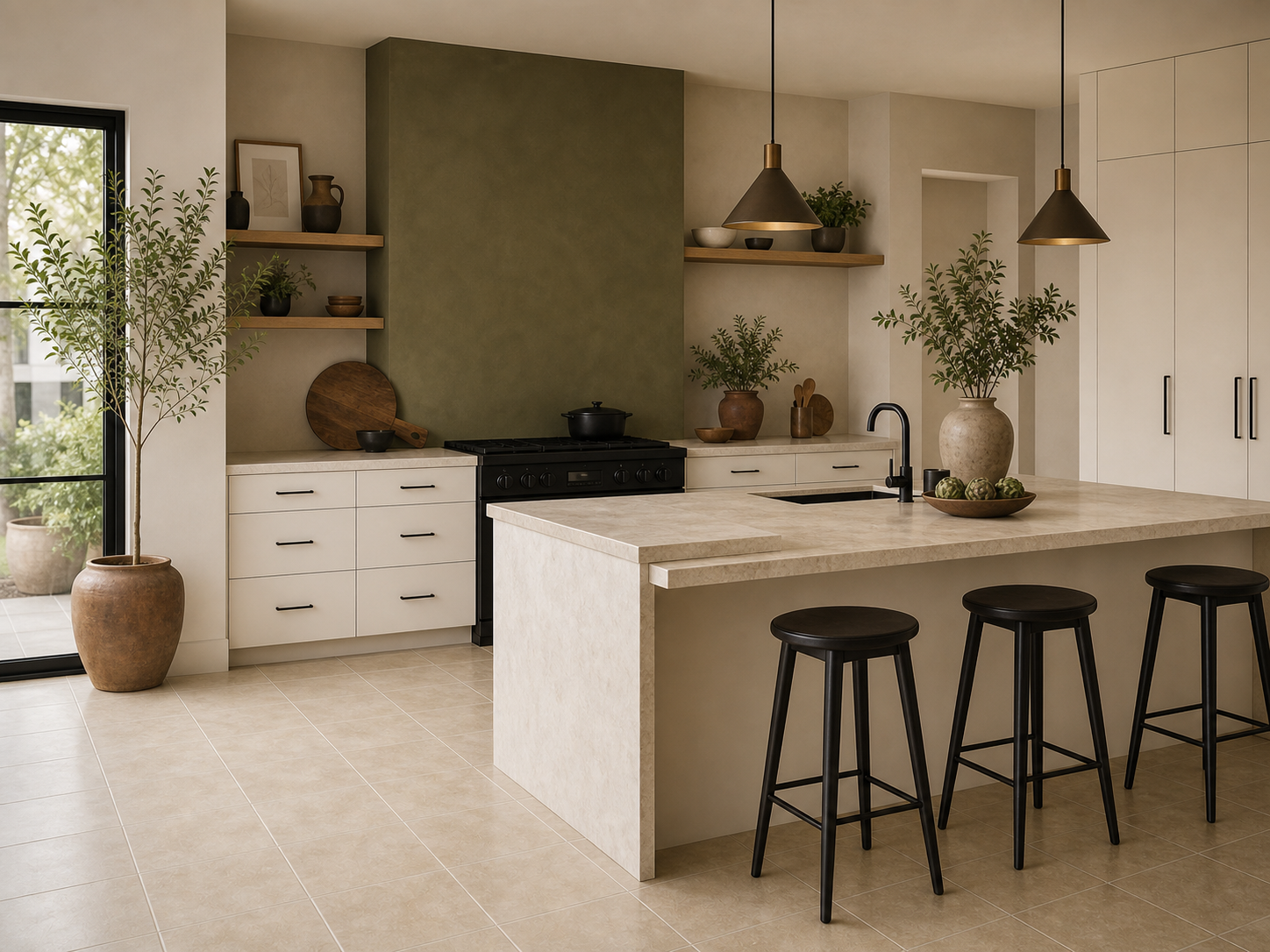
A stronger cabinet color lets the beige floor recede. Oak and a simple runner bridge the tile without going beige-on-beige.
Keep: the square grid visible. Add: black-framed glass and one large runner.
Warm white cabinetry and a quiet olive range wall keep the floor neutral, not dated. Black stools add enough edge.
Keep: plain beige tile. Add: honed stone and one muted green surface.
A celadon ceramic wall gives the beige floor a fresher green context while pale oak, limestone, black appliances, and blackened metal keep it clean.
Keep: floor low contrast. Add: flat fronts, pale stone, black stools.
Terracotta connects to the floor warmth while warm white cabinets and black steel glass keep the room contemporary.
Keep: square porcelain underfoot. Add: bronze faucet and simple pendants.
The cobalt accent works because the room is otherwise grounded in olive, oak, limestone, black steel, and warm white.
Keep: the floor as a quiet field. Add: color in one or two controlled objects.
Brighter green works when it is held to one wall and balanced by oak, warm white, black steel, and a few orange accents.
Keep: beige tile fully visible. Add: color as clean blocks, not pattern.
A quiet cream micro-terrazzo island gives the beige floor a designed material family without turning the room into a pattern story.
Keep: floor grout low contrast. Add: tiny aggregate flecks, oak, bronze, and warm white.
The ceiling becomes the main warmth, so the cabinets can stay quiet while olive tile, oak shelves, and blackened hardware sharpen the beige floor.
Keep: visible tile foreground. Add: warm rafters, clerestory light, restrained black appliances.
Olive bases and a cream terrazzo island give the floor a modern material family while the vaulted wood ceiling keeps the room grounded.
Keep: beige grid uninterrupted. Add: woven pendants, pale oak, and blackened metal.
A normal counter-height view keeps attention on the beige tile, warm white fronts, olive ceramic, oak shelves, and blackened details.
Keep: tile foreground and low contrast. Add: wood ceiling as context, not the focal point.
Pale oak and a muted olive island give the existing floor enough material support while the ceiling stays a small natural cue overhead.
Keep: simple cabinet planes. Add: cream terrazzo, bronze, and matte black pulls.
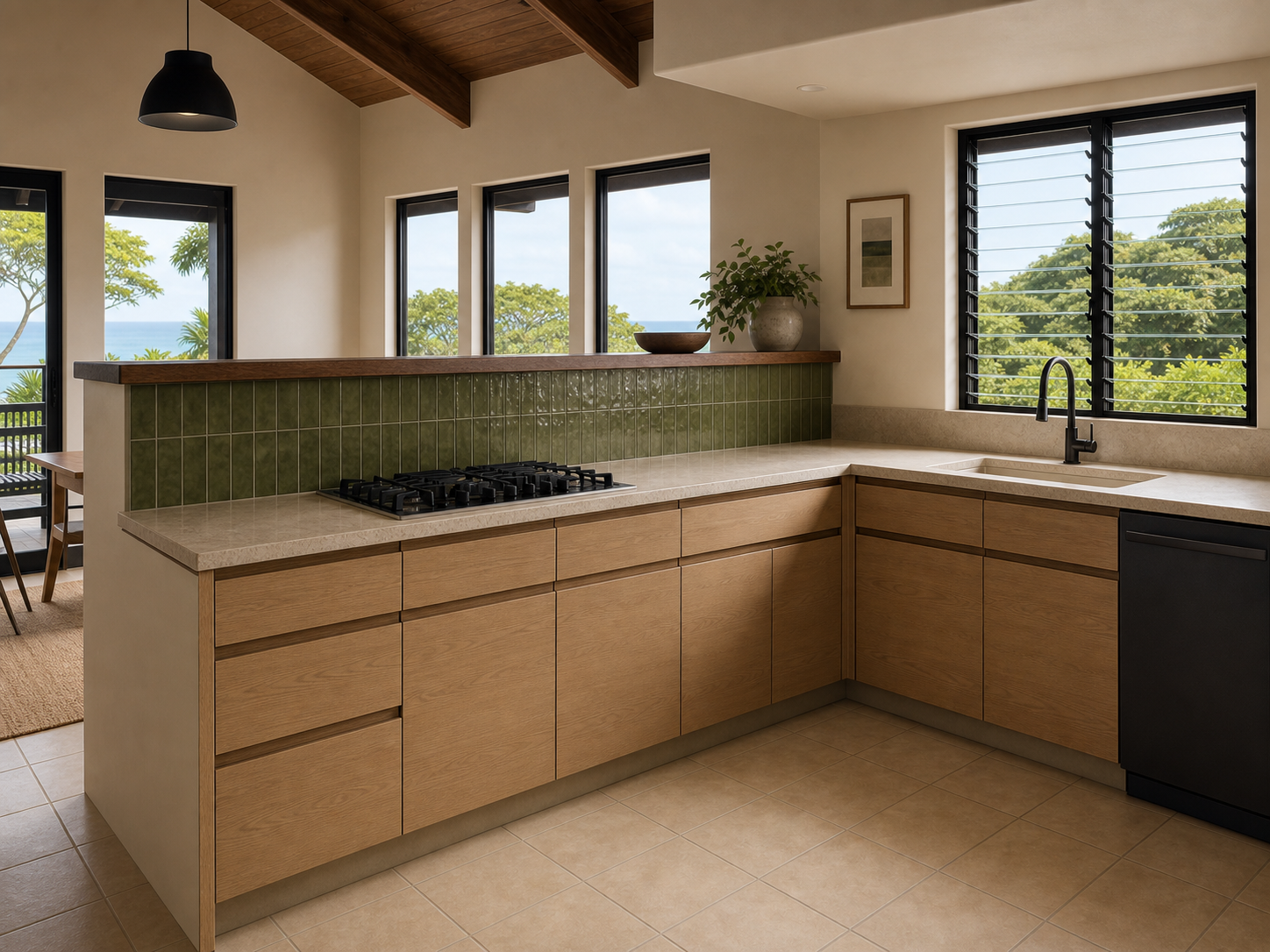
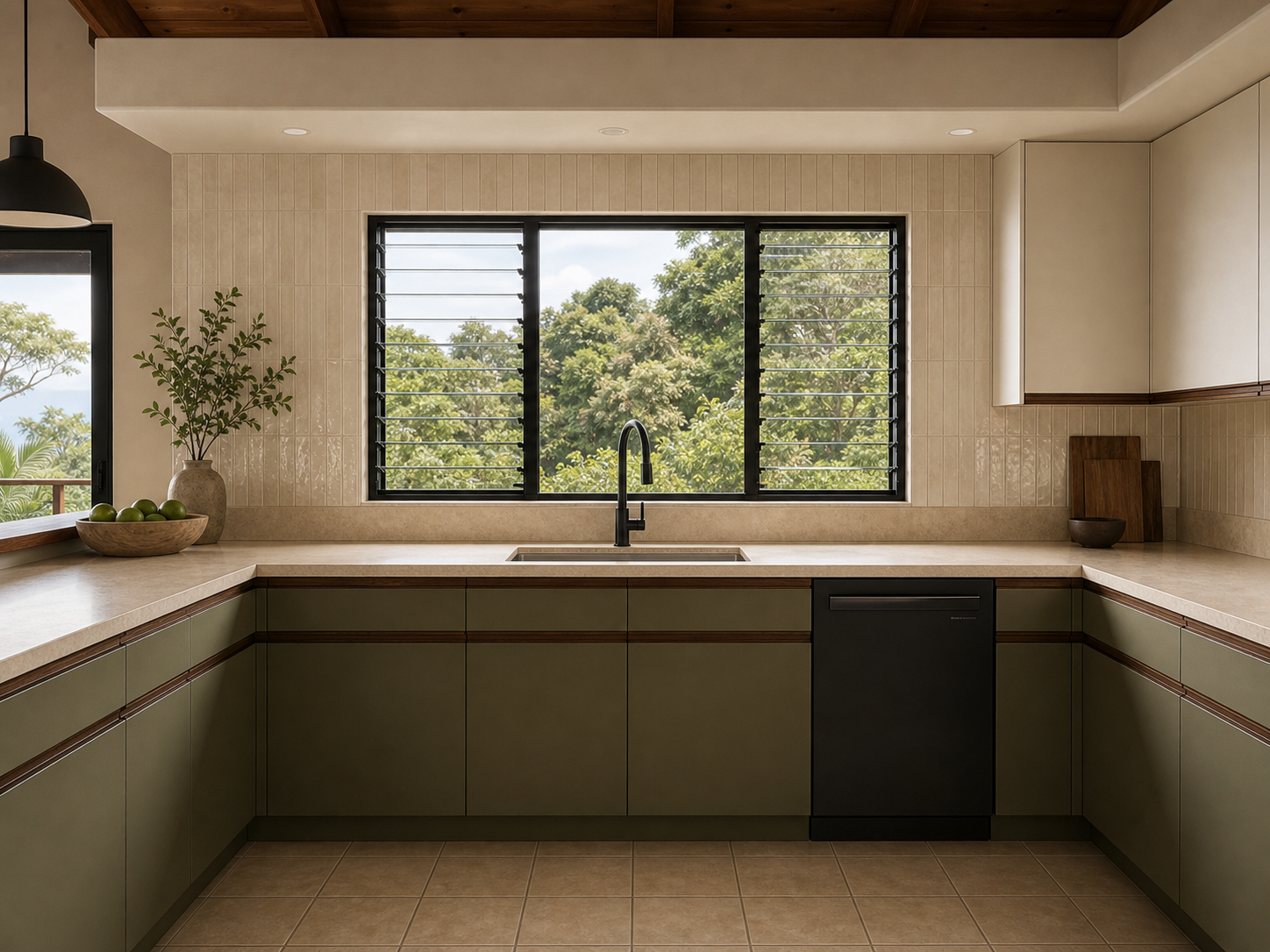
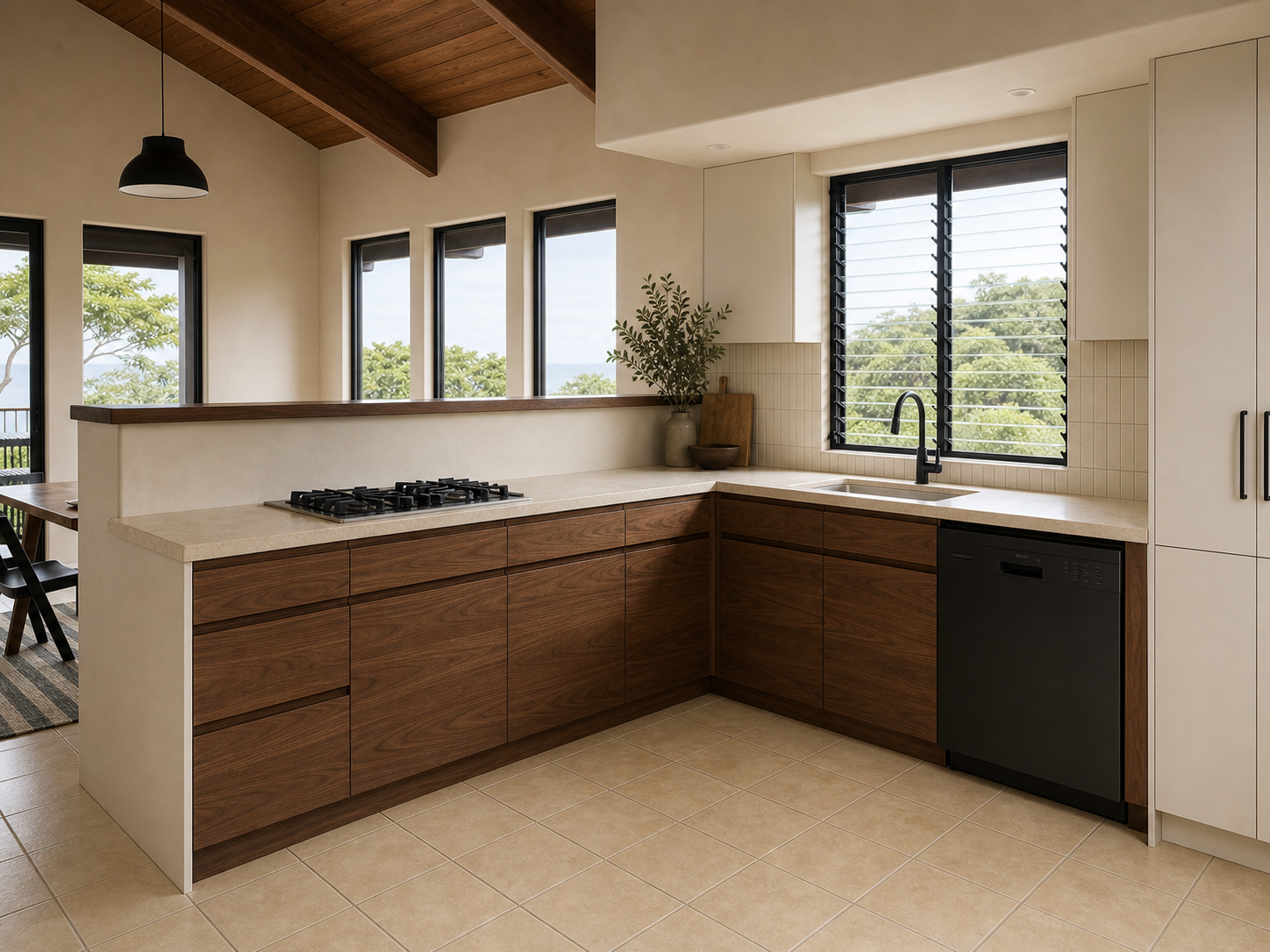
Render-quality redesign studies for Paul's kitchen direction: each keeps the beige tile floor, black louvered windows, warm wood context, integrated dark appliances, and clean counters while varying the cabinet refacing and backsplash height.
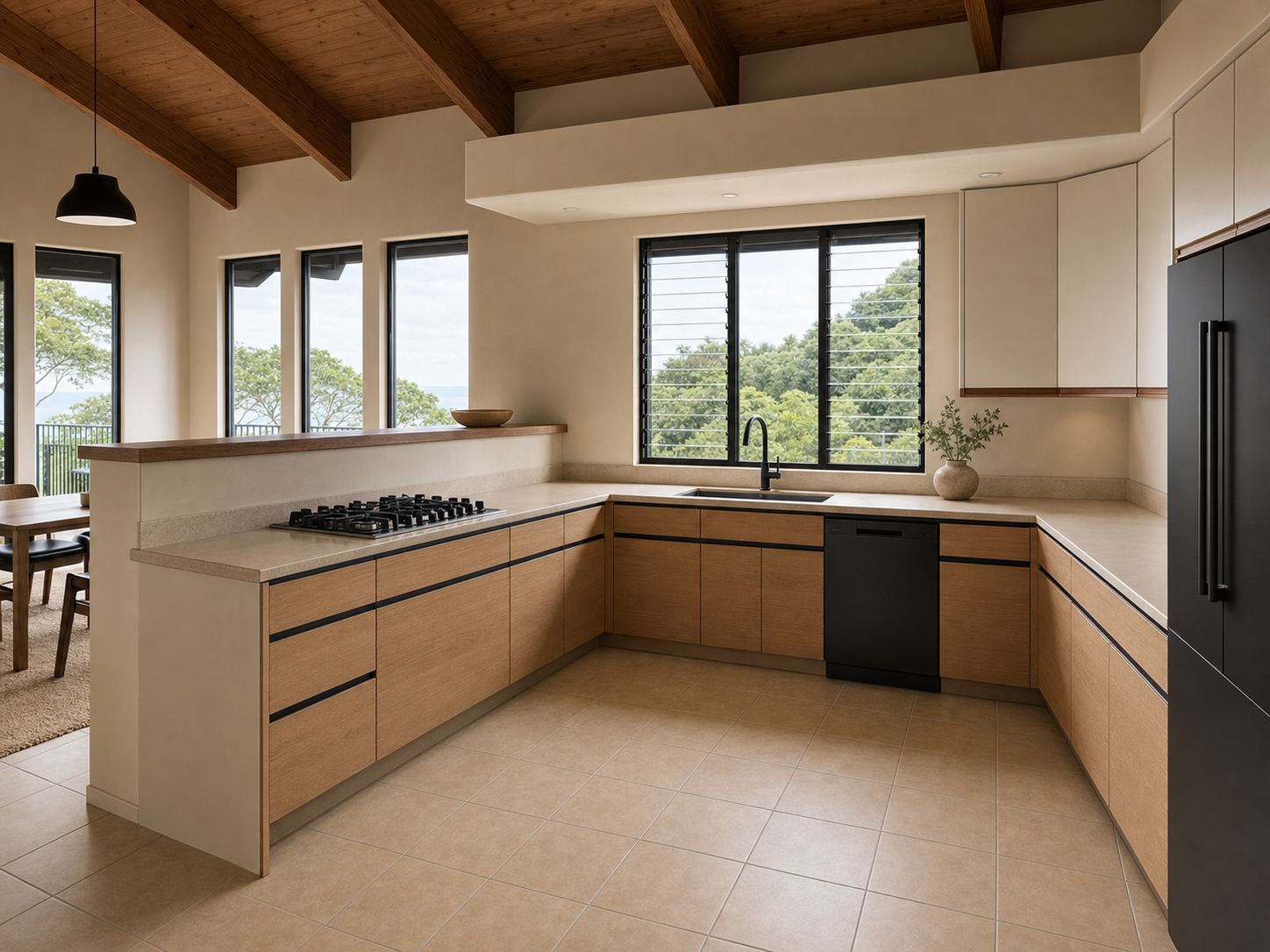
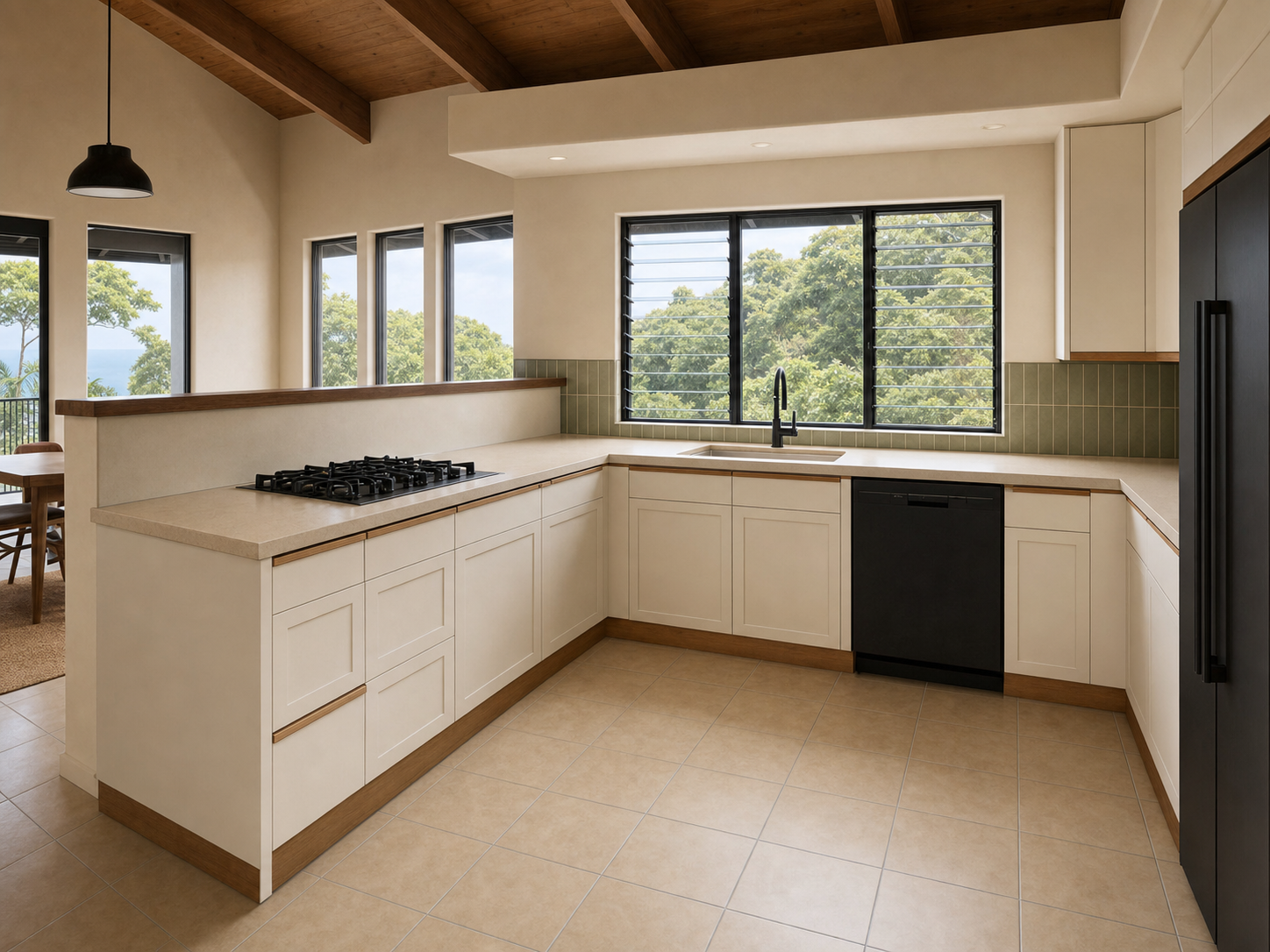
Warm oak slab fronts replace the old cream-and-wood rails while the olive tile stays at normal counter-to-window height. Black integrated appliances keep the counter run quiet.
Cabinets: warm oak slab. Backsplash: standard-height olive vertical tile.
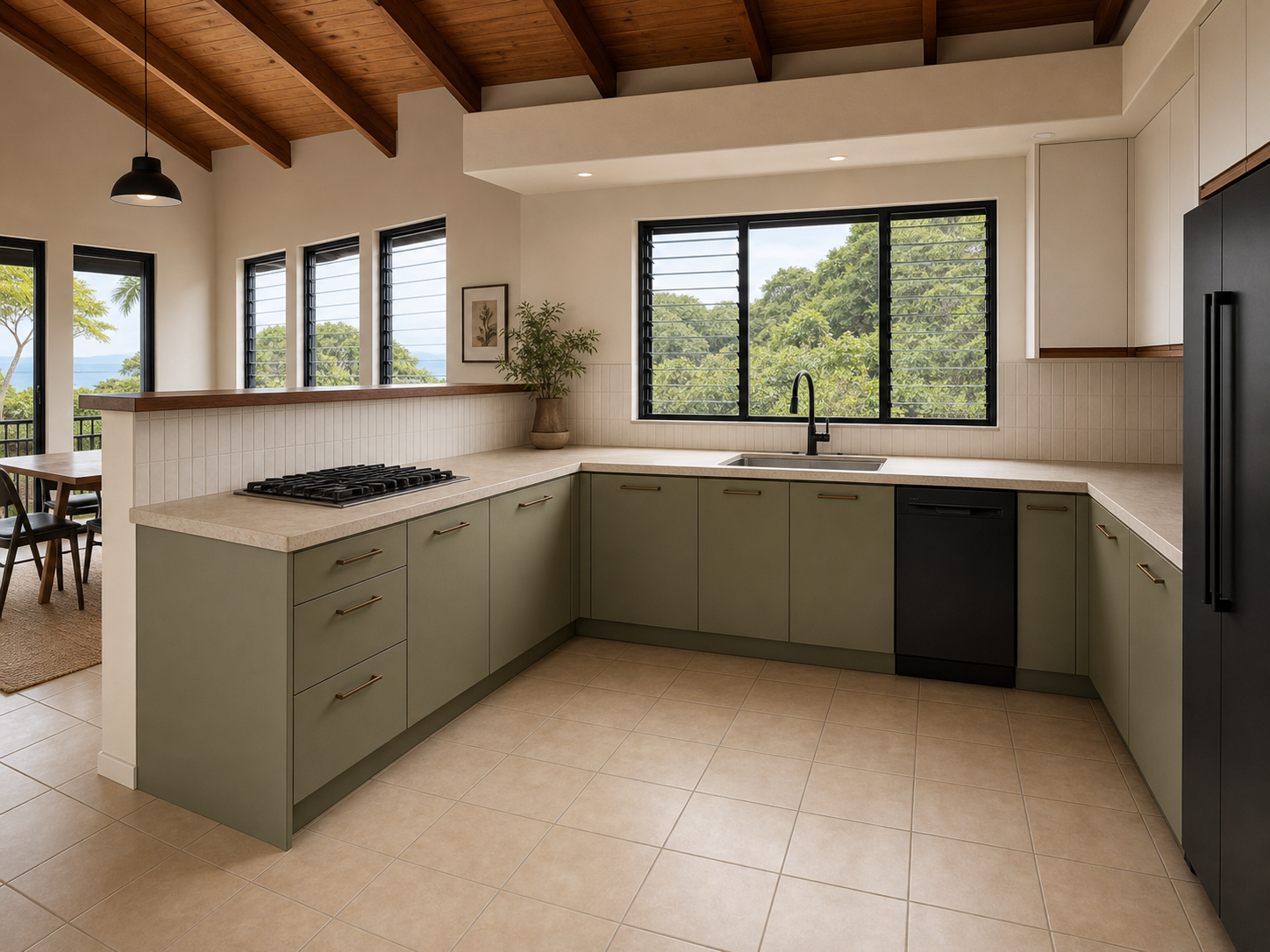
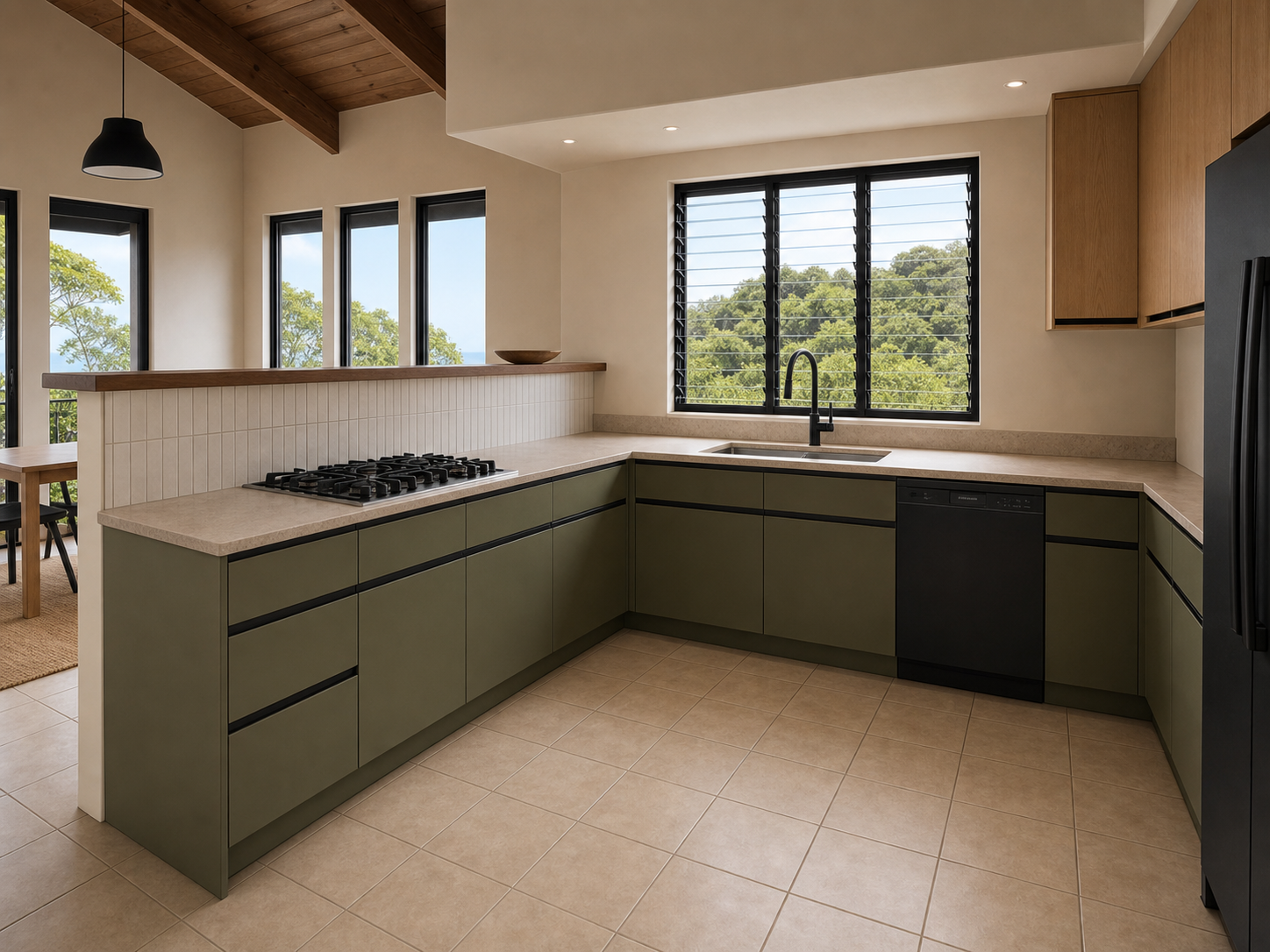
Olive painted lowers ground the sink wall with warm-white uppers above. The cream vertical tile climbs around the window, making the backsplash a full-height architectural field.
Cabinets: olive lowers with warm-white uppers. Backsplash: full-height cream tile wall.
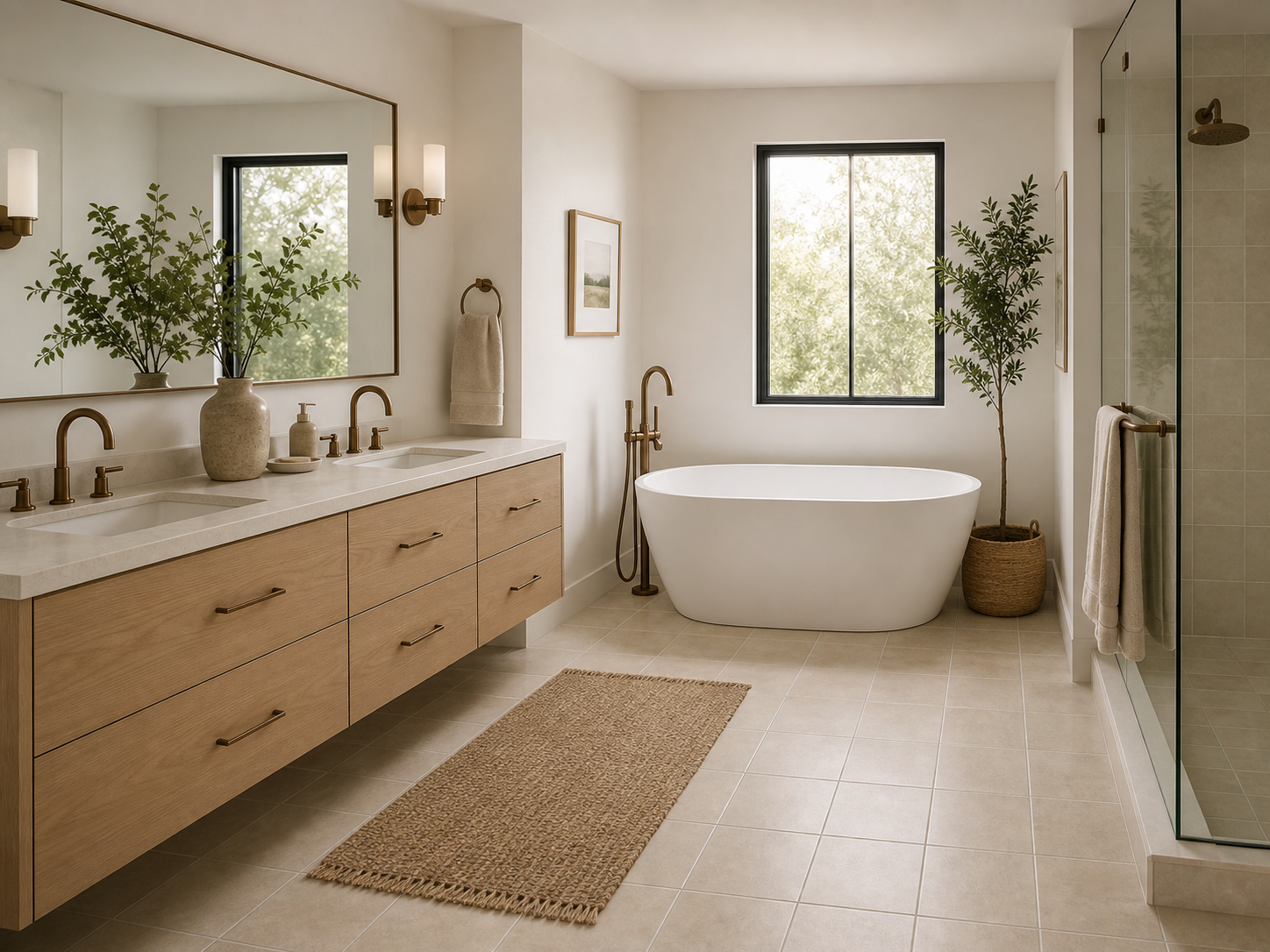
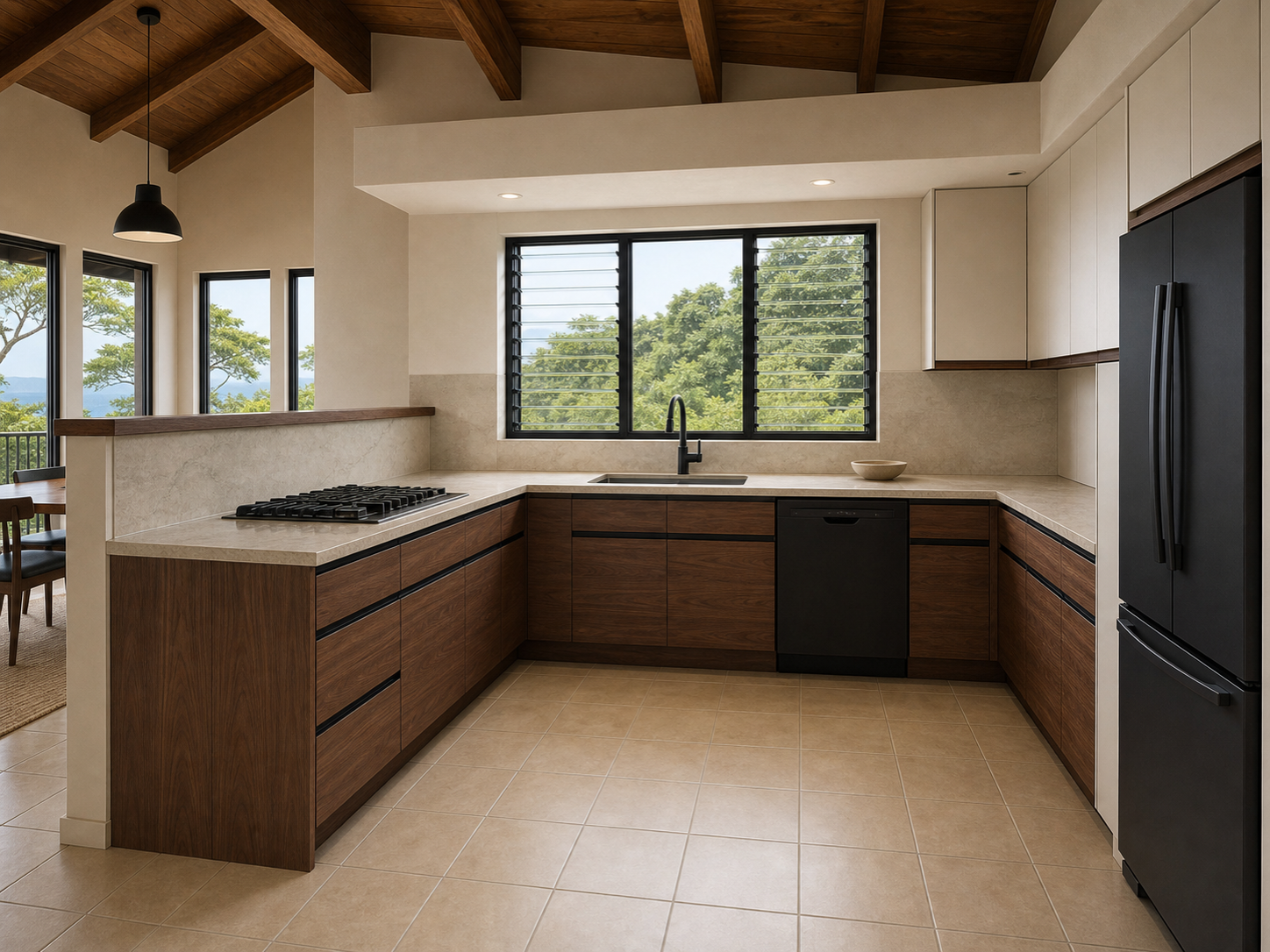
Walnut lowers give the beige floor a richer material partner. The cream tile is deliberately partial around the sink and short return, leaving warm plaster above.
Cabinets: walnut lowers with warm-white tall fronts. Backsplash: partial vertical tile field.
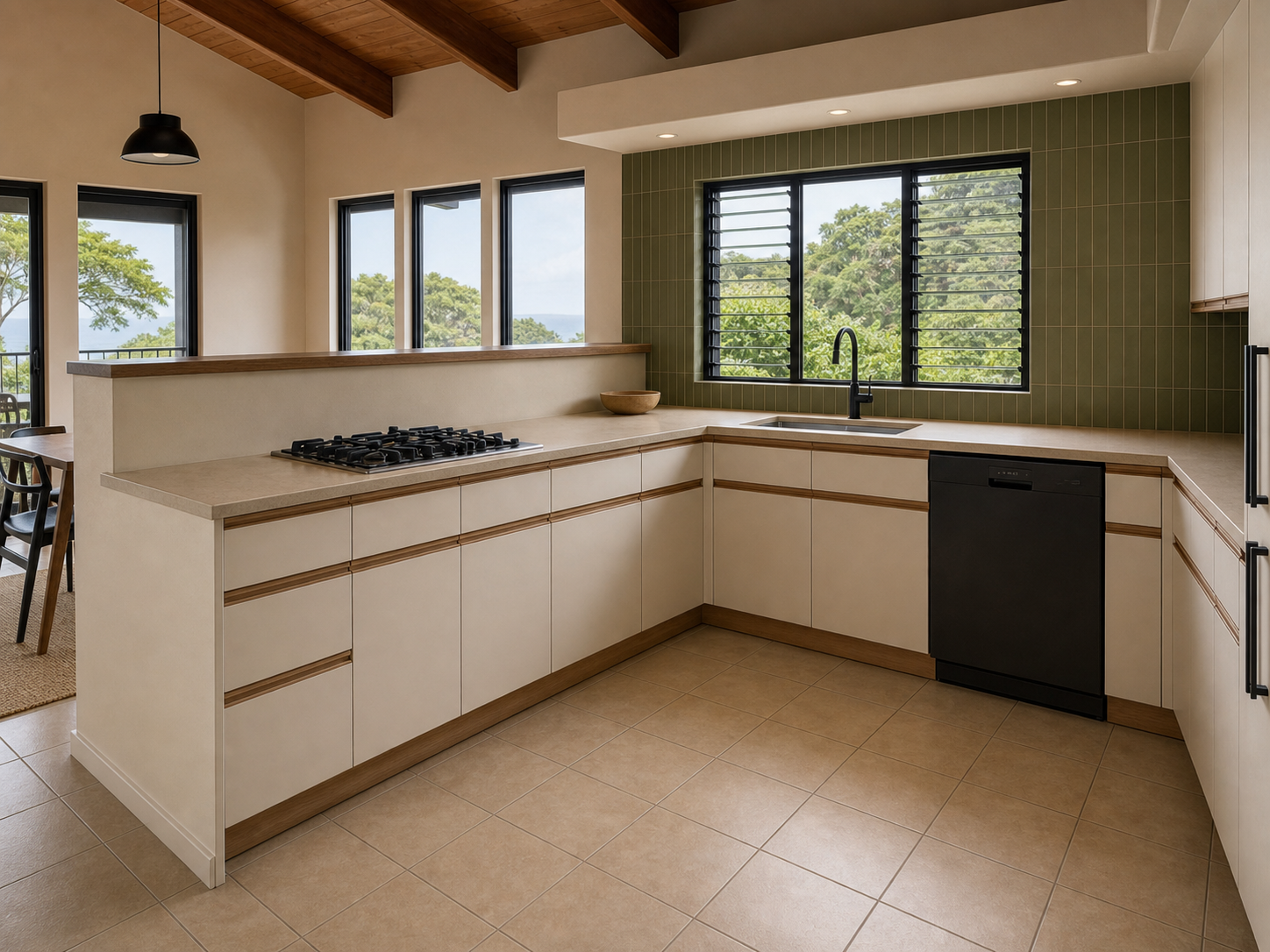
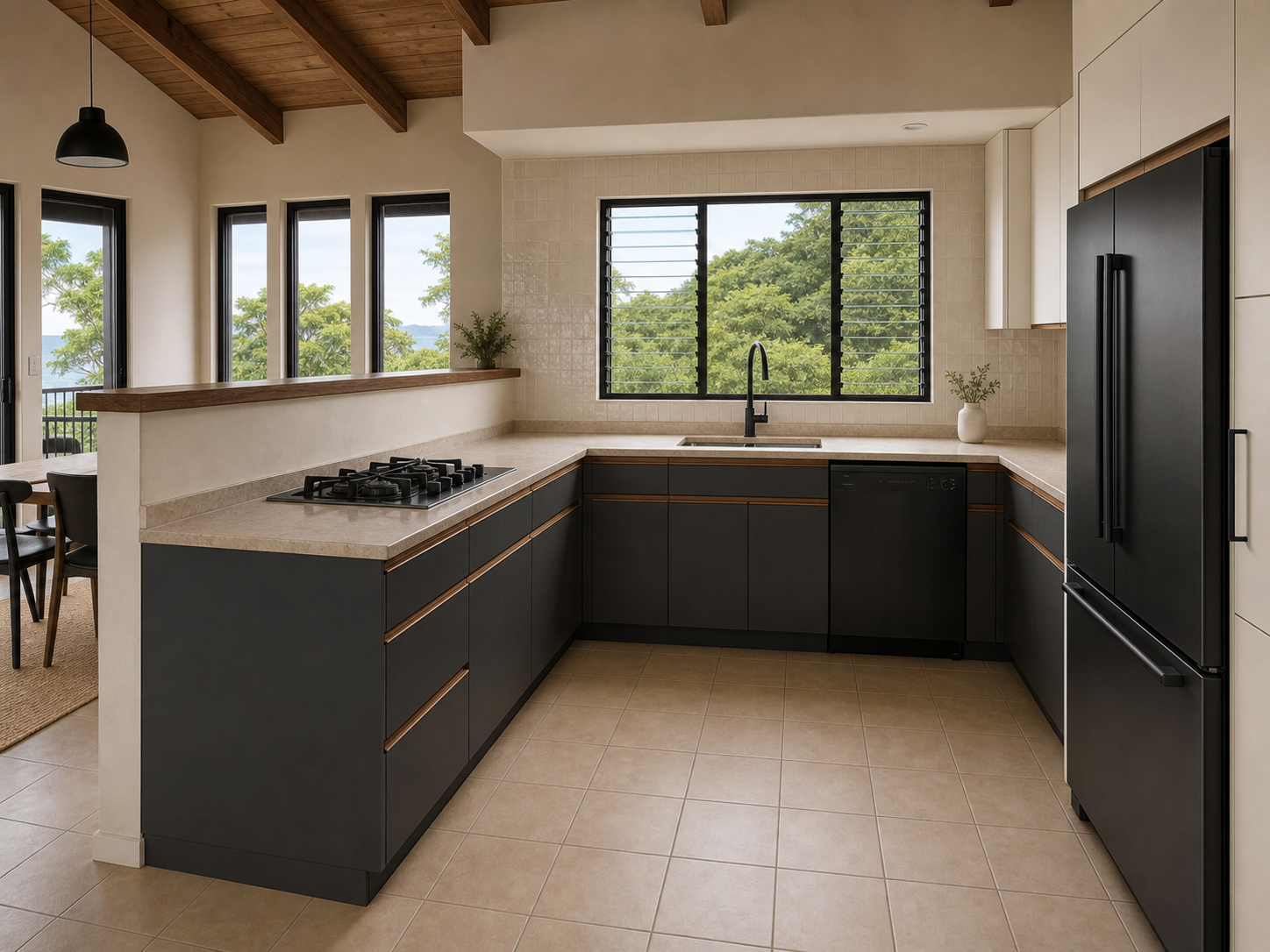
Warm-white slab fronts stay quiet while olive vertical tile becomes the main feature around the sink window. The peninsula, soffit, beige floor, and black windows stay in ordinary kitchen proportions.
Cabinets: warm-white slab with oak pulls. Backsplash: full-height olive sink wall.
The simplest backsplash option is a short stone curb with plaster above. Natural oak slab lowers do the material work without changing the kitchen's actual L-shaped footprint.
Cabinets: natural oak slab lowers. Backsplash: 4-6 inch cream stone curb.
Muted sage lowers add color at cabinet height while the pale vertical tile stays contained between counter and upper/soffit lines. It reads as refacing, not a full reconstruction.
Cabinets: muted sage lowers with white uppers. Backsplash: counter-to-upper cream tile.
Walnut lowers are paired with a quiet limestone slab feature zone, keeping the existing refrigerator wall, peninsula cooktop, and window wall believable.
Cabinets: walnut lowers with warm-white uppers. Backsplash: restrained limestone slab zone.
Charcoal lowers sharpen the beige tile floor while oak pulls keep the room warm. The tile rises only to the window-height zone, then returns to plaster.
Cabinets: charcoal lowers with oak accents. Backsplash: window-height cream tile zone.
Olive slab lowers and oak upper planes keep the palette grounded. The backsplash emphasis shifts to the cooktop/peninsula side instead of covering every wall.
Cabinets: olive lowers with oak upper faces. Backsplash: contained cooktop-zone feature.
A narrow-frame shaker-slab front is the most traditional option in the set. Pale sage tile stays at standard backsplash height and leaves the walls and soffit quiet.
Cabinets: warm-white shaker-slab. Backsplash: standard-height pale sage tile.
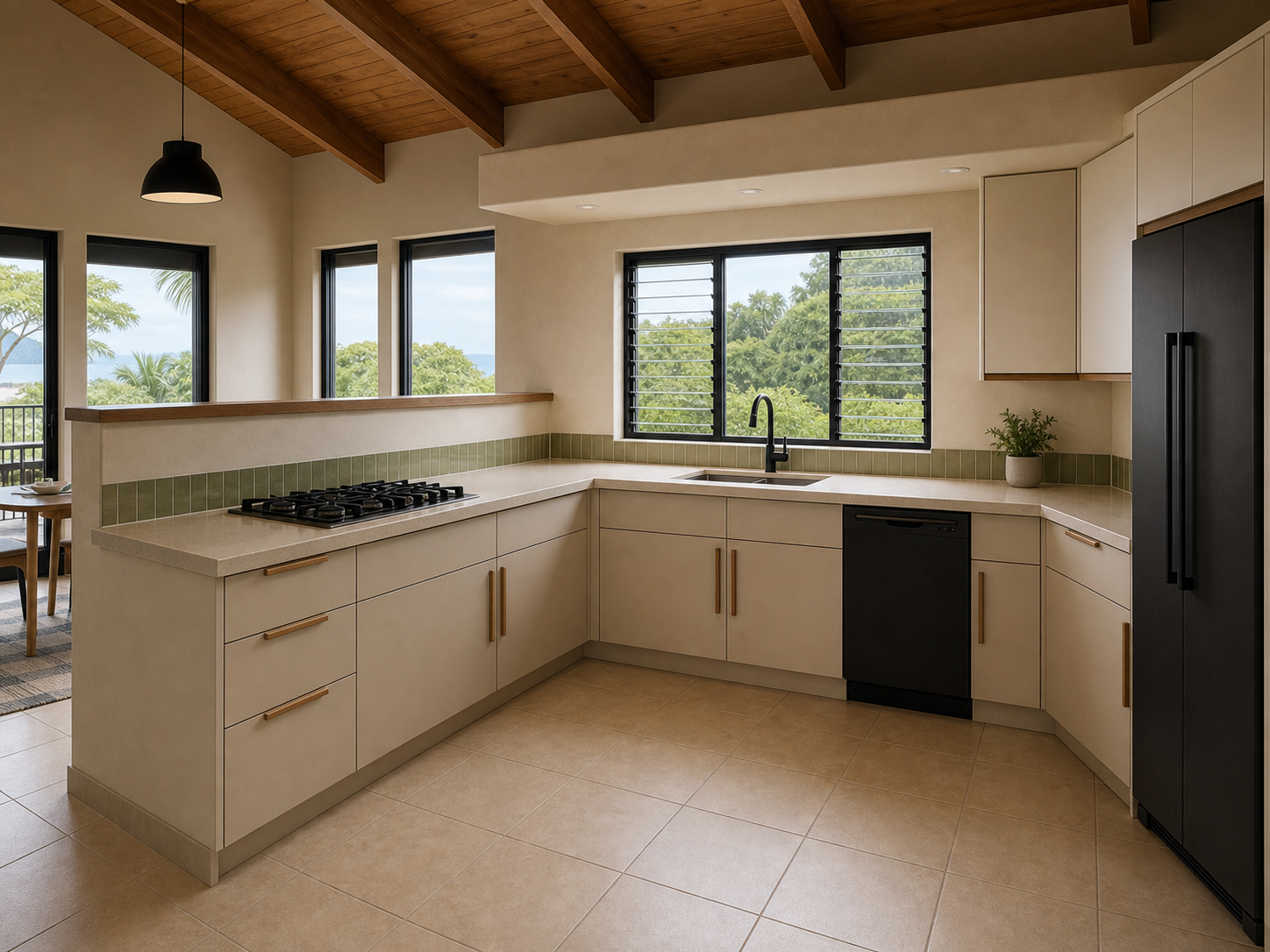
Soft greige fronts are deliberately restrained, with oak pulls adding enough warmth against the beige floor. The olive note becomes a low band rather than a full wall.
Cabinets: soft greige slab with oak pulls. Backsplash: low muted olive band.
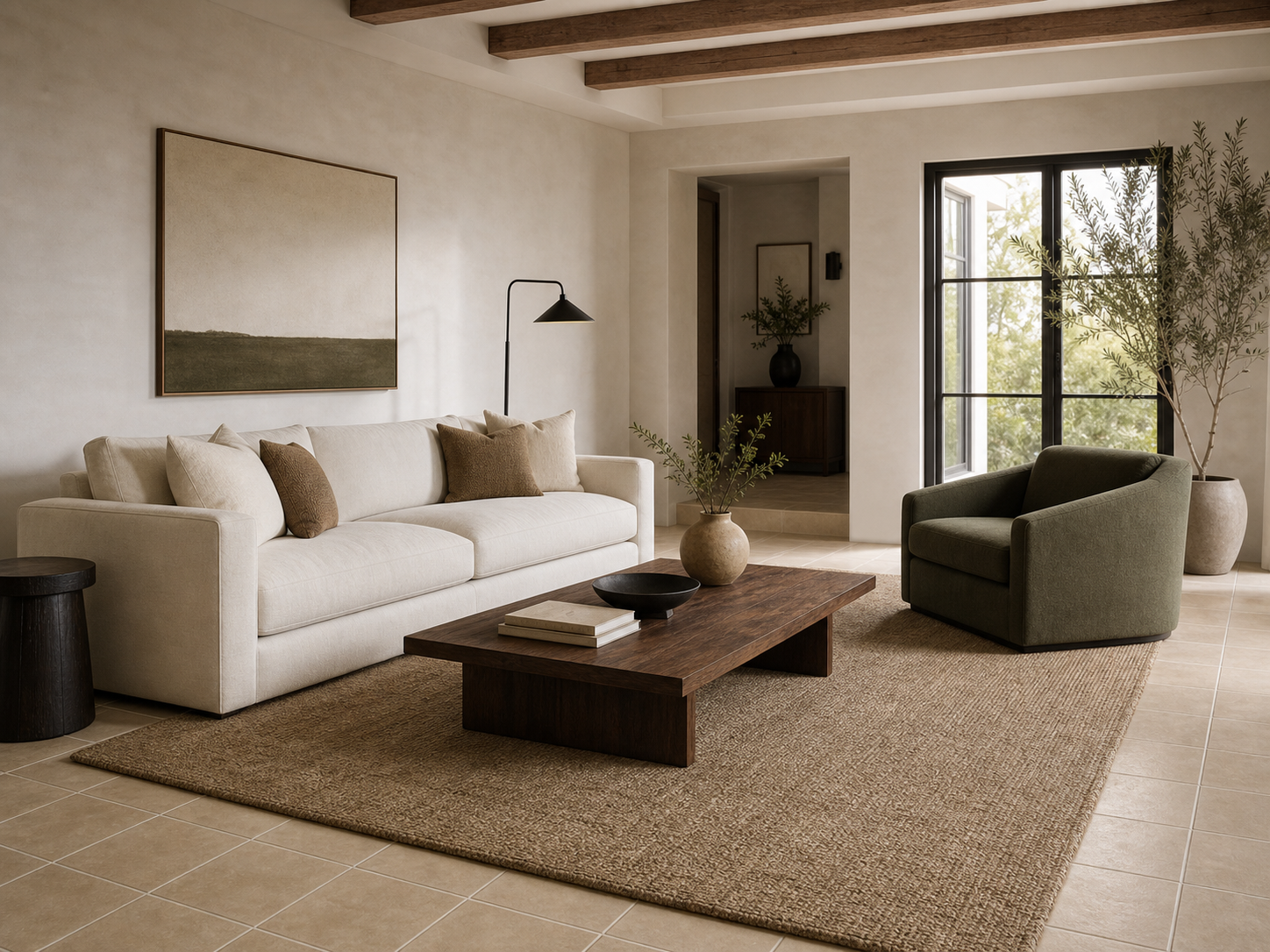
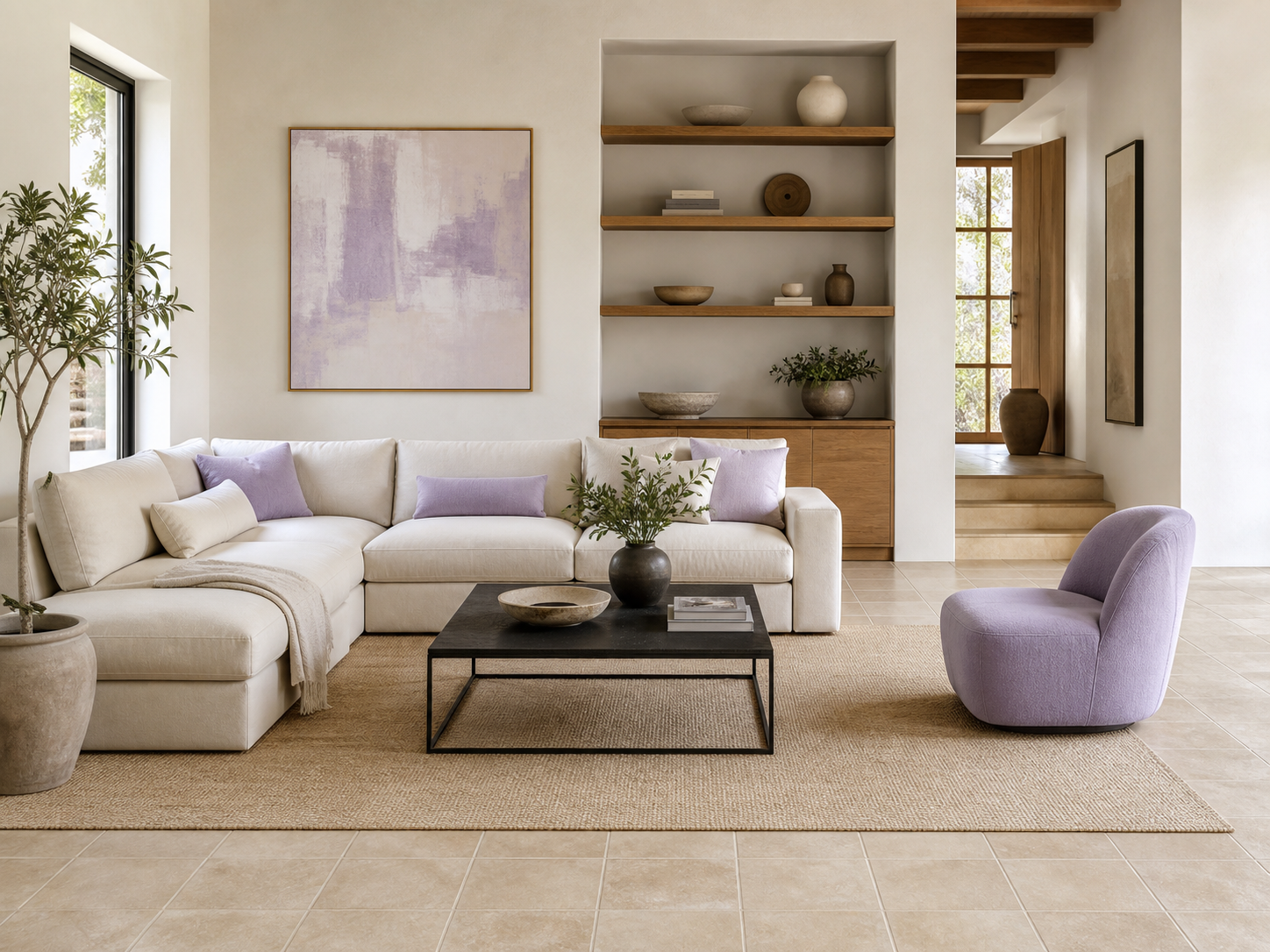
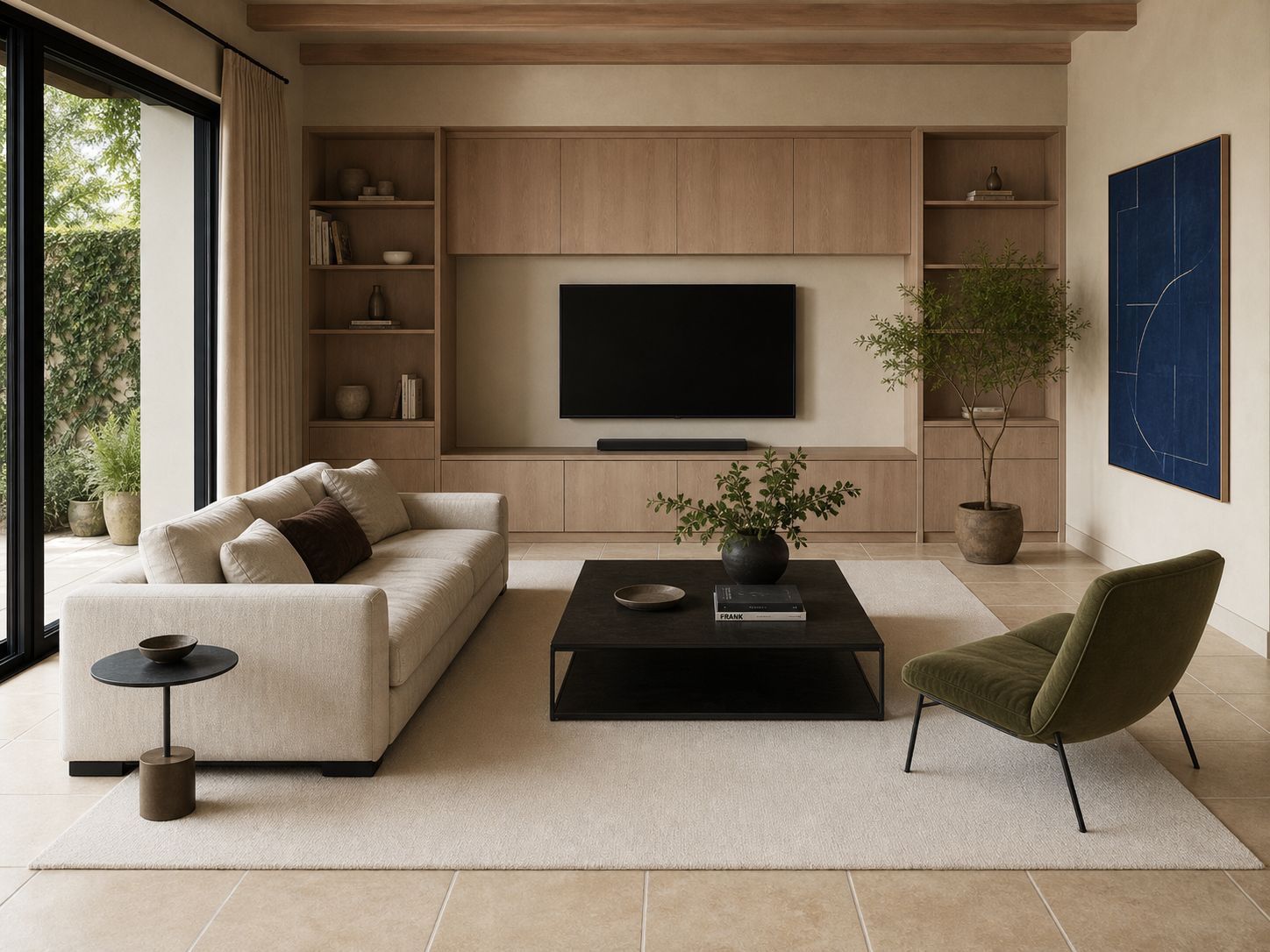
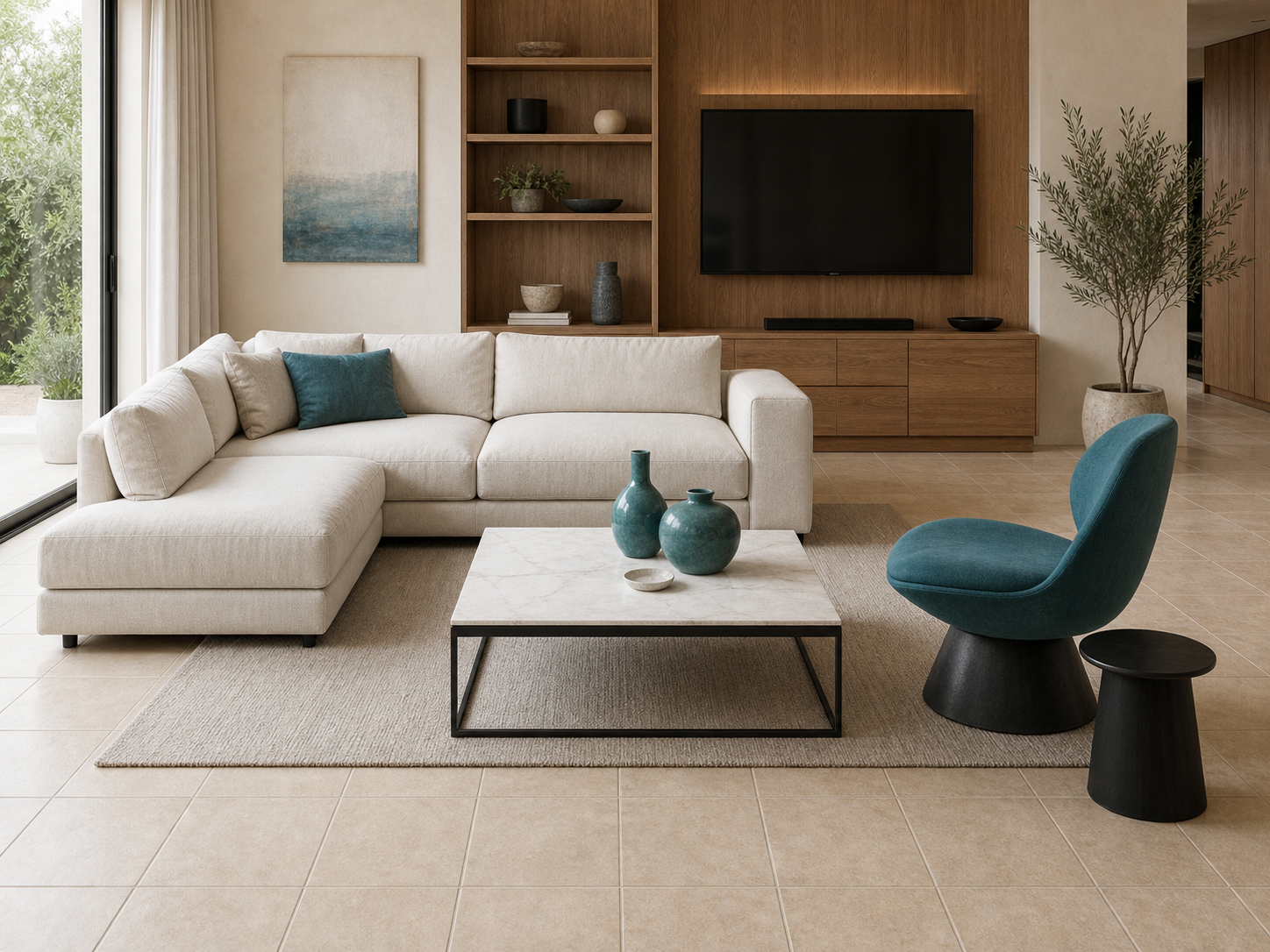
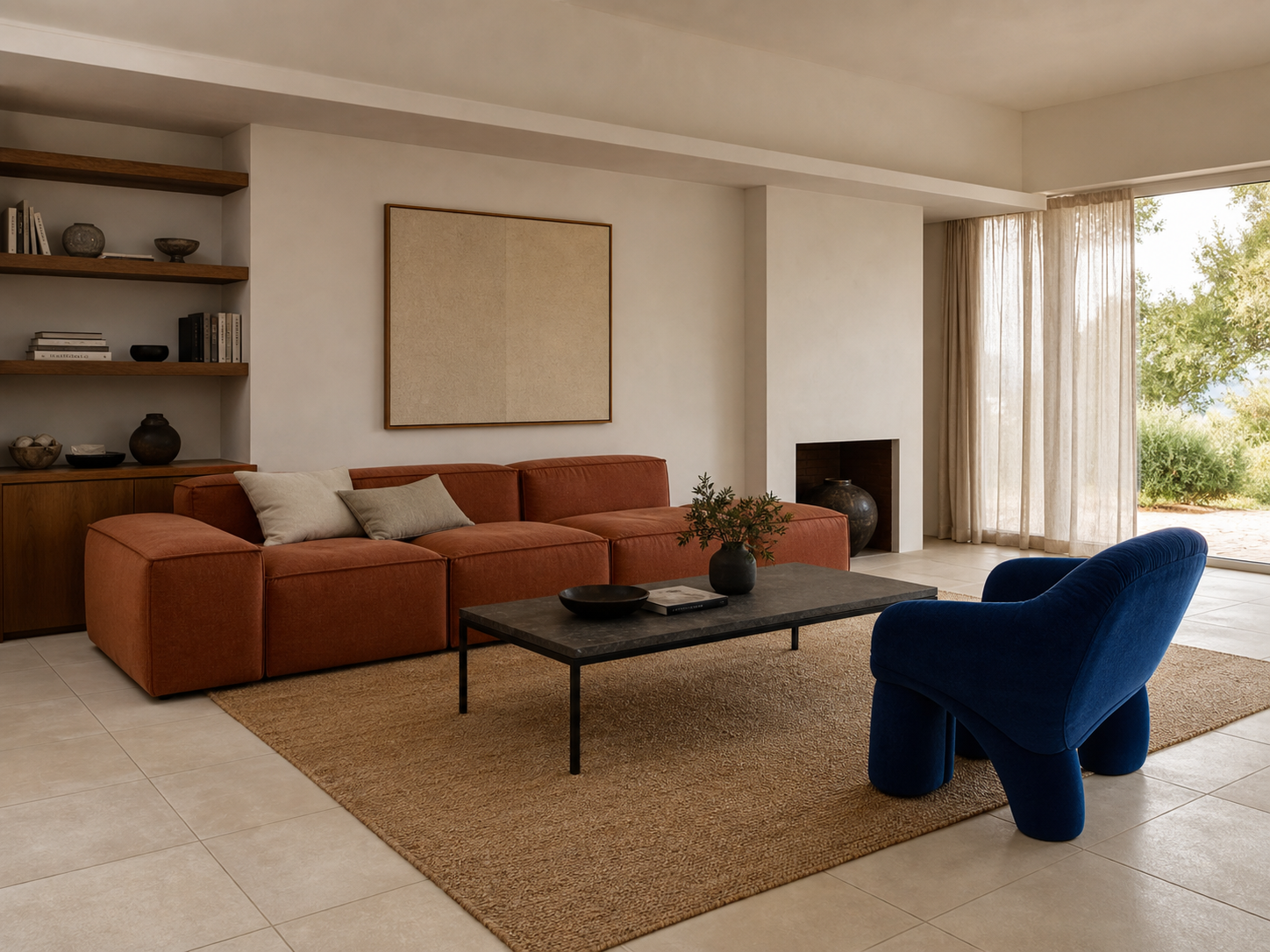
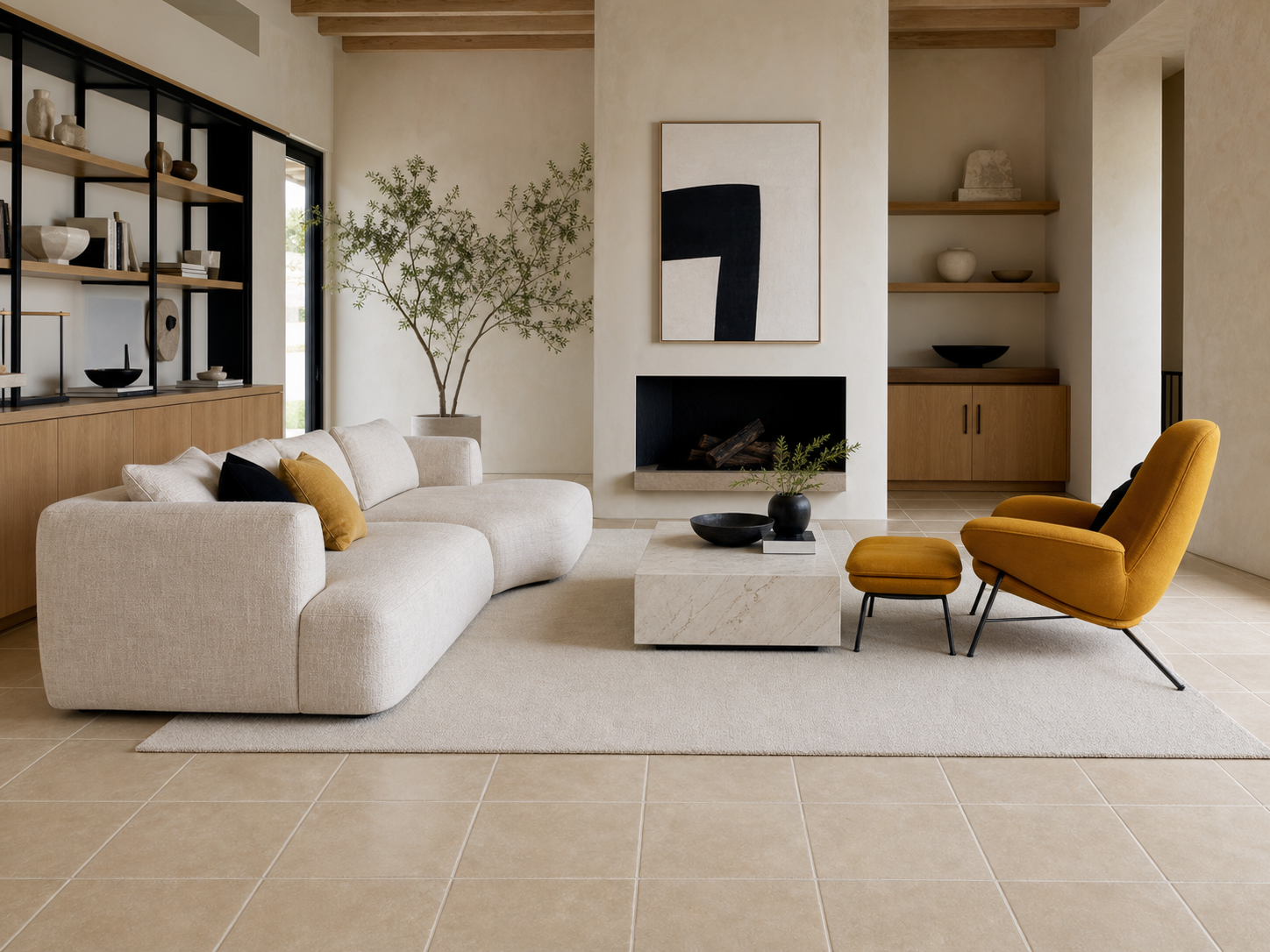
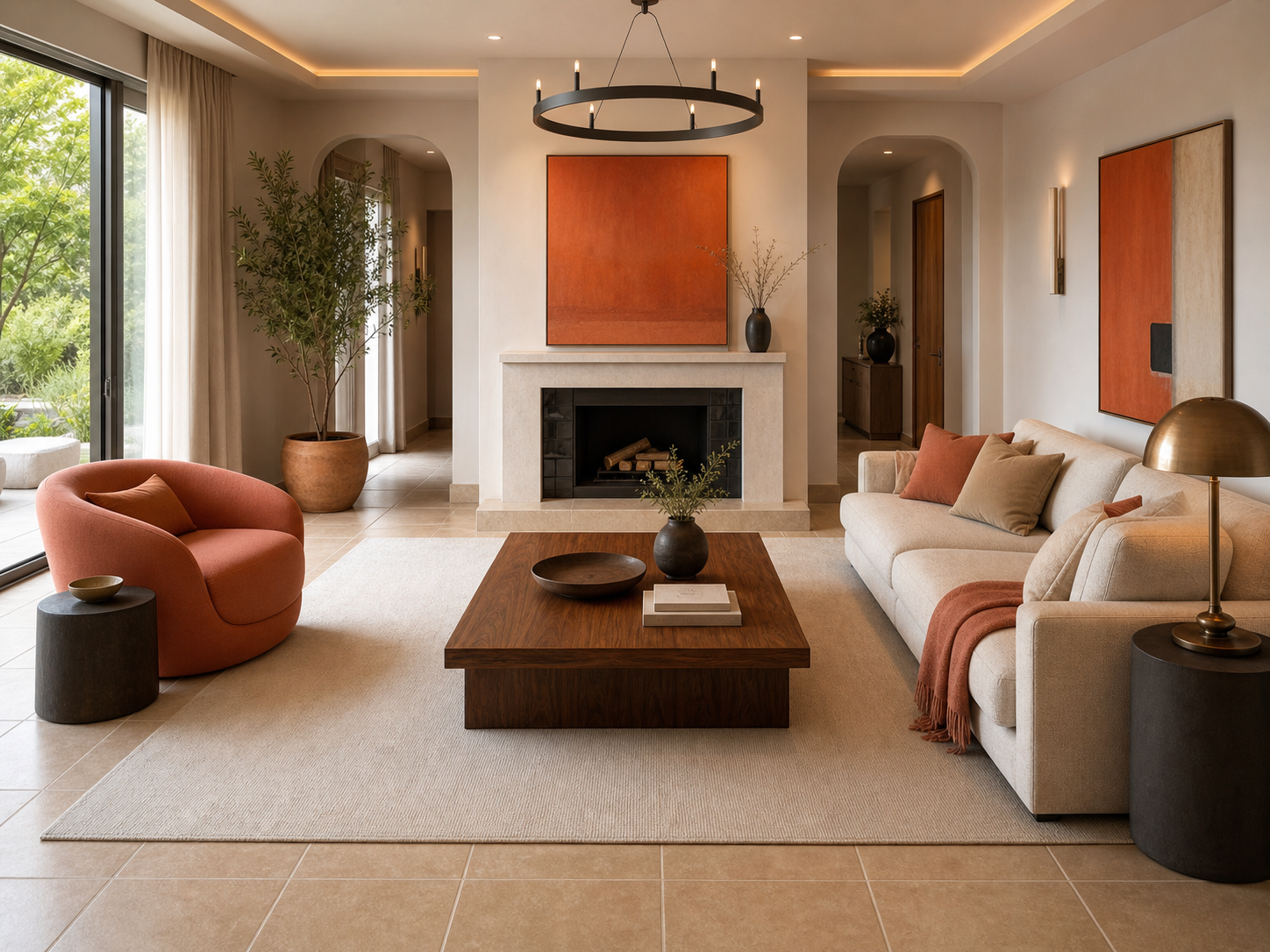
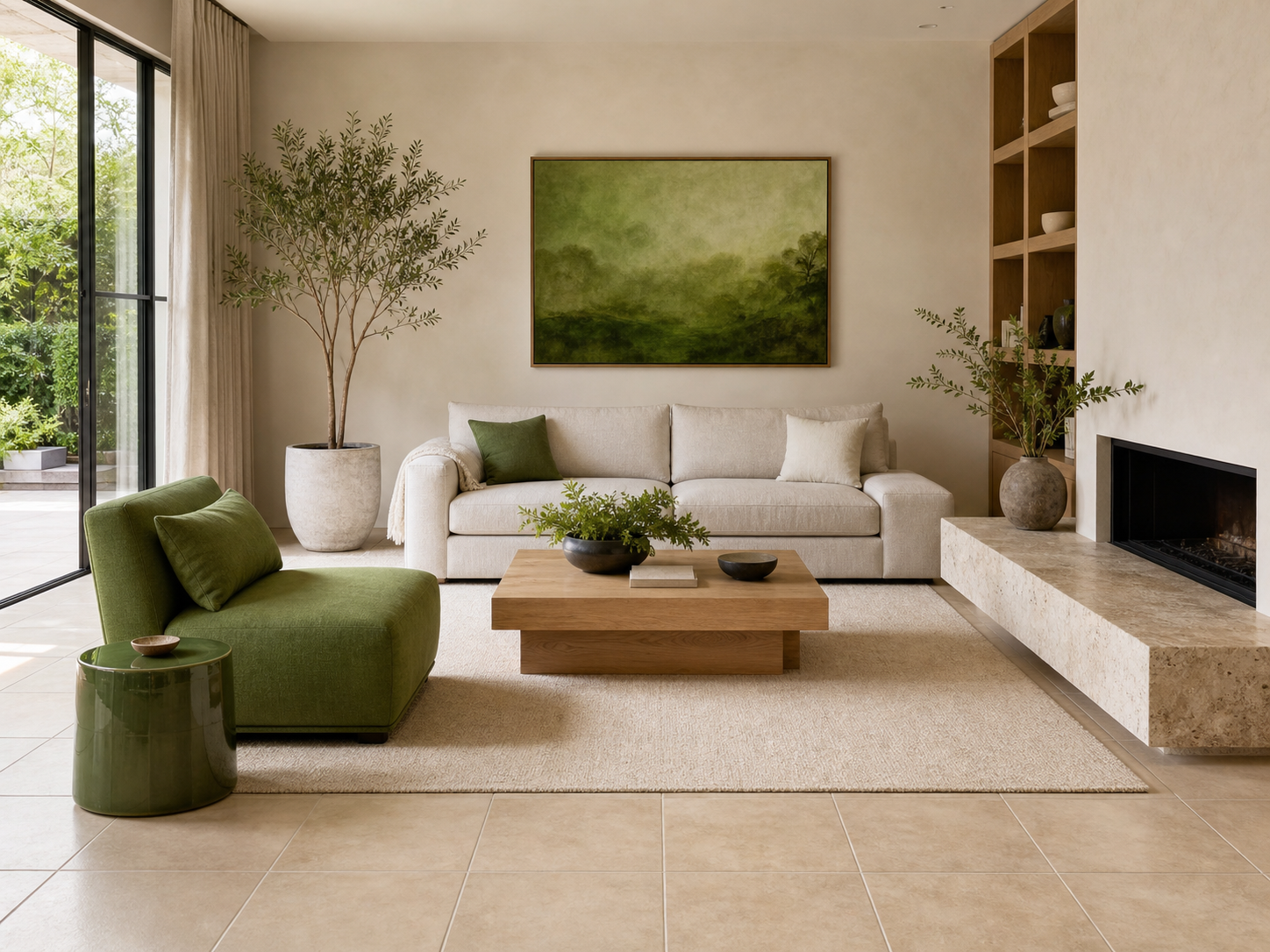
The blue vintage-carpet direction is gone. These use plain rugs, modern upholstery, blackened metal, wood, plaster, saturated accents, brighter greens, and restrained cathedral ceiling warmth.
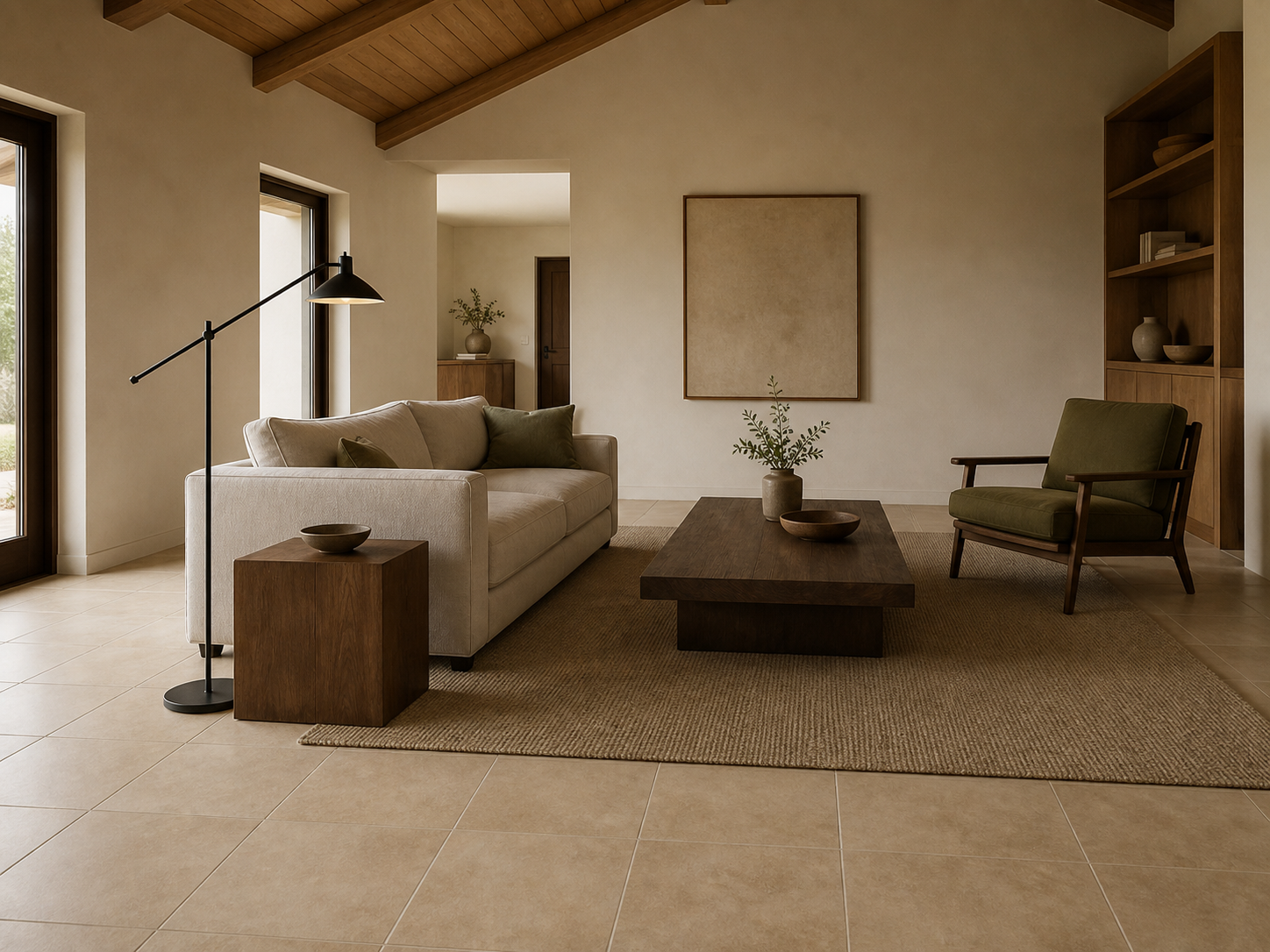
The rug holds the seating area while linen, walnut, black metal, and olive upholstery keep the tile from reading builder beige.
Keep: tile at the perimeter. Avoid: tiny rugs and overstuffed seating.
This replaces the disliked blue-rug direction with gentler color. The rug stays plain; the chair and art add lift without darkening the room.
Keep: rug oversized and simple. Avoid: antique blue patterns.
Warm plaster and oak make the floor feel settled, while cobalt appears as a clean art accent instead of a rug pattern.
Keep: plain warm-white rug. Add: one strong artwork and blackened steel.
A plain rug controls the tile field. Turquoise, teal, oak, white stone, and blackened metal add color without turning the room into a pattern story.
Keep: visible beige tile border. Avoid: patterned rugs and decorative clutter.
Color feels modern when it is blocked into simple forms. Oak shelves, plaster, and black metal keep the palette architectural.
Keep: rug low and plain. Add: saturated color in sculptural shapes.
Black, white, and oak give the beige tile structure. One saffron chair adds saturated color without making the palette heavy.
Keep: beige tile as the base. Add: black stone, bronze sconces, oak built-ins.
Orange reads cleaner when it is in simple upholstery and large art, with linen, walnut, black steel, and a plain rug doing the quiet work.
Keep: tile at the perimeter. Add: warm color in a few confident pieces.
A clearer green can feel sophisticated when the rest of the room stays natural: linen, oak, stone, black steel, and warm plaster.
Keep: the beige grid visible. Add: green as upholstery and art, not wall-to-wall color.
A natural rug holds the seating while olive, walnut, blackened metal, and the ceiling beams give the beige tile enough structure.
Keep: tile border visible. Add: clerestory light and a simple natural rug.
Saturated color stays controlled in upholstery and art. The plain rug, wood ceiling, oak table, and beige tile do the quiet work.
Keep: floor and ceiling both visible. Avoid: busy rugs or small scattered color.
The plain rug controls the seating zone while the beige tile border, walnut, olive, and small band of ceiling keep the room grounded.
Keep: tile visible at the rug edge. Add: low furniture, simple art, blackened metal.
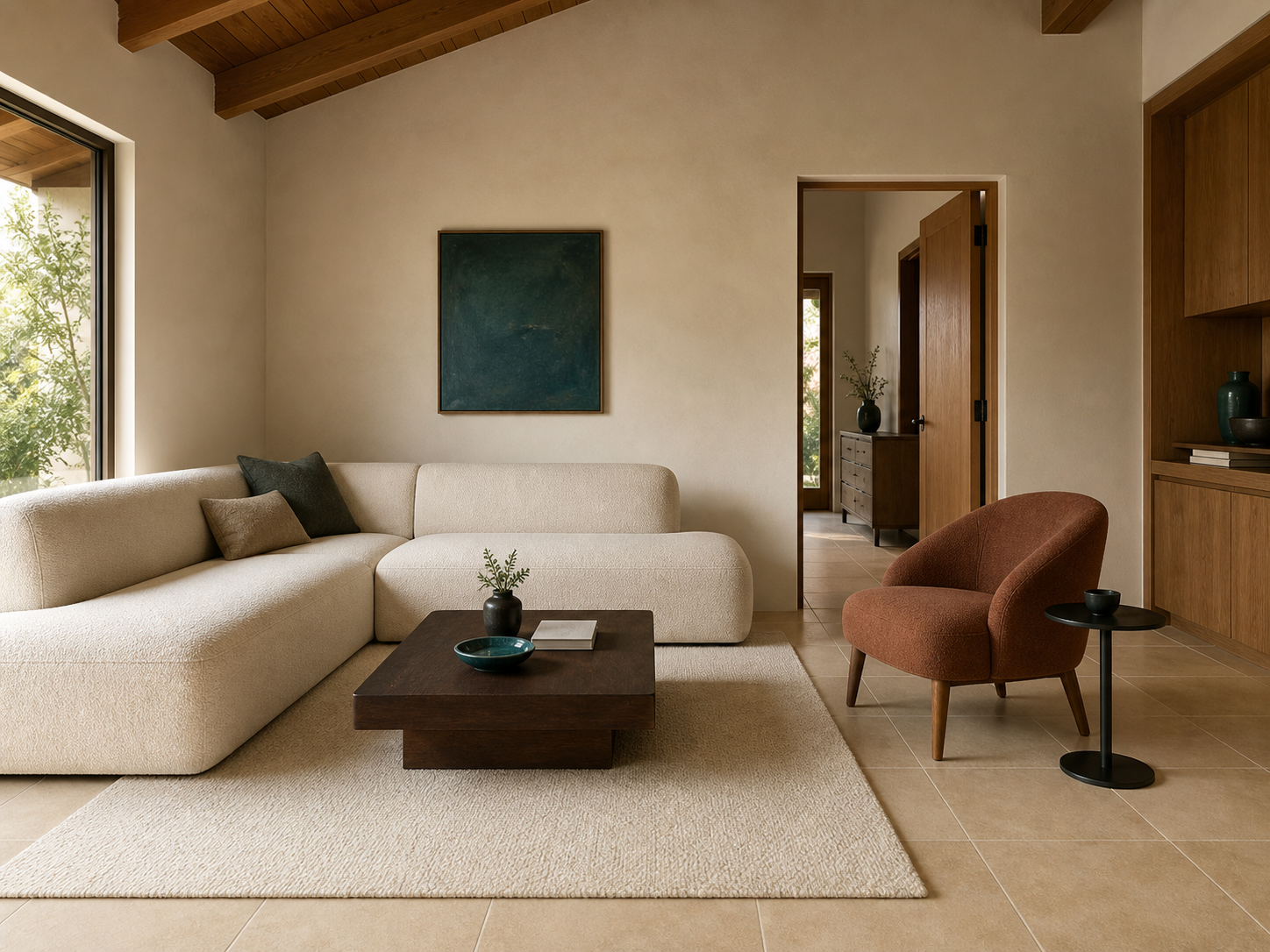
Color stays in one chair and one artwork, leaving the beige tile, ivory rug, warm plaster, and oak casework to do the calm work.
Keep: composition tight and simple. Avoid: patterned rugs and ceiling-first framing.
Use contrast and cleaner planes: oak, white stone, plaster, clear glass, black or bronze fixtures, fine terrazzo, one stronger accent surface, and visible wood ceiling structure.
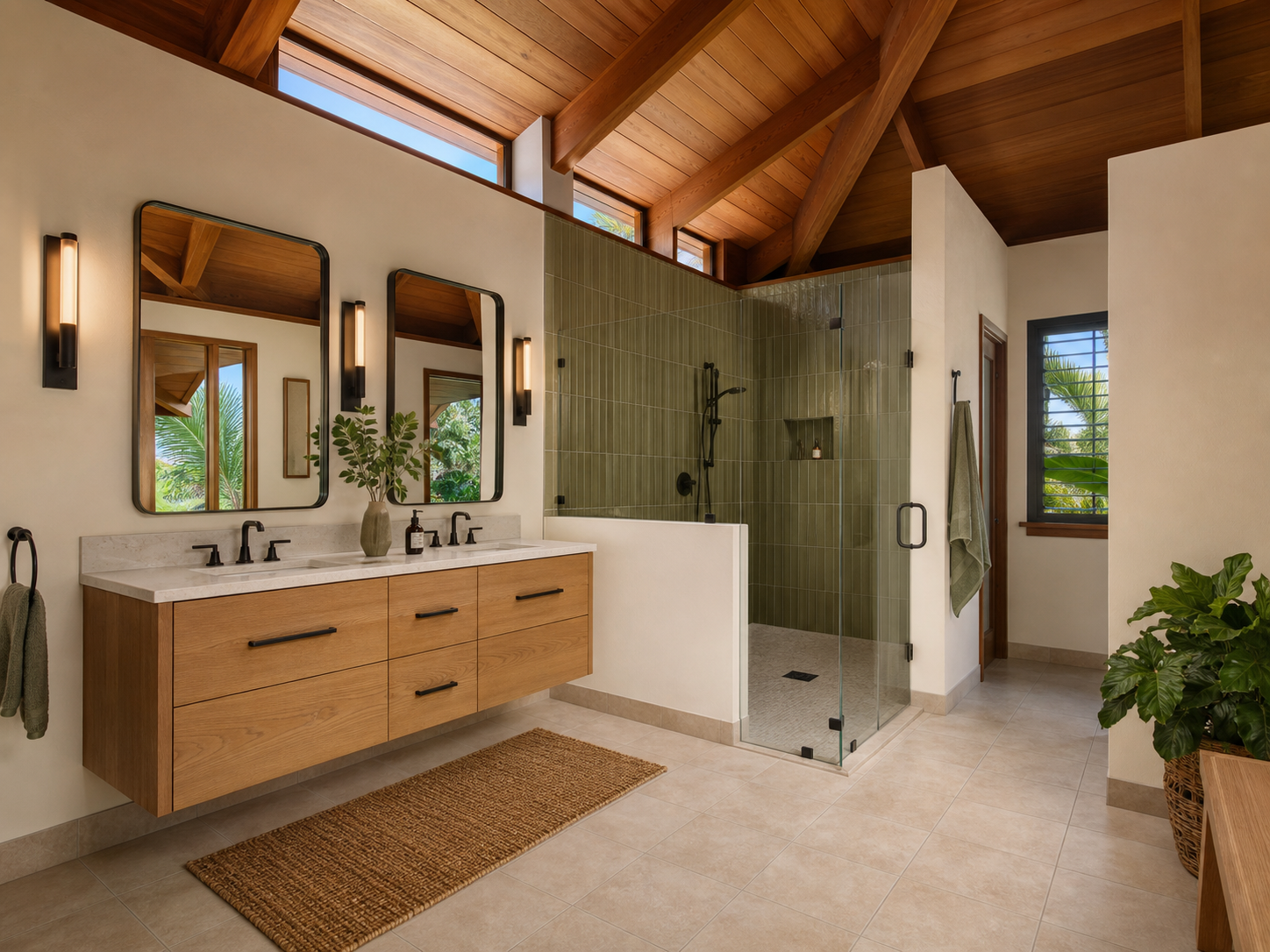
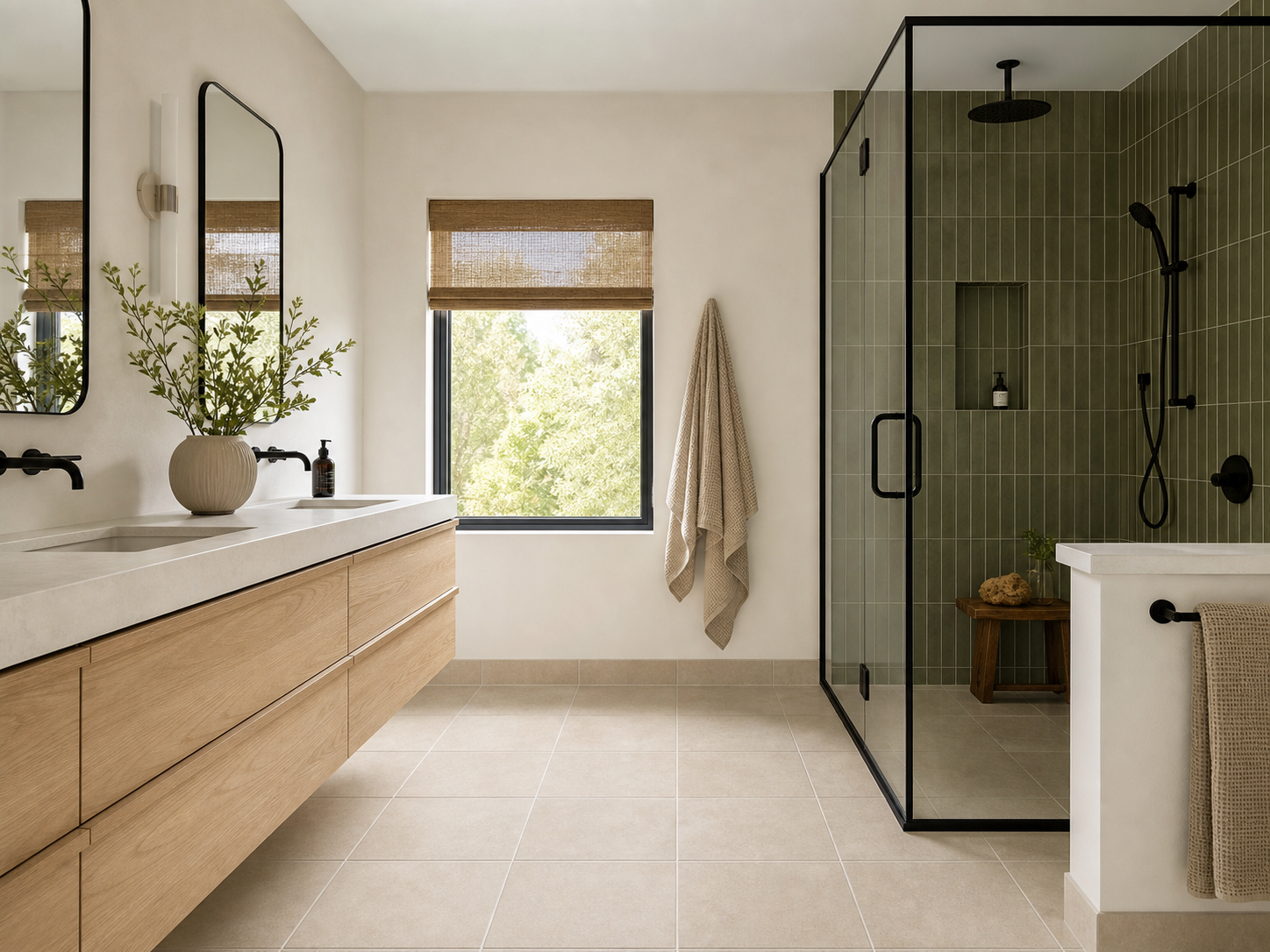
A floating oak vanity lifts the room visually. Olive vertical tile and black fixtures give the beige floor context.
Keep: floor grid clean. Add: large mirror, clear glass, white walls.
White oak, bronze, white surfaces, and a woven mat make the existing tile feel like a warm base for a cleaner room.
Keep: beige grout low contrast. Avoid: ornate vanities and tan paint.
The beige floor works when the vanity is light, the walls are warm white, and the shower brings a clean olive vertical plane.
Keep: square tile visible. Add: matte black fixtures and linen towels.
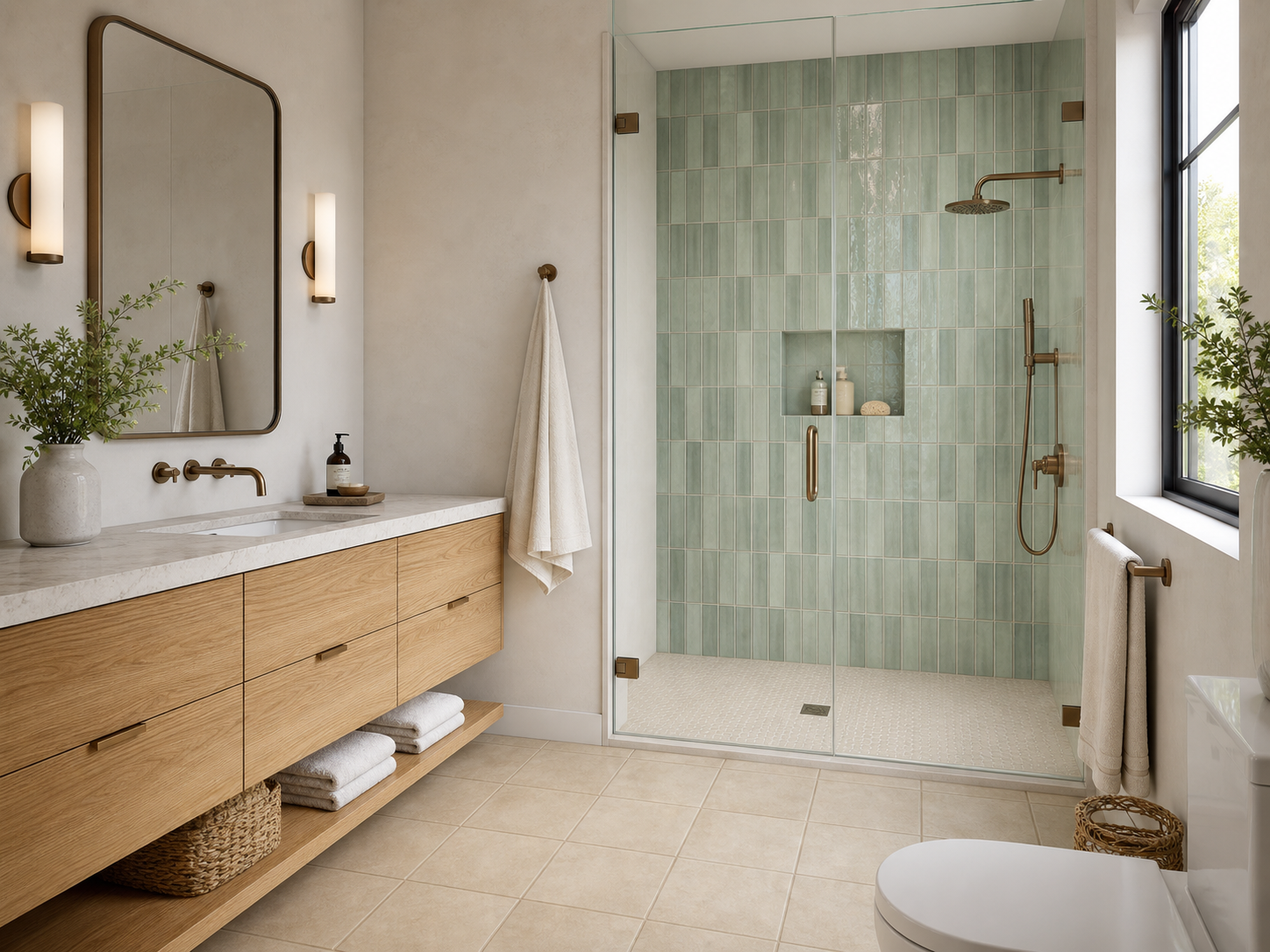
A pale green shower plane makes the beige floor look intentional. White stone, oak, bronze, and clear glass keep the room crisp.
Keep: floor untouched. Add: flat-front vanity and warm white plaster.
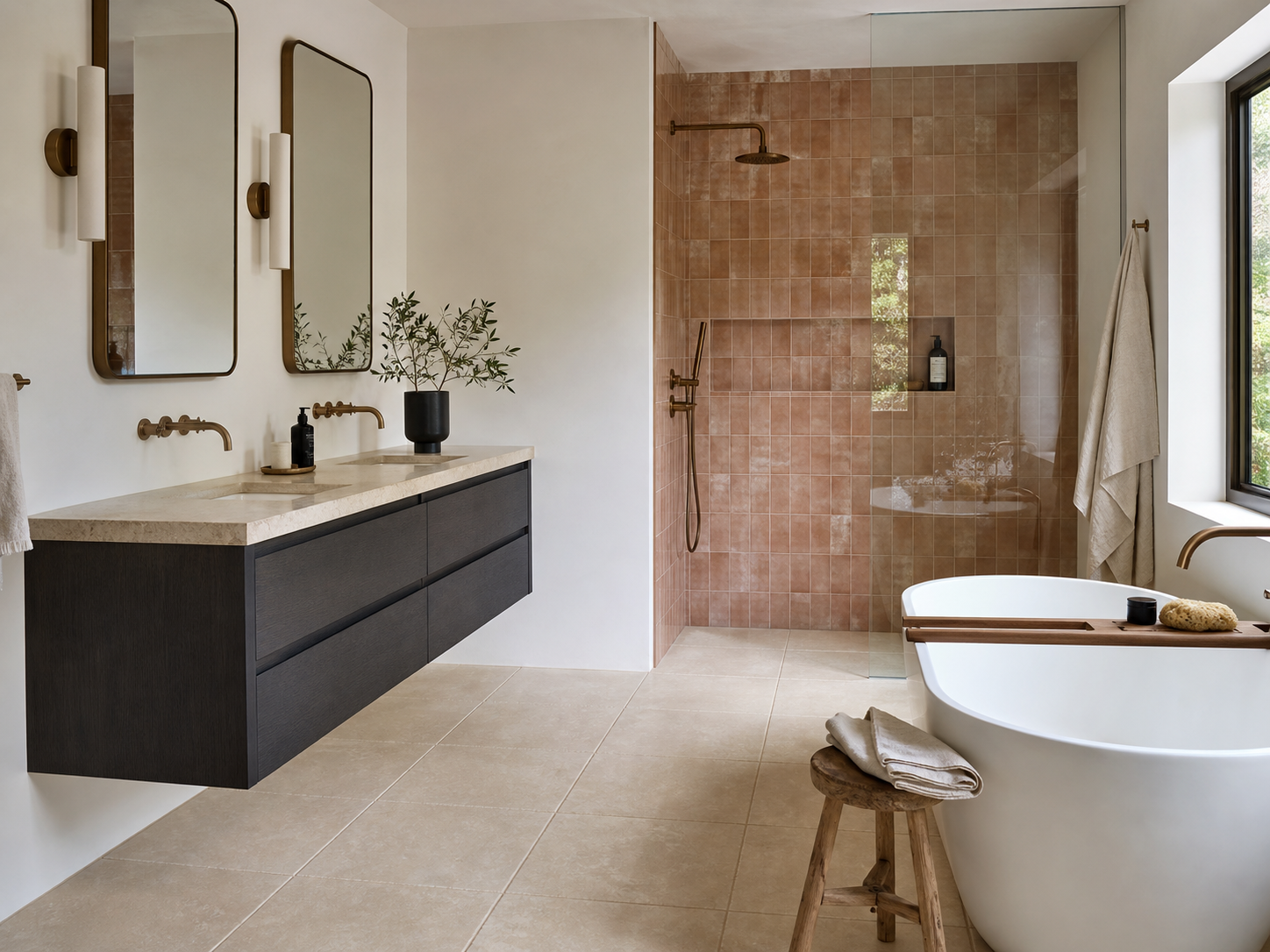
Charcoal sharpens the room immediately, while terracotta and bronze keep the beige tile in a warm modern family.
Keep: beige floor as the only grid. Add: clear glass and one saturated wet wall.
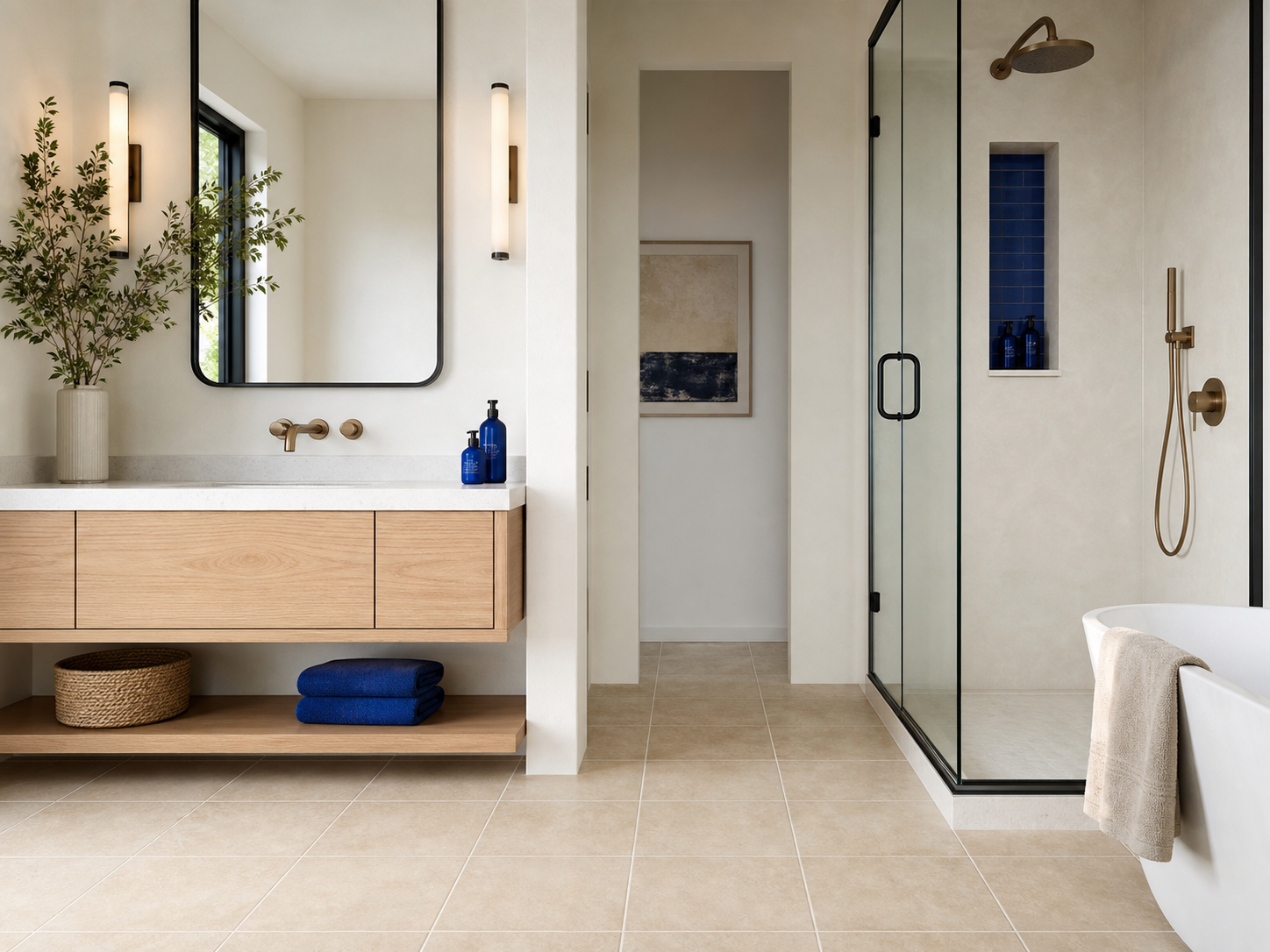
Cobalt works in a smaller dose here: one clean niche and a few objects, with oak, bronze, blackened metal, and white stone doing the quiet work.
Keep: grout beige or creamier. Add: oak, bronze, black steel, and white stone.
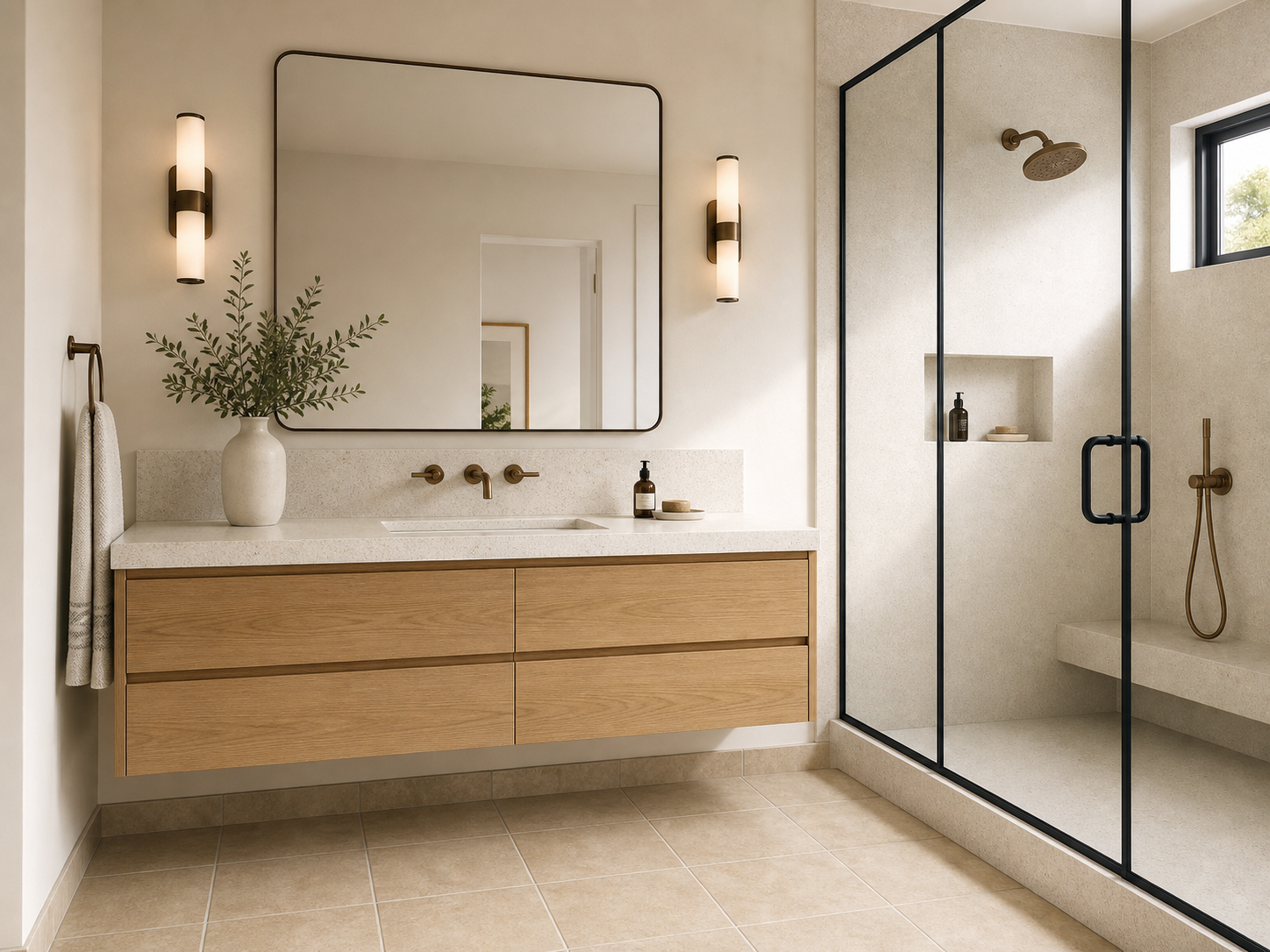
Micro-terrazzo belongs on the vanity and wet-wall surfaces here, so the existing beige tile floor stays the quiet base.
Keep: floor tile untouched. Add: fine cream aggregate, oak, bronze, and clear glass.
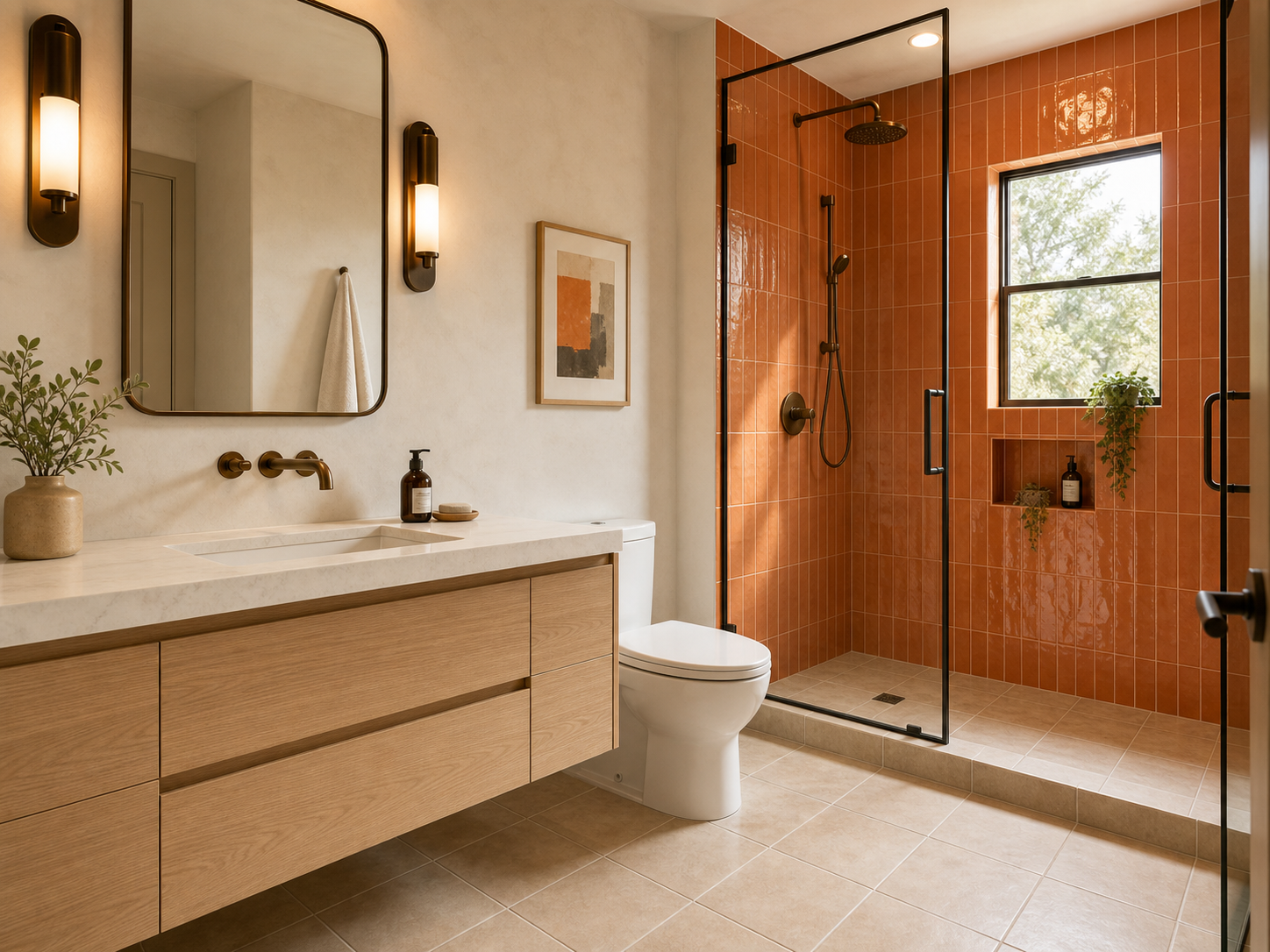
Orange works when it is an intentional shower plane, balanced by oak, white stone, bronze, black steel, and warm plaster.
Keep: beige tile as the ground. Add: orange ceramic in one architectural surface.
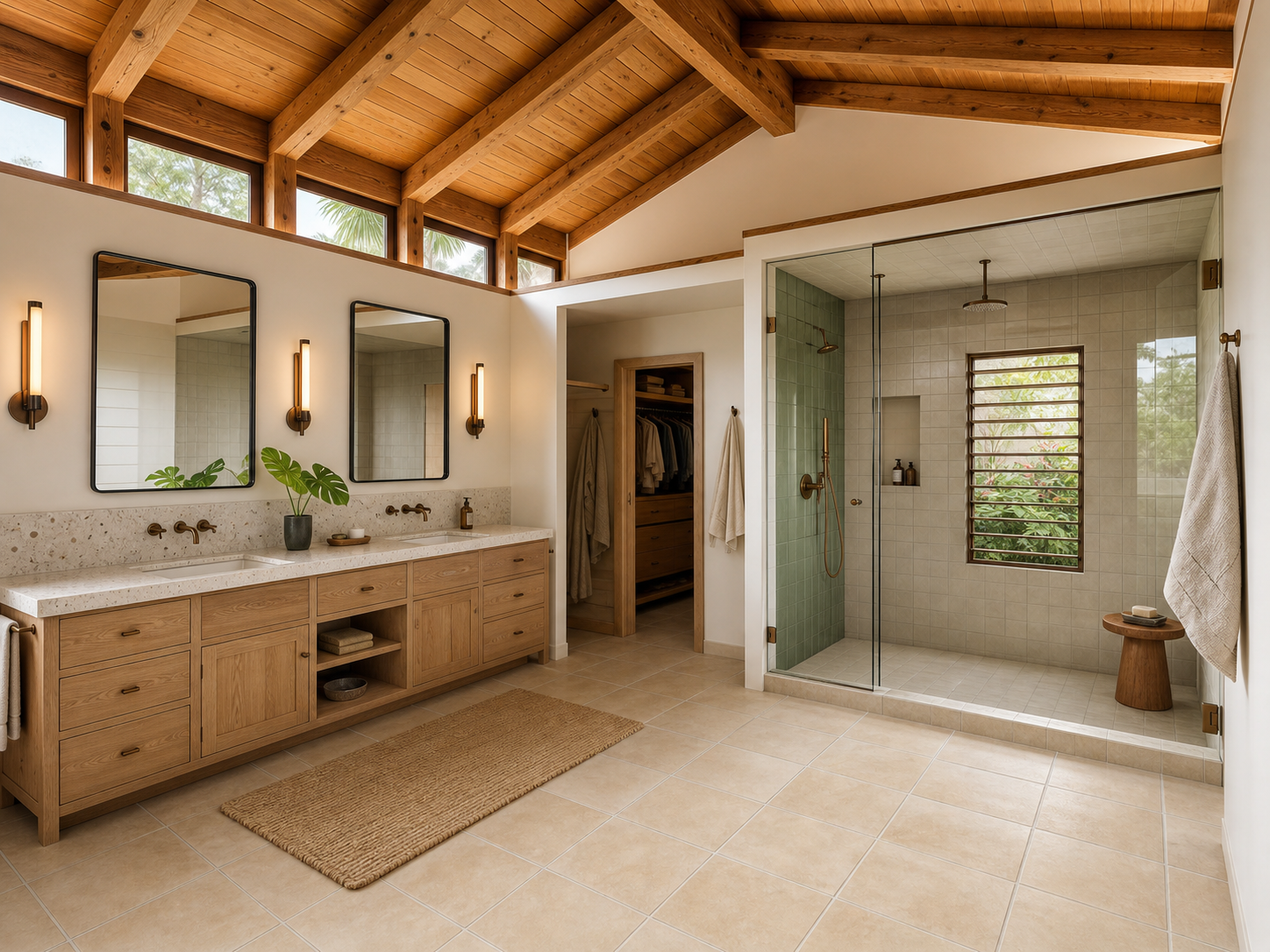
The ceiling makes the oak vanity feel native to the room, while olive tile and black fixtures give the beige floor a cleaner frame.
Keep: square floor visible. Add: high windows, clear glass, and matte black details.
Fine terrazzo, oak, bronze, and a small celadon wet-wall moment make the beige floor read as part of a deliberate warm palette.
Keep: floor low contrast. Add: warm ceiling boards and simple bronze fixtures.
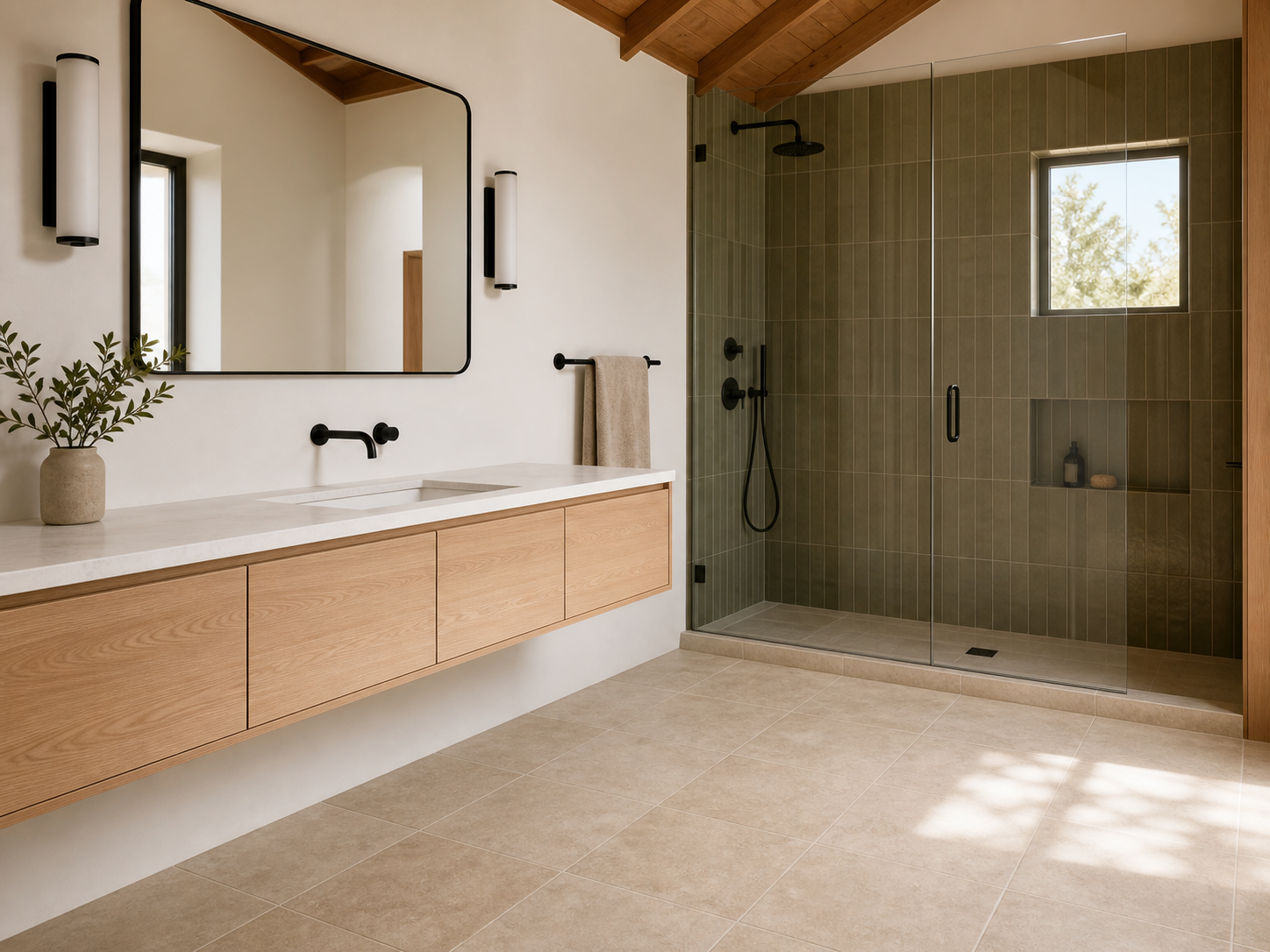
A tighter vanity-and-shower view keeps the beige floor primary while oak, olive vertical tile, clear glass, and black fixtures sharpen it.
Keep: floor grid clear. Add: ceiling boards only as a small architectural cue.
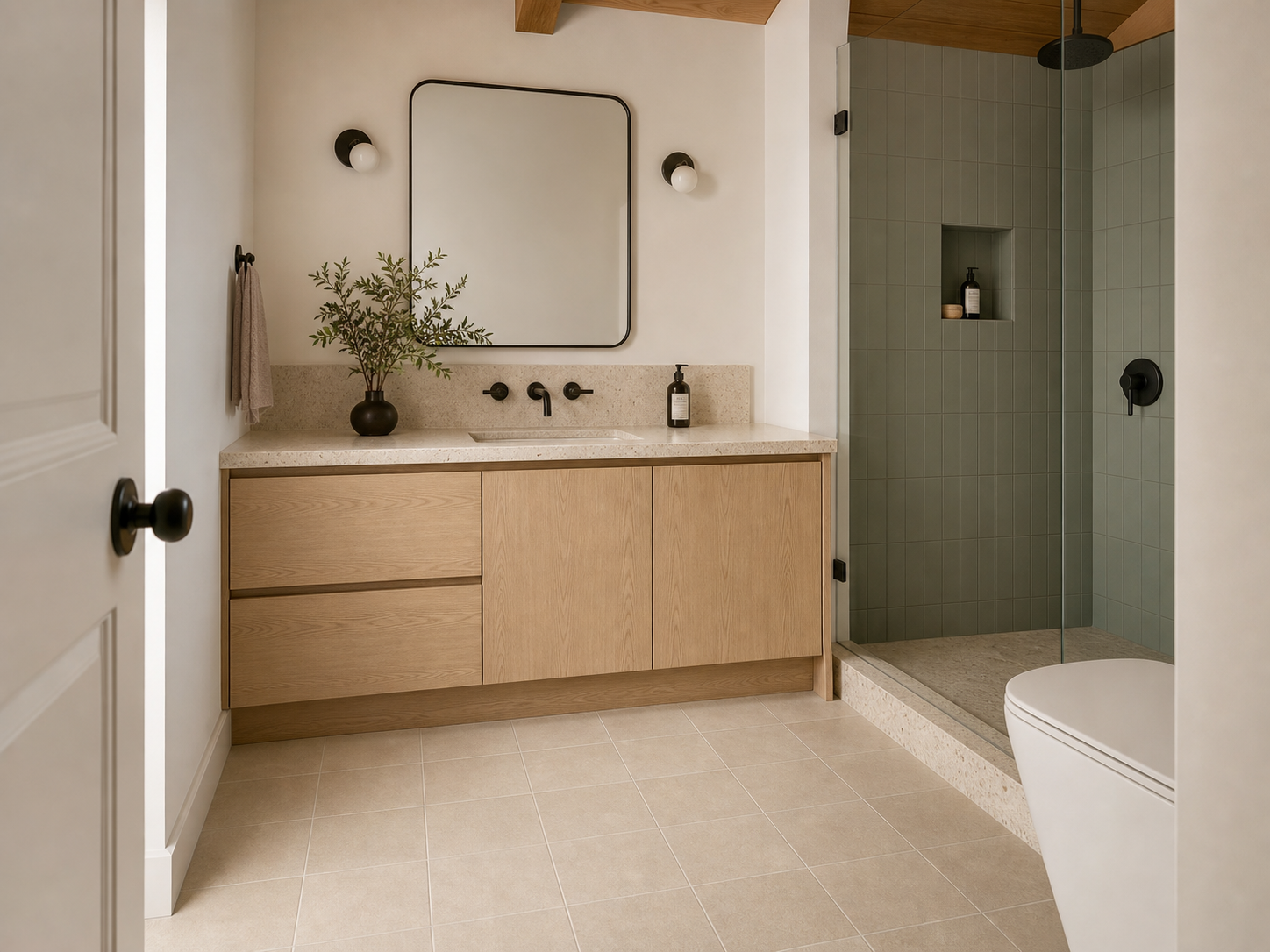
Cream terrazzo and pale oak connect to the floor, while the celadon shower and modest wood ceiling keep the palette fresh.
Keep: beige tile as the quiet base. Add: matte black or bronze details, clear glass.
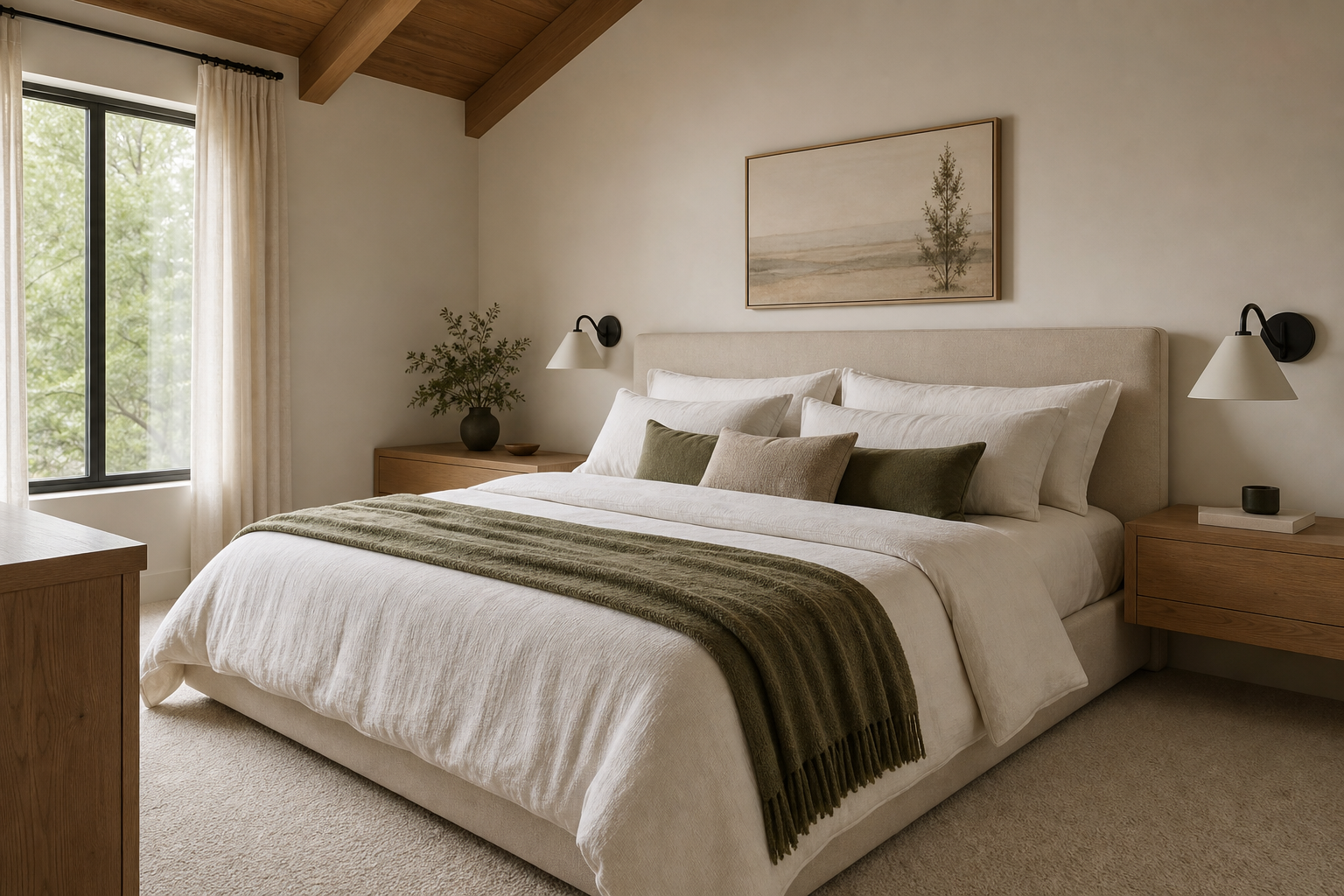
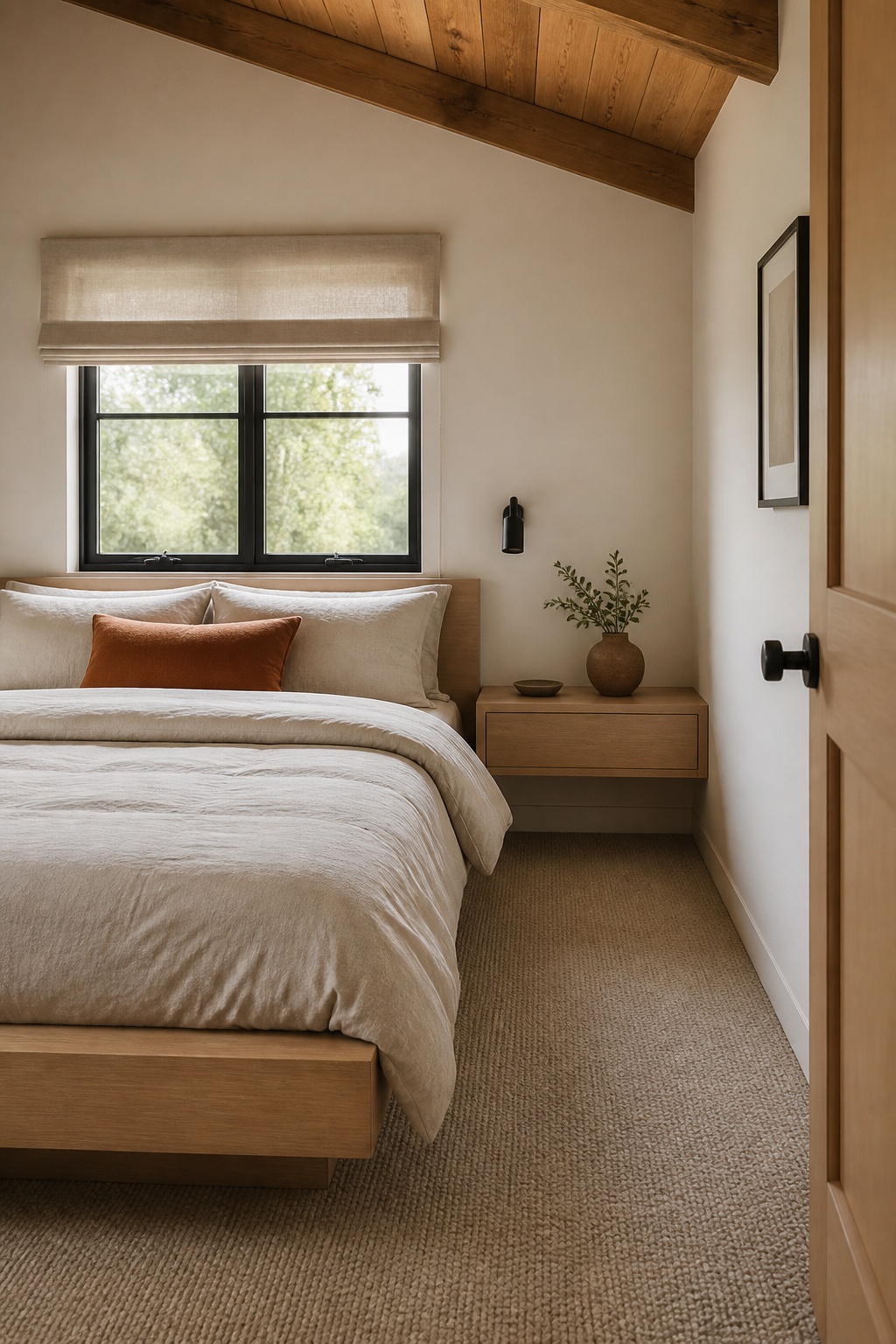
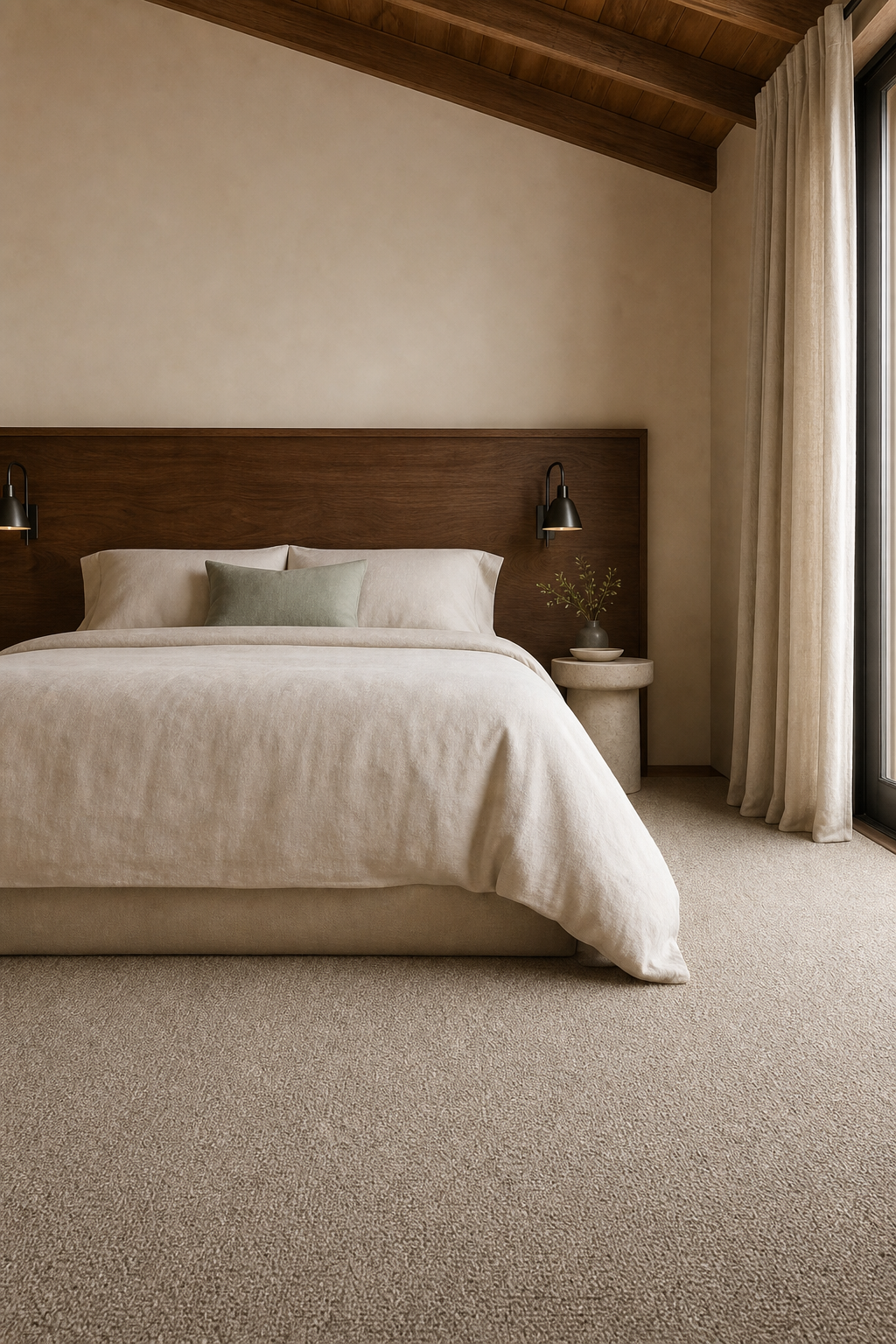
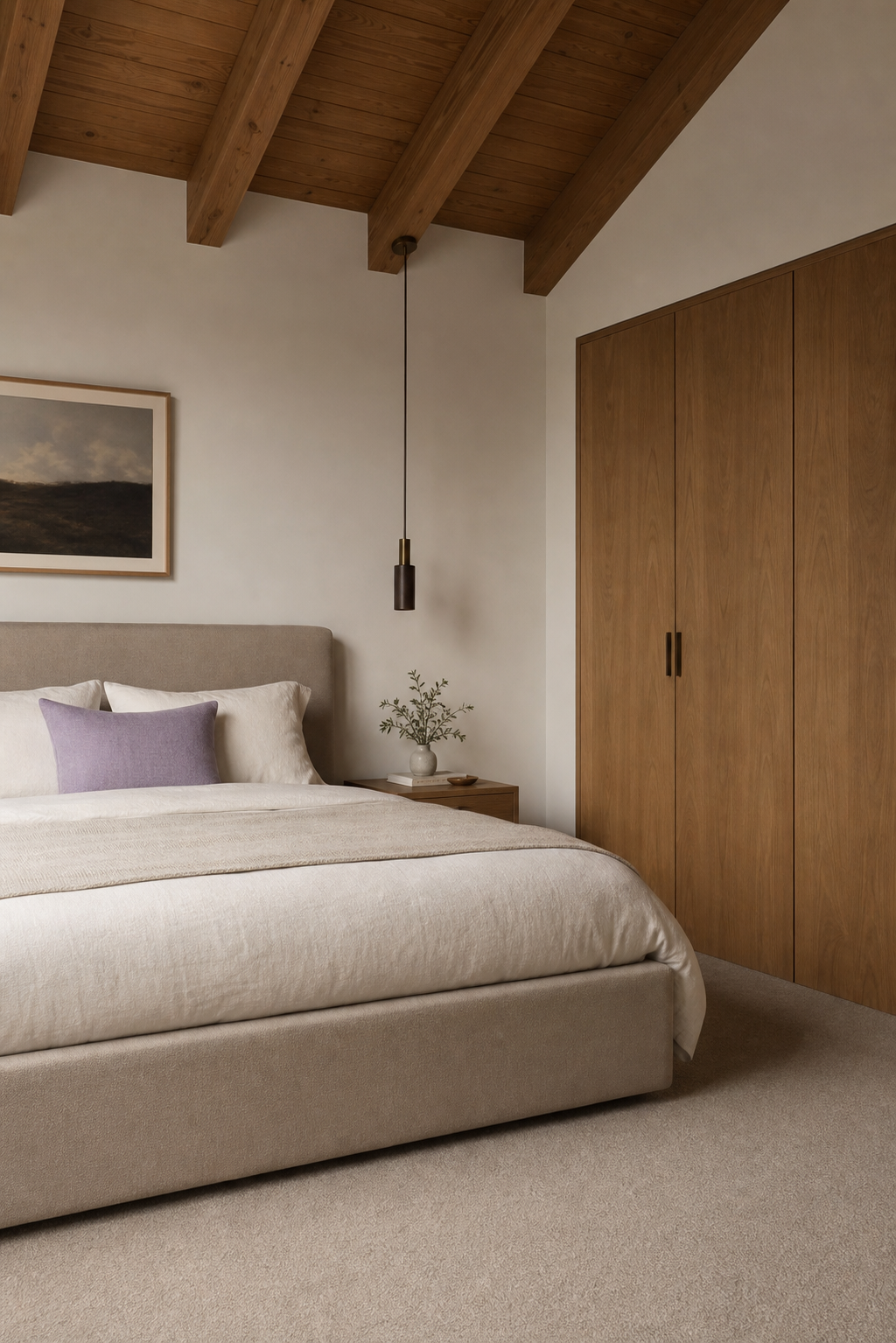
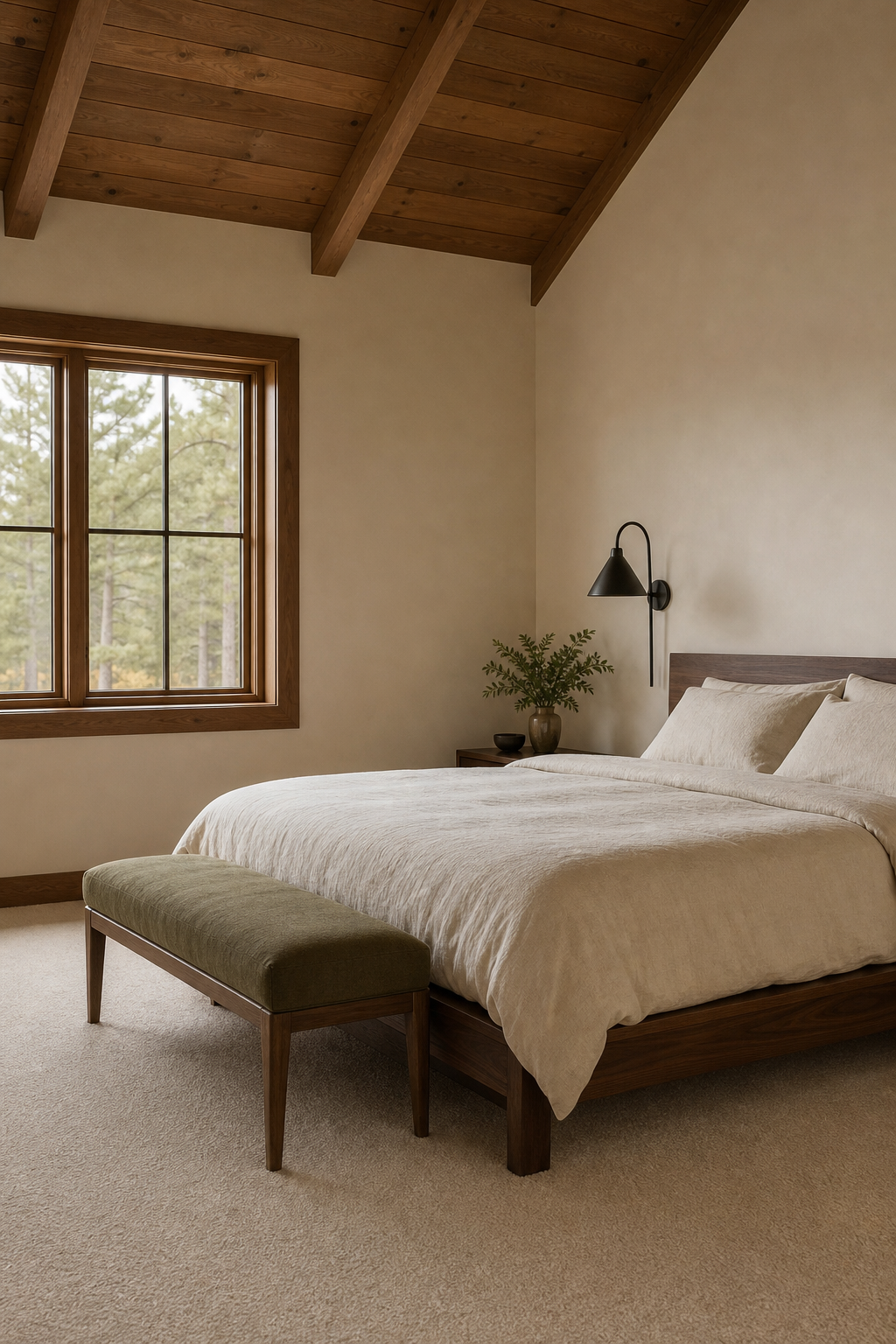
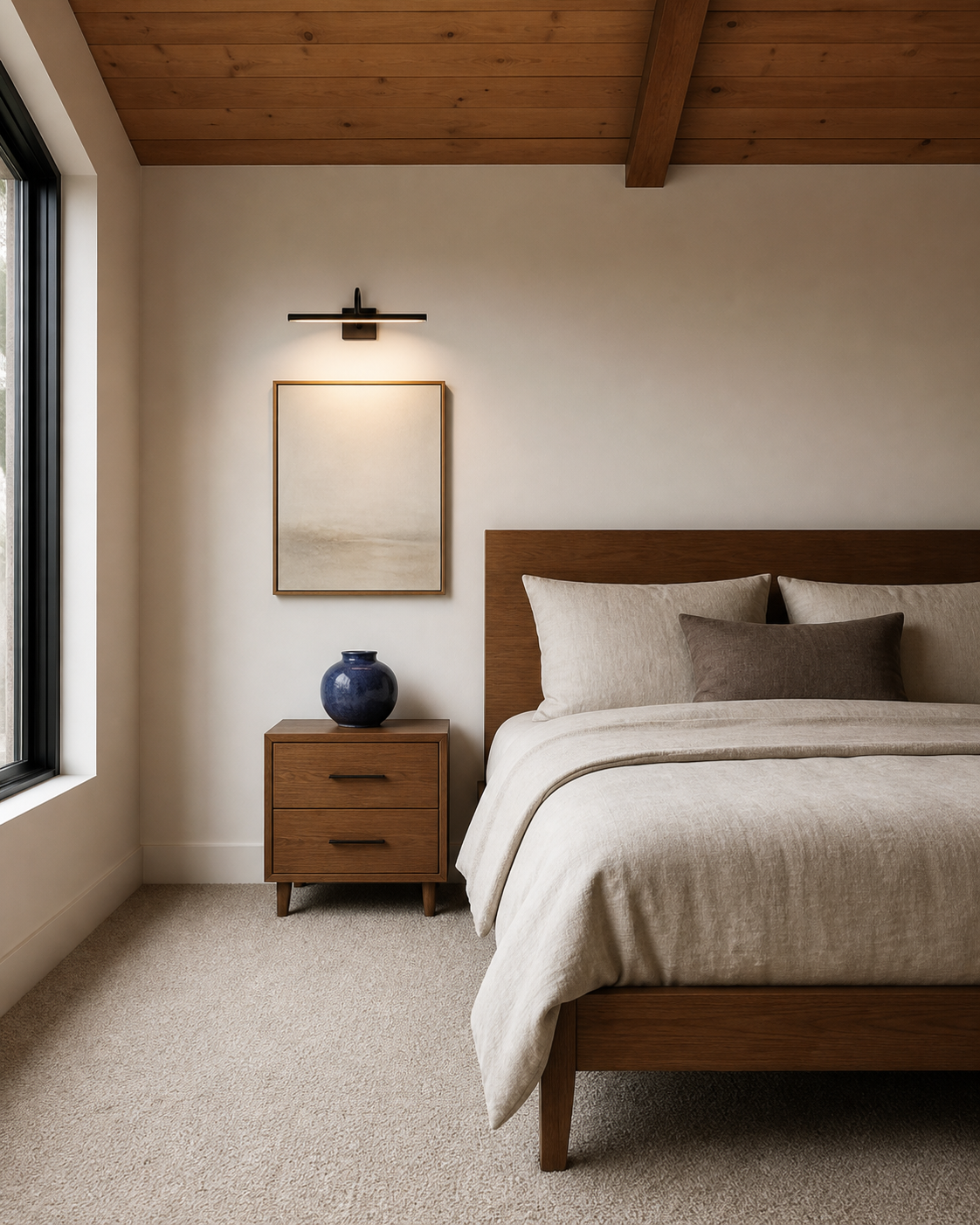
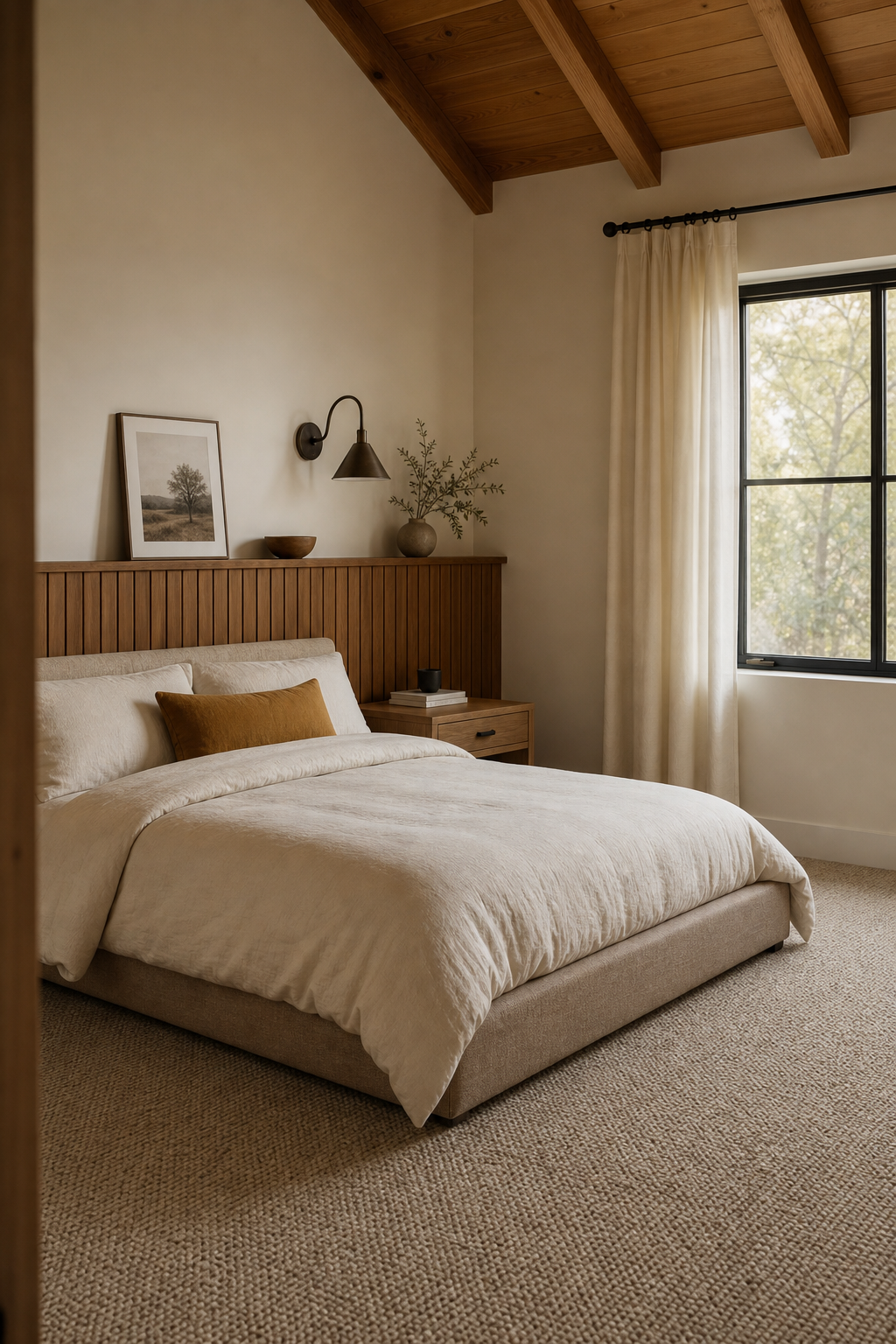
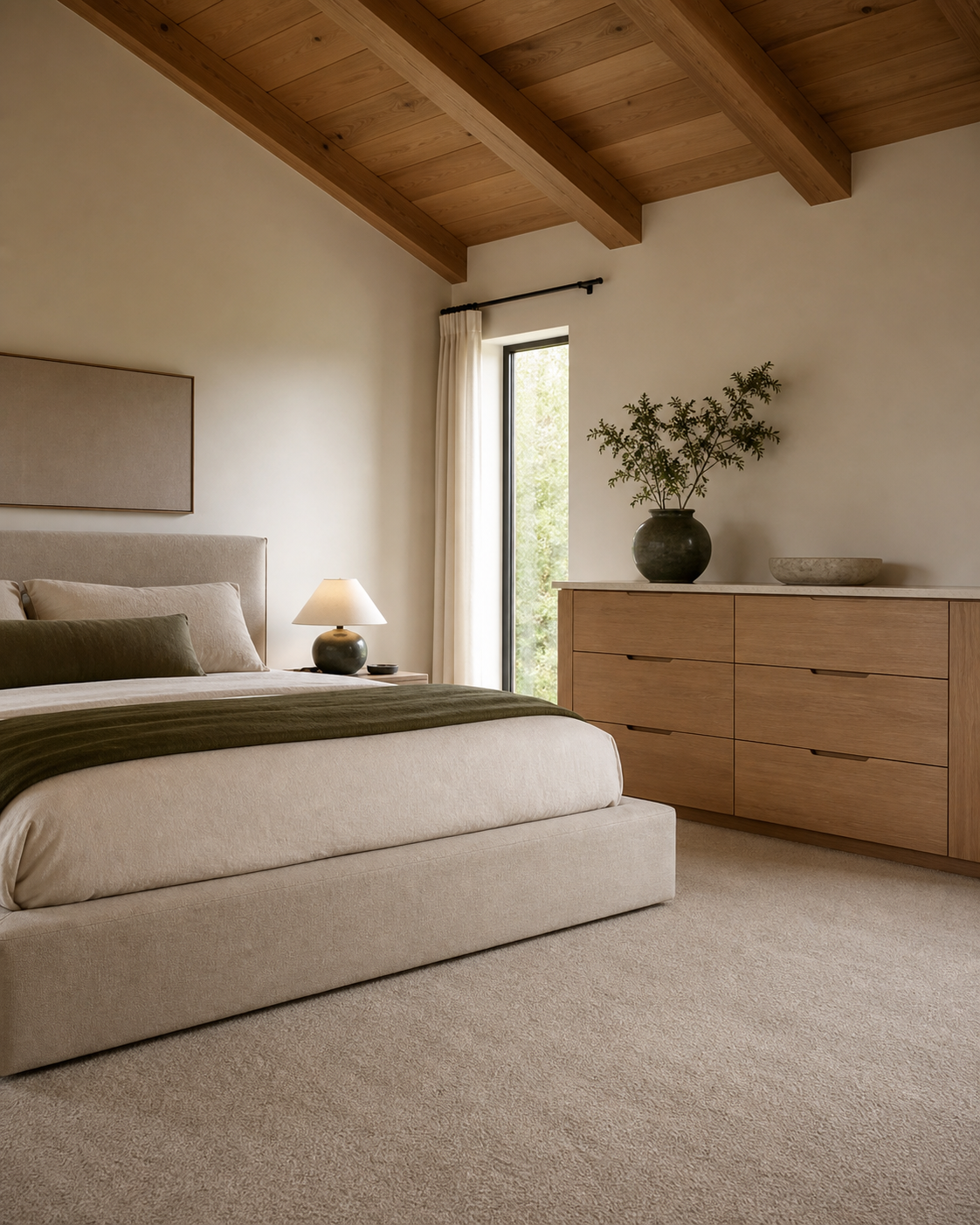
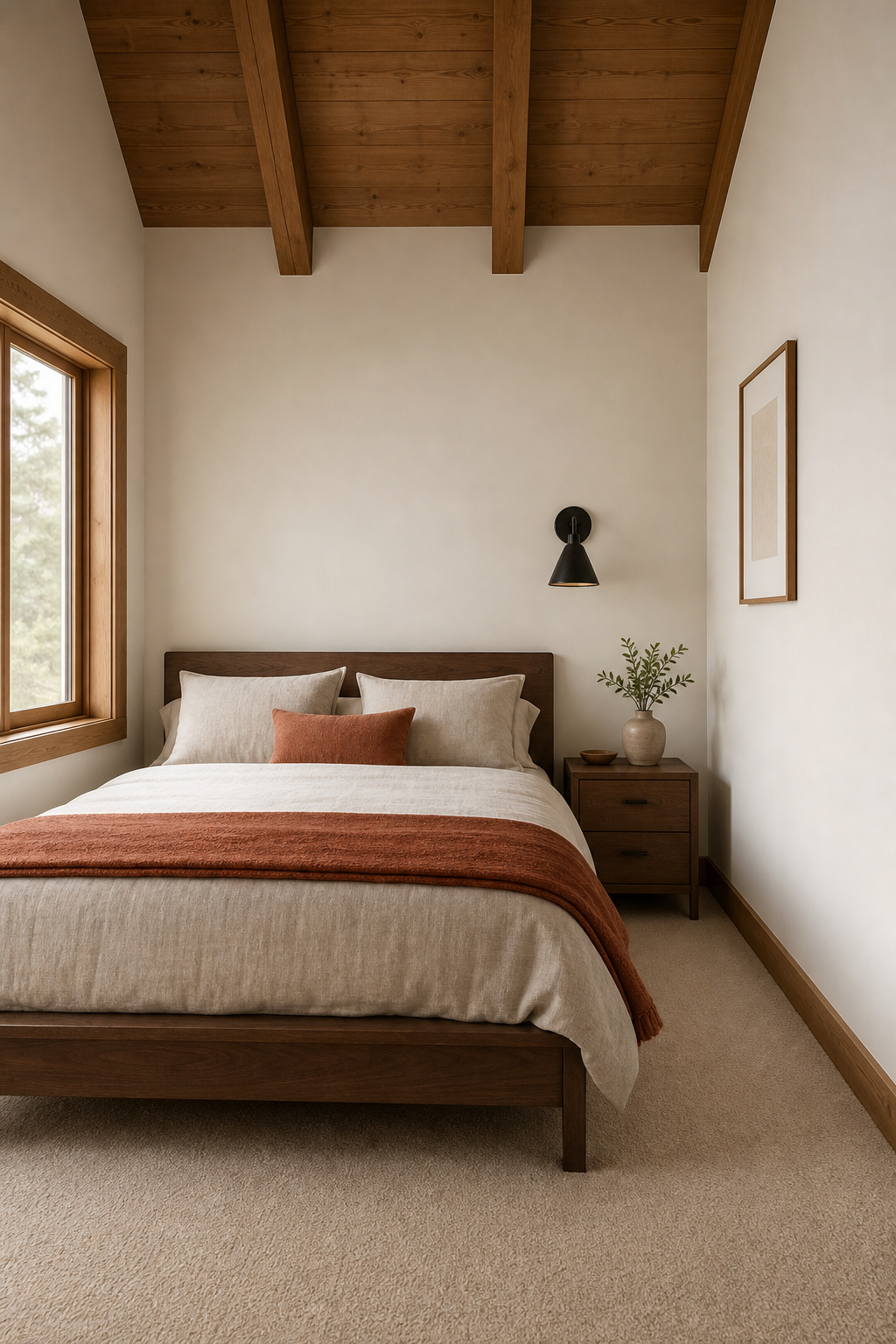
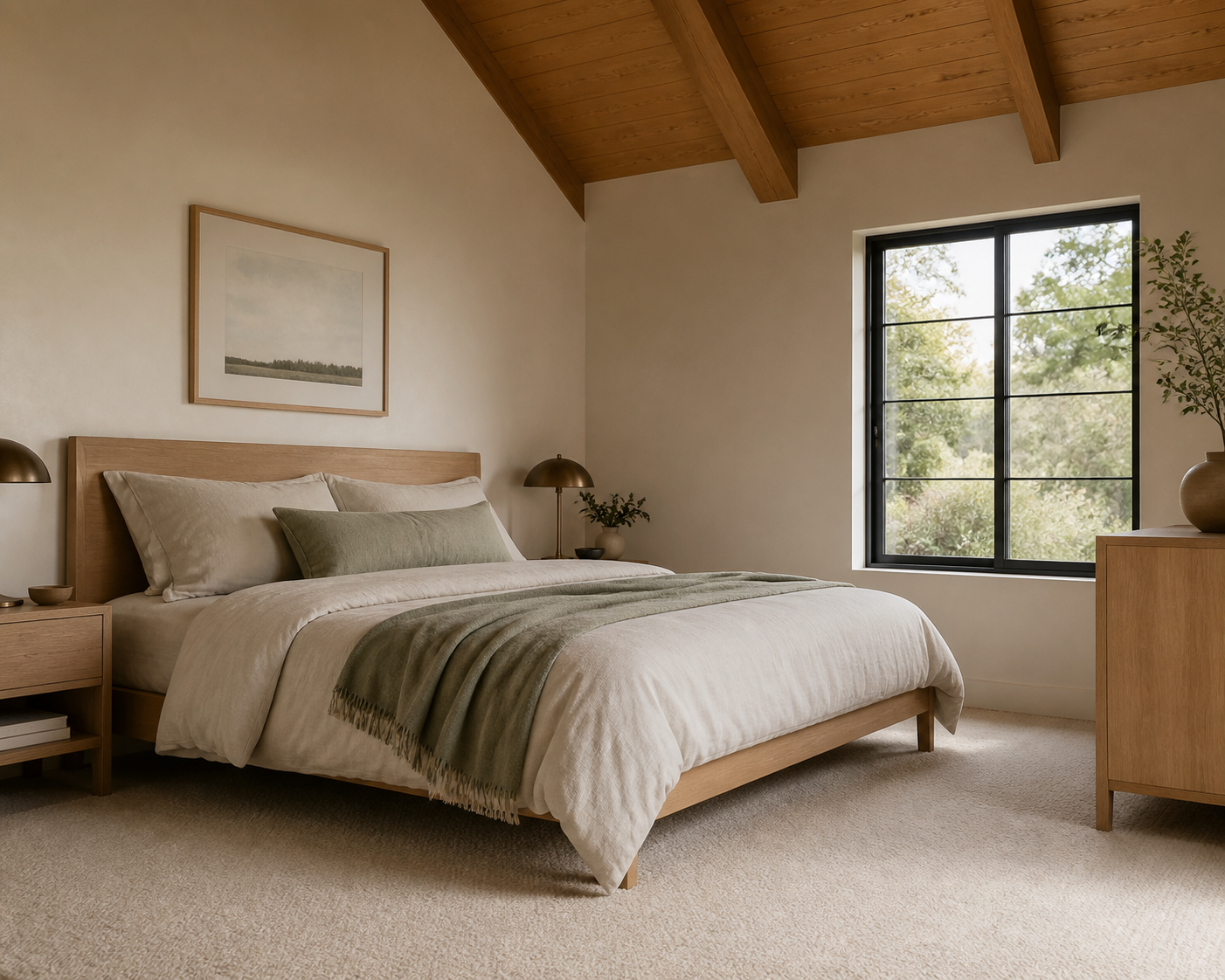
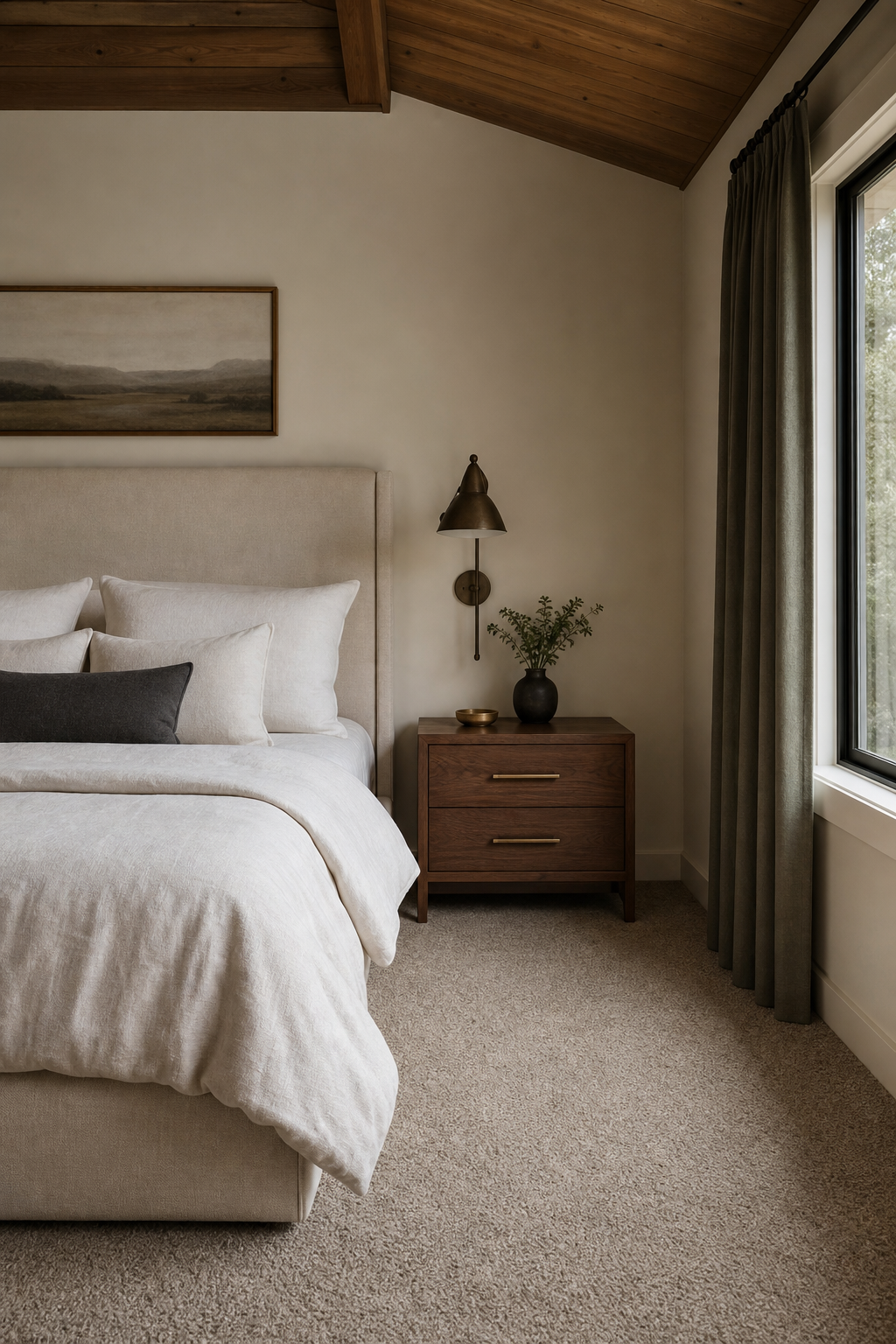
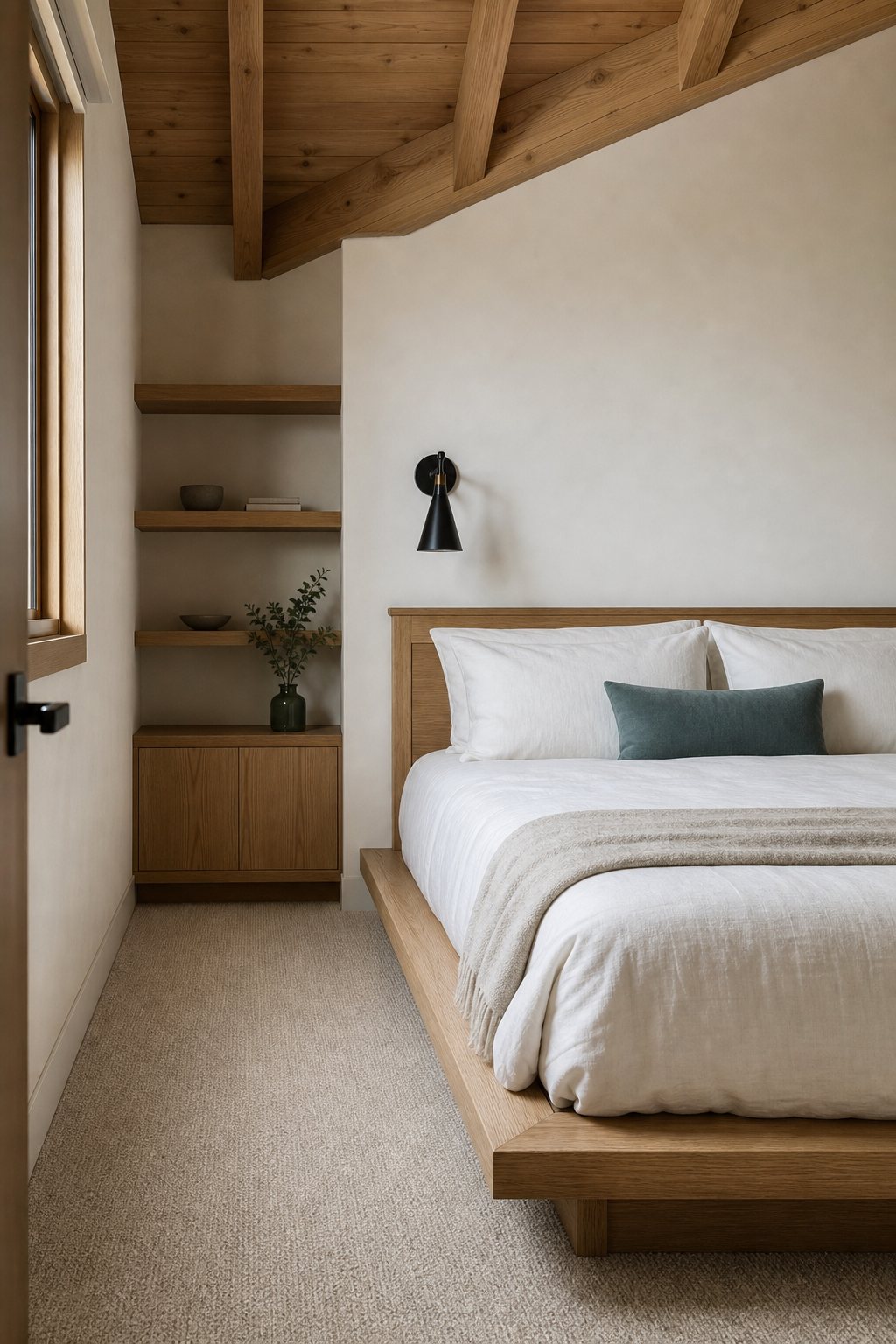
Carpeted bedroom directions for the same house context: warm wood cathedral ceilings, quiet bedding, oak or walnut, muted accents, and normal tighter compositions instead of wide ceiling-first views.
Low ivory carpet and simple bedding keep the room soft while olive pillows, oak, black sconces, and a modest wood ceiling cue connect it to the rest of the palette.
Keep: carpet wall-to-wall. Add: warm wood overhead as context, not the whole view.
A single terracotta pillow gives the beige carpet enough warmth without making the room busy. Oak and blackened metal keep it crisp.
Keep: tight natural framing. Add: one warm accent and simple linen bedding.
Walnut gives the soft carpet an architectural edge, while celadon, cream stone, and black lamps keep the palette calm and current.
Keep: carpet visible in the foreground. Add: one muted green note and warm wood.
Soft lavender replaces busier color with a quieter lift. The oak wardrobe and ceiling make the carpet feel deliberately warm.
Keep: furniture planes simple. Add: muted color in one pillow or artwork.
The olive bench makes the beige carpet feel connected to the green directions elsewhere, while walnut and ivory bedding keep the room minimal.
Keep: broad carpet field. Add: one low upholstered accent and blackened metal.
Cobalt works as a small ceramic note, not a room theme. Oak, white linen, beige carpet, and wood ceiling do the quiet work.
Keep: color small and controlled. Add: plain bedding and one black fixture.
A saffron pillow adds warmth without competing with the carpet. Oak slats and bronze lighting keep the room structured.
Keep: ceiling as a small top cue. Add: warm accent color in one soft object.
Pale oak storage gives the carpet a built-in material partner, while the olive lamp and warm ceiling stay quiet.
Keep: normal lens and straight lines. Add: low contrast carpet and pale oak.
Terracotta belongs as one broad textile block. Walnut, cream linen, and the ceiling boards carry the rest of the warmth.
Keep: simple surfaces. Add: warm color in one controlled layer.
Celadon softens the beige carpet without turning the room pastel. Pale oak and bronze make the palette feel intentional.
Keep: carpet as the floor finish. Add: one muted textile and warm metal.
Small charcoal and bronze details sharpen the soft carpet and cream bedding without making the bedroom heavy.
Keep: muted bedding and visible carpet. Add: dark accents only in small doses.
Teal stays quiet when it is just one pillow. Oak, linen, carpet, and the modest ceiling cue keep the room closer to the first minimal directions.
Keep: tighter bedroom composition. Avoid: wide-angle ceiling-showcase framing.
Tile and grout resource
Big Island Surface Care advertises tile and grout cleaning, sealing, and optional color sealing on Big Island. That is useful here if Paul wants the existing grout made slightly lighter or creamier while adding protection.